News
July 03, 2019
11: The US is far from the only country that celebrates independence this time of year. There are no less than 11 other countries that do the same in the first ten days of July. In order, they are Canada, Burundi, Rwanda, Somalia, Belarus, Algeria, Cape Verde, Venezuela, Comoros, Malawi, the Solomon Islands, Argentina, South Sudan (the world's newest country!), and the Bahamas.
2: There are two countries in the world that have no official independence day or national day at all. They are the United Kingdom (the eventual cause of so many other independence days, of course) and Denmark, which wants you to know that they were "once brutal Vikings." Vikings don't get colonized!
335: The US may run a big trade deficit with the rest of the world, but the flag industry is doing its best to close the gap. In 2018 the US ran a trade surplus of 300 percent in cloth flags. Of the roughly $6.3 million worth of flags imported, almost all came from China. Meanwhile three quarters of the $21 million worth exported went south of the border to Mexico. Thanks to Jason at the US Census Bureau for helping us out with the data.
$1 billion: Boom, ra-ta-ta-ka, boom… BOOM! Americans spend more than a billion dollars on fireworks every year, according to the American Pyrotechnics association. most of which are used during the July 4 period. Ninety nine percent of them are imported from the USA's "strategic competitor" China.
Quiz Answer: Liberate yourself from a common misconception. The US actually declared independence on July 2nd 1776. The Declaration text was approved on the 4th but not signed until almost a month later, on August 2nd. So if you're in the US, tell your boss Signal said you can take August 2nd off, too.
From Your Site Articles
More For You
Will Fitzpatrick
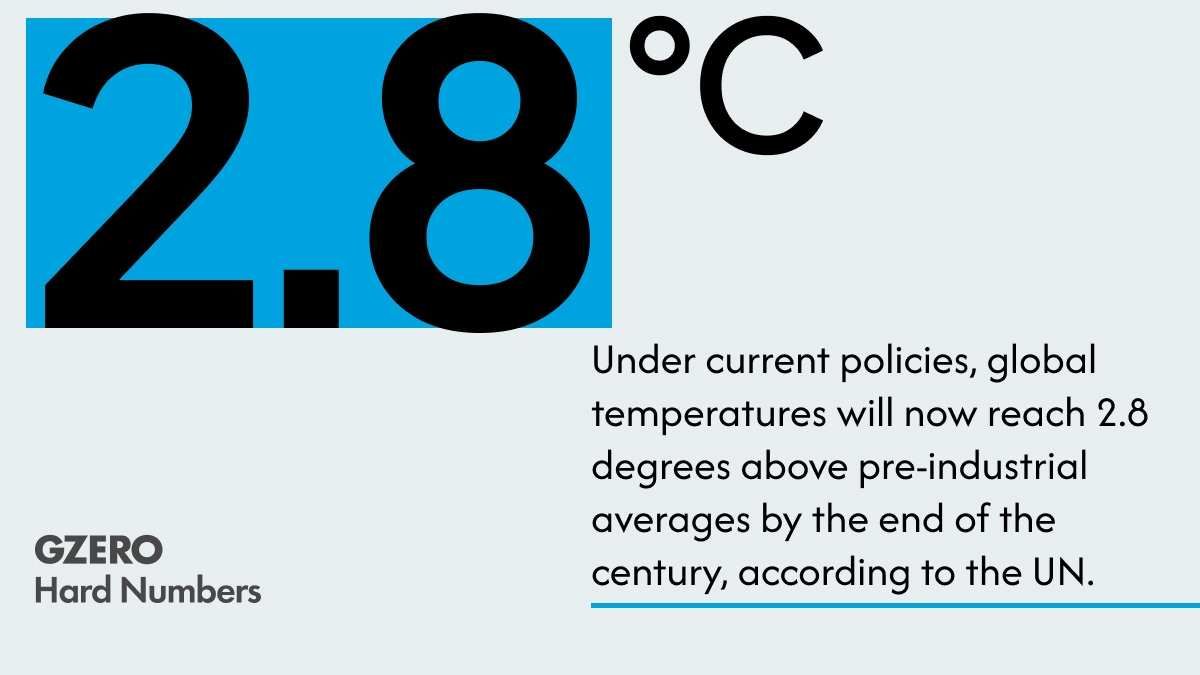
2.8 is way above the UN target of 1.5 degrees that was set by the 2015 Paris Agreement.
Most Popular
- YouTube
A Democratic sweep in 2026 could shake up Washington. Will it change Trump’s grip on power or set the stage for 2028? Amy Walter and Liam Donovan join Ian Bremmer on GZERO World.
Could Chinese AI give Europe an edge? | The Debrief with Heather West
Could China give Europe a shortcut in the AI race?
Europe has struggled to build models that compete with American and Chinese rivals. But Chinese models that companies can download, customize, and run themselves could offer another way forward—with more control over data and security.
This week, Microsoft launched the Velocity Prize, a global competition designed to give students ages 13–16 an opportunity to demonstrate their computational thinking, coding, and creative problem-solving skills in Minecraft. Supported by Microsoft’s Digital Crimes Unit, the competition encourages students to build digital skills and learn how to use technology responsibly while exploring future opportunities in cybersecurity. By helping equip the next generation with the skills to navigate and shape the digital world, the Velocity Prize is helping build a pipeline of future problem-solvers who can contribute to a safer and more resilient digital ecosystem. Read more here.
© 2025 GZERO Media. All Rights Reserved | A Eurasia Group media company.