What We're Watching
Police and soldiers vs. protesters in Mozambique
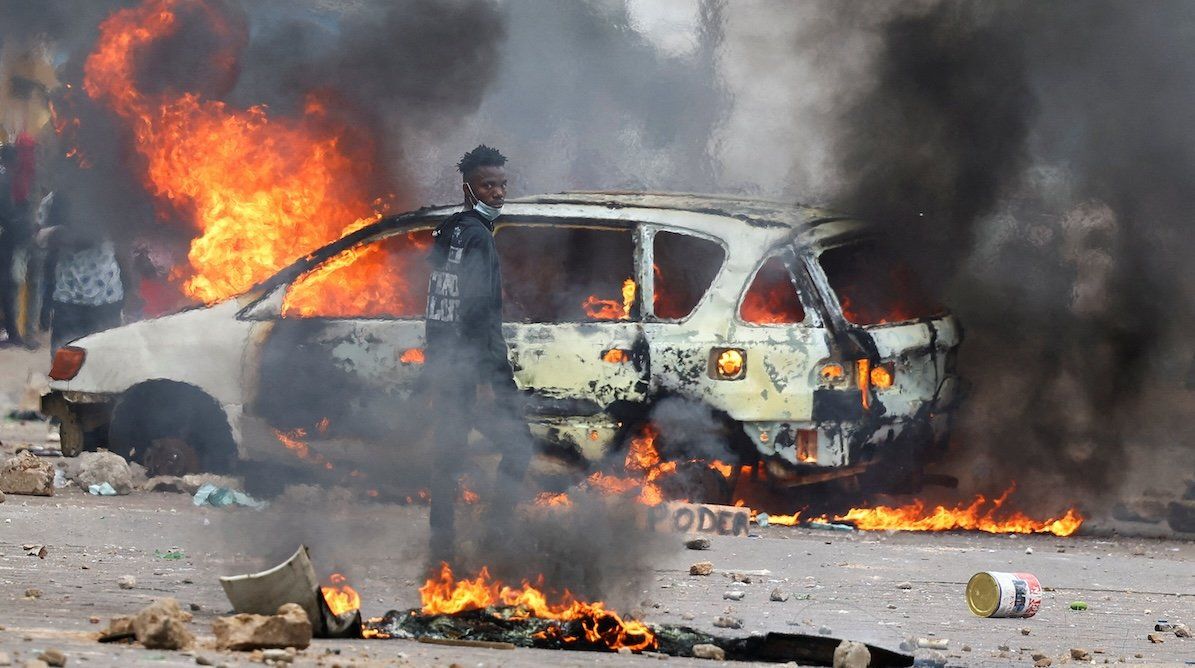
A protester looks on near a burning barricade during a "national shutdown" against the election outcome, in Maputo, Mozambique, on Nov. 7, 2024.
REUTERS/Siphiwe Sibeko
The published results of the election found that FRELIMO’s Daniel Chapo won nearly 71% of the vote. His main opponent, independent candidate Venancio Mondlane, was given 20.3%, and opposition party RENAMO’s candidate, Ossufo Momade, came in third with 5.8%.
UN High Commissioner for Human Rights Volker Türk warned on Wednesday that police and soldiers patrolling the streets of Maputo may be increasing tensions to dangerous levels. “The police must refrain from using unnecessary or disproportionate force and ensure that they manage protests in line with Mozambique’s international human rights obligations,” Türk said.
Fearing the spread of unrest, South Africa has closed, partially reopened, and then reclosed its border with Mozambique this week.
This week, Microsoft launched the Velocity Prize, a global competition designed to give students ages 13–16 an opportunity to demonstrate their computational thinking, coding, and creative problem-solving skills in Minecraft. Supported by Microsoft’s Digital Crimes Unit, the competition encourages students to build digital skills and learn how to use technology responsibly while exploring future opportunities in cybersecurity. By helping equip the next generation with the skills to navigate and shape the digital world, the Velocity Prize is helping build a pipeline of future problem-solvers who can contribute to a safer and more resilient digital ecosystem. Read more here.
With the midterms just weeks away, Democrats are eyeing control of Congress as Republicans struggle with the political fallout from the Iran war, rising prices, and Trump's unpopularity. Amy Walter and Liam Donovan join Ian Bremmer to break down what could happen in November and what it means for the future of both parties.
Since returning to power in 2025, the Trump administration has drastically changed the answer to this question, pursuing an ‘America First’ philosophy that is dramatically more transactional: the US will give you money, but you must give the US something valuable in return.
Indonesia’s worst wildfires in a decade are quickly becoming a domestic and international headache for President Prabowo Subianto.