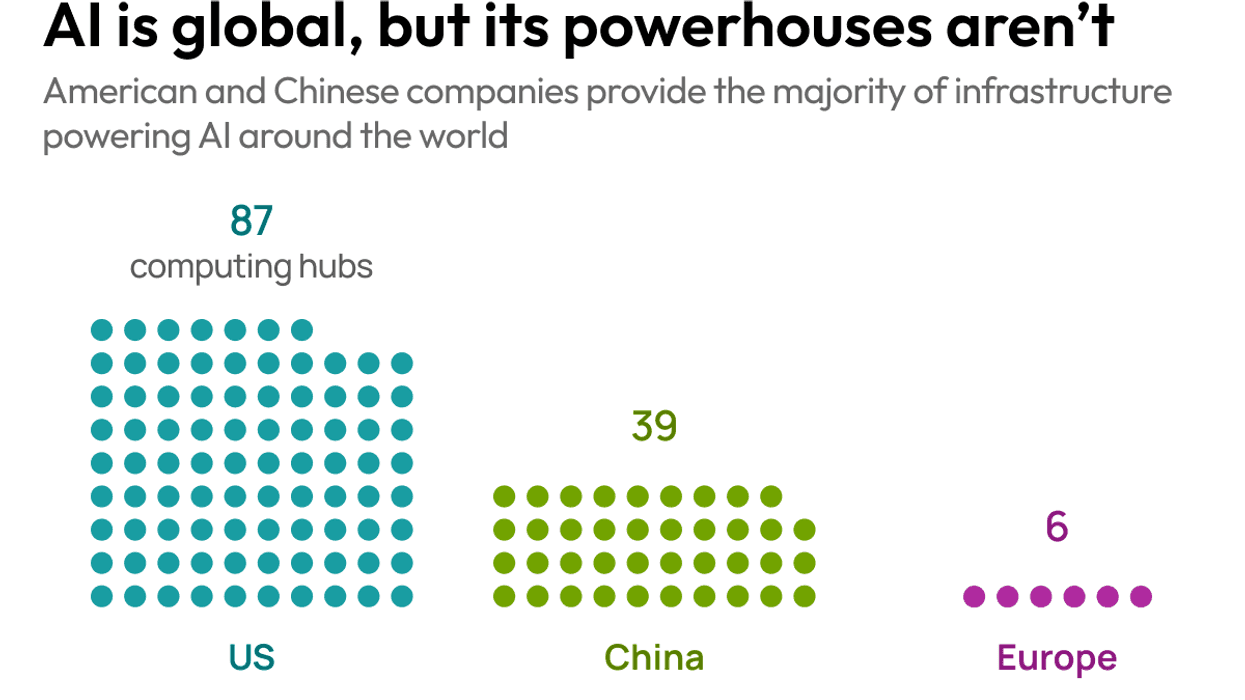
The risk of a major technology blow-up between the US and Europe is growing. A few weeks ago, we wrote about how the European Union wanted to boost its "technological sovereignty" by tightening its oversight of Big Tech and promoting its own alternatives to big US and Chinese firms in areas like cloud computing and artificial intelligence.
Last week, European Commission President Ursula von der Leyen and her top digital officials unveiled their first concrete proposals for regulating AI, and pledged to invest billions of euros to turn Europe into a data superpower.
It's an ambitious plan and Washington is going to hate it. Here's a quick summary of the emerging fault lines that could turn old Cold War allies into digital adversaries:
Data: Brussels wants to cut big US tech companies down to size and promote European competitors, and data (the lifeblood of today's tech firms) is the focus. The EU wants to invest 6 billion euros to create "European data spaces" that can help local companies compete against Silicon Valley and Chinese tech giants that have access to mountains of data. The EU might also force some companies that have a lot of data to share more of it with competitors. What Brussels views as clever industrial policy, Washington is likely to view as protectionism.
Artificial intelligence: The EU also outlined plans to regulate artificial intelligence, focusing on uses of AI that could lead to serious harm if something goes wrong (think driverless cars going haywire, or an HR app that turns out to be racist). It wants to require companies working on so-called "high-risk" AI to submit their algorithms to mandatory tests and checks. But defining what is "high-risk" and deciding what hoops companies will have to jump through will be contentious. The US has already warned Europe against adopting "heavy handed innovation-killing" AI regulation.
Other attempts to rein in Big Tech: The EU is also pushing for new rules for internet companies to remove violent or other harmful content from their websites. And it's investigating the possibility of tightening competition rules to better deal with big internet platforms.
Of course, none of this is happening in a vacuum. The potential for a big transatlantic digital spat is growing as both sides are grappling with the implications of digital disruption for jobs and democracy and trying to come to grips with China's rise as a technology power. The US and Europe would be stronger confronting these challenges together. But at a time when the transatlantic relationship is already strained by trade spats and doubts about America's commitment to NATO, technology looks like one more wedge driving the two sides apart.