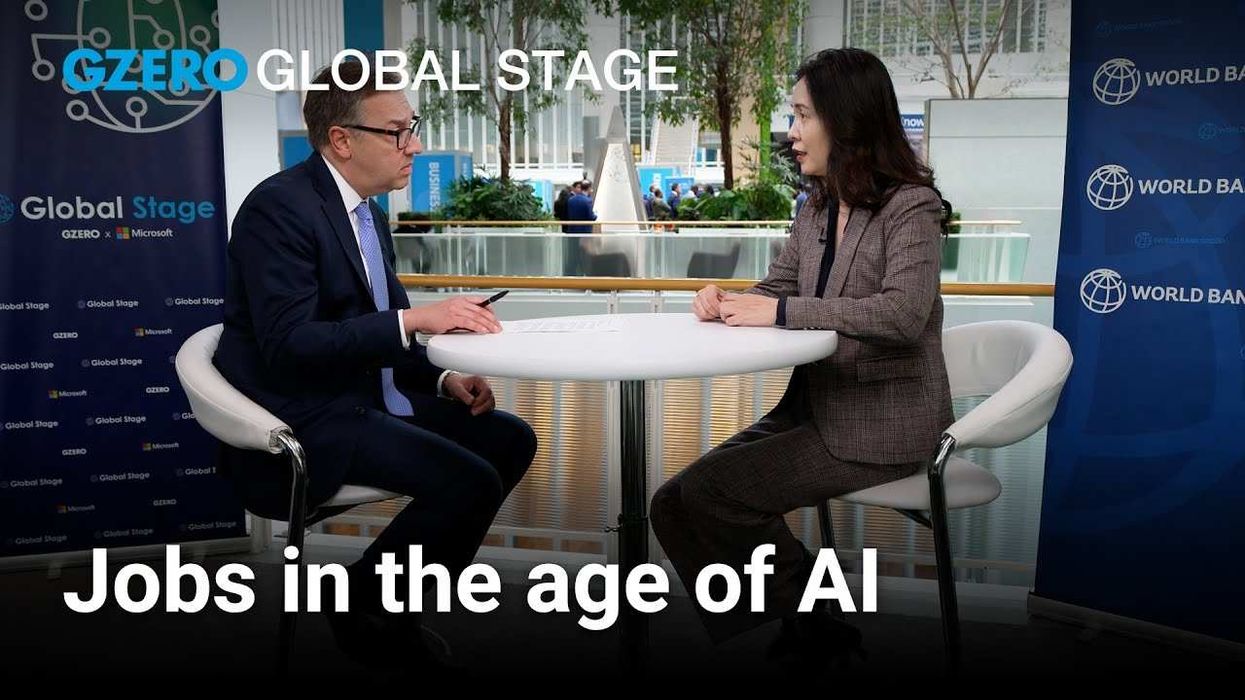

Weeks after a chaotic general election, Pakistan’s political parties still struggle to form a coalition to move the country forward. GZERO’s Tony Maciulis sat down with Pakistan’s former Foreign Minister Hina Khar at the Munich Security Conference for her take on how the nation’s imprisoned ex-Prime Minister Imran Khan maintains a hold over supporters and remains a powerful political force.
Independent candidates mostly aligned with Khan’s political party, Pakistan Tehreek-e-Insaf (PTI), won the most votes on February 8, though they fell short of a majority, setting off a power struggle between Khan and his political rival, former Prime Minister Nawaz Sharif.
Comparing Khan to former US President Donald Trump and India’s leader Narendra Modi, Khar said, “He really represents what populist leaders are all about. He’s able to get everybody to rally around what all is wrong and the great injustices. However, when he comes to power, he doesn’t have any to plan to sort it out.”
Khar explained that Khan’s popularity flows from his ability to tap into the frustrations of his base, who are deeply concerned about rising costs of living, including food and energy prices.
While she hopes the political parties will be able to come to a resolution that respects the voters' mandate, Khar says “the jury is out” about whether Khan will ultimately bow out of the process.
Khar also addressed the ongoing tensions between Pakistan and neighboring India. In a past interview with GZERO, she had described India as a “rogue nation,” a claim she stood by once again in Munich. Modi’s popularity, she said, “is based on anti-Muslim, anti-Islam” sentiments that resonate with Hindu nationalist supporters.
- Hina Khar: Pakistan must solve its domestic problems and step back from a global role ›
- Imran Khan sentenced, Pakistan on edge ›
- Imran Khan released from prison ›
- Pakistan’s military pays the price for Imran Khan's arrest ›
- Imran Khan’s AI prison address ›
- Pakistan holds elections without Imran Khan ›
- Protecting science from rising populism is critical, says UNESCO's Gabriela Ramos - GZERO Media ›