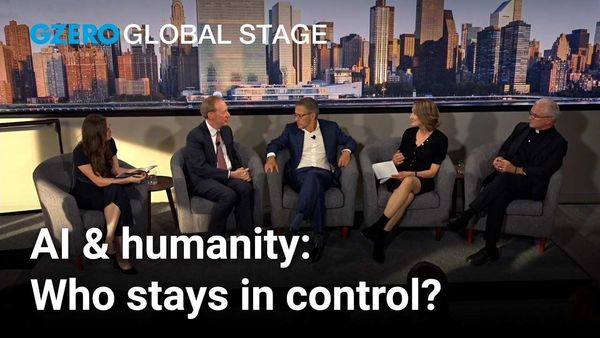
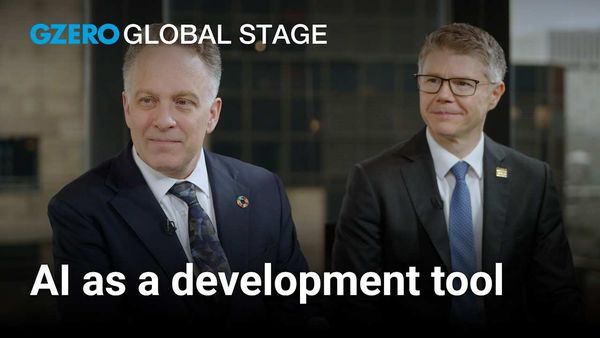
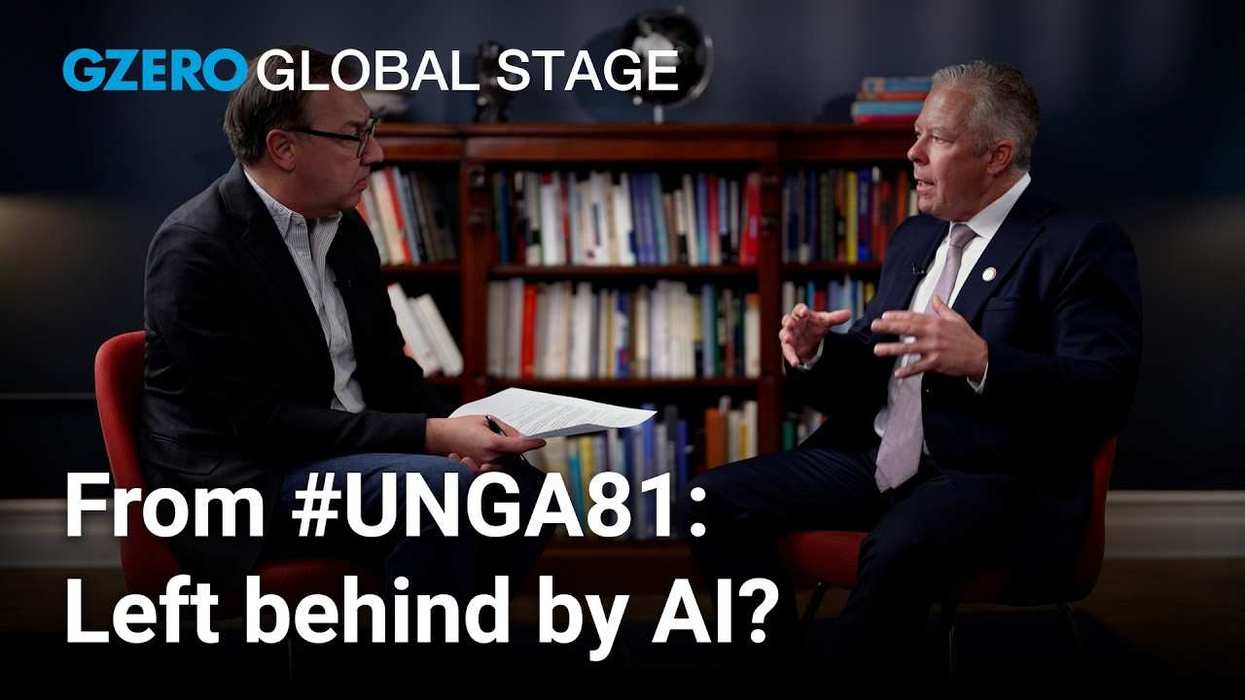
In a GZERO Global Stage discussion at the 79th UN General Assembly, Ian Bremmer and Amina Mohammed emphasized the potential of artificial intelligence (AI) to drive progress towards the Sustainable Development Goals (SDGs) and address global inequities.
Bremmer noted that AI could be the key to achieving goals like clean water access and reducing hunger, pointing out the transformative power AI could bring in the coming years.
"AI is your opportunity," Bremmer said. He highlighted the importance of capacity building, standard setting, and ensuring that the Global South has a seat at the table in AI governance efforts, noting that AI has the potential to move the world towards meaningful progress by 2030.
Amina Mohammed echoed this sentiment but urged caution, emphasizing the need for responsible deployment of AI. "It's really exciting, it's scary, and we're not ready," she said, stressing the importance of investments and proper infrastructure to ensure AI benefits humanity as a whole. Mohammed underscored the responsibility of global leaders to ensure checks and balances are in place as AI continues to evolve.
Bremmer and Mohammed spoke during GZERO’s Global Stage livestream, “Live from the United Nations: Securing our Digital Future,” an event produced in partnership between the Complex Risk Analytics Fund, or CRAF’d, and GZERO Media’s Global Stage series, sponsored by Microsoft. The Global Stage series convenes heads of state, business leaders, and technology experts from around the world for critical debates about the geopolitical and technology trends shaping our world.
- Can the UN get the world to agree on AI safety? ›
- The UN takes on AI ›
- Why António Guterres believes the UN should lead on AI: Exclusive interview ›
- The UN’s AI resolution ›
- Breaking: The UN unveils plan for AI ›
- Join us Jan. 22 from Davos for a Global Stage discussion on the AI economy - GZERO Media ›
- Groundbreaking AI projects showcased at AI Action Summit in Paris - GZERO Media ›