Skip to content
Search

Latest Stories

Europe

Hard Numbers: France bets big on nuclear, Africa underreporting COVID, Chinese space tug, NYC fires unvaxxed workers, Turkish electric protest

Hard Numbers: France bets big on nuclear, Africa underreporting COVID, Chinese space tug, NYC fires unvaxxed workers, Turkish electric protest
Gabriella Turrisi
Make us preferred on Google

50 billion: France plans to spend 50 billion euros ($57.4 billion) to further boost its already big nuclear program. The EU recently classified nuclear power as a sustainable investment despite strong objections from Germany.


7: Africa’s COVID infections could be up to seven times higher than reported, and deaths 2-3 times higher, according to the World Health Organization. The likely cause? Low supplies for testing.

300: Like a space tugboat, a Chinese satellite was recently spotted pushing another long-defunct satellite into a “graveyard” orbit some 300 km (186 miles) away. Such operations are becoming more common to get rid of space junk.

18: Turkey's President Recep Tayyip Erdogan recently raised power prices by half and bumped the value-added tax on electricity from 1% to 18% in response to sky-high inflation. Now, a Turkish opposition leader says he won’t pay his electricity bill until Erdogan repeals the price and tax hikes.

3,000: New York City is expected to can 3,000 unvaccinated municipal employees on Friday. Although they only represent 1% of the city's public workforce, it's likely the biggest mass firing tied to a vaccine requirement in the US — just as New York state is lifting some mask mandates.
More For You

Is Russia the biggest geopolitical tail risk today?
- YouTube
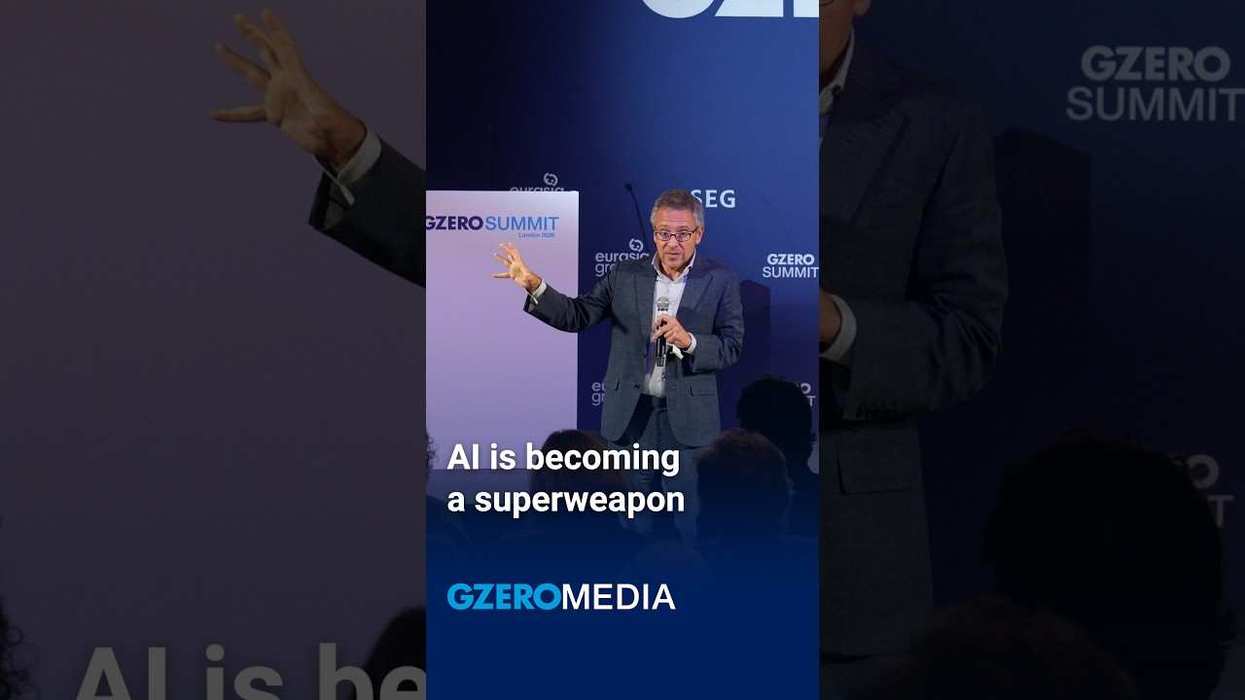
What is the biggest geopolitical tail risk today? At the 2026 US-Canada Summit, hosted by Eurasia Group and RBC in Toronto, Ian Bremmer assesses the geopolitical risks shaping an increasingly volatile global landscape. He highlights Russia as one of the most significant tail risks today, driven by the ongoing war in Ukraine and the potential for [...]
Iranian President Masoud Pezeshkian displays a memorandum of understanding after signing it in Tehran, Iran, on June 18, 2026.

Iranian President Masoud Pezeshkian displays a memorandum of understanding after signing it in Tehran, Iran, on June 18, 2026, after the document was signed by US President Donald Trump.

Iranian Presidency via ZUMA Press
What does the US-Iran deal mean for Tehran? The interim agreement to end the war, signed by both sides on Wednesday, appears to tilt toward Iran: it lifts the US naval blockade of Iranian ports, grants sanction waivers for Iranian oil products – meaning Tehran no longer has to sell oil at a discount – and gives the Islamic Republic access to [...]
The growing strategic importance of the Arctic
- YouTube
As global competition intensifies in the Arctic, Greenland has reemerged as a strategic focal point for the United States and its allies. From the sidelines 2026 US-Canada Summit, hosted by Eurasia Group and RBC in Toronto, Tony Maciulis sits down with Thomas Dans, chairman of the US Arctic Research Commission, to discuss why the Arctic is [...]
Israeli PM Benjamin Netanyahu at a news conference

Israeli Prime Minister Benjamin Netanyahu holds a news conference, following a US-Iran deal, in Jerusalem, June 15, 2026.

REUTERS/Ronen Zvulun/Pool
US-Iran deal could spell disaster for NetanyahuIsraeli Prime Minister Benjamin Netanyahu was already struggling in polls ahead of elections later this year, but his situation might get worse after Washington and Tehran agreed to a deal (pending its signing on Friday). Why the issue with ending the war? Israel ploughed resources into the war, its [...]