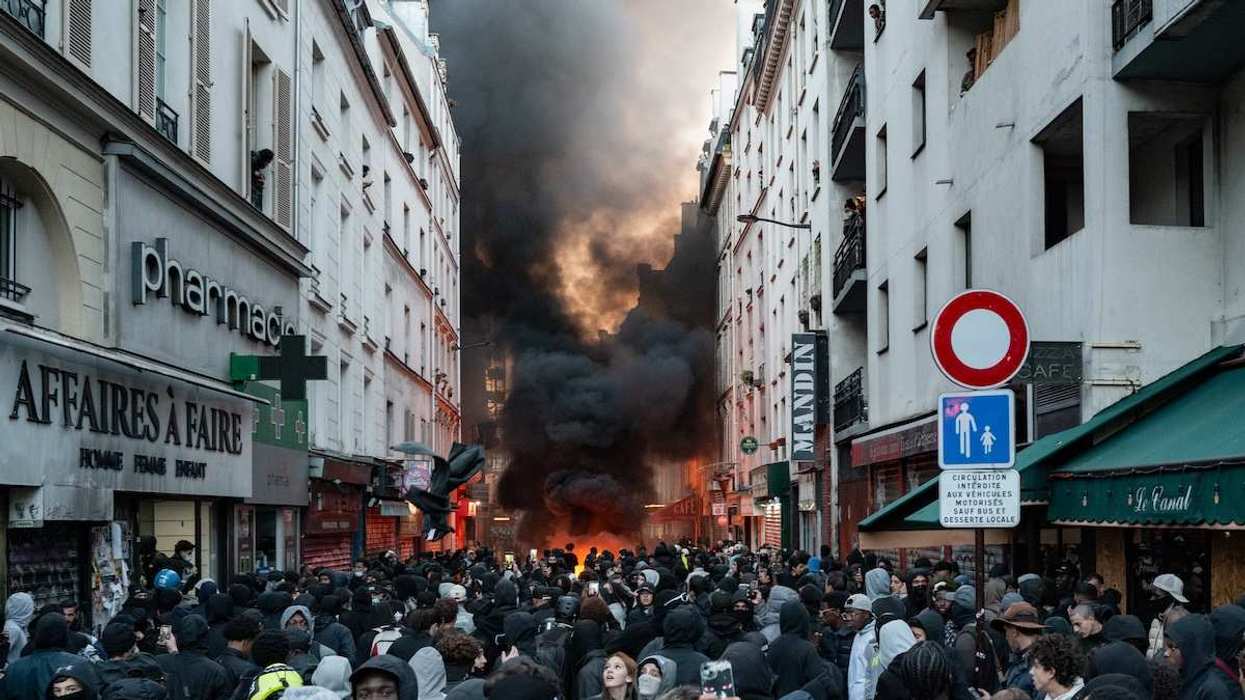
Six months after pro-democracy Hong Kong protesters began marching against an extradition law that would have allowed suspects to be tried in mainland courts, things in the semi-autonomous territory feel on the brink. The question is, the brink of what?
Rather than a sudden break that resolves the crisis one way or another – either a government capitulation or crackdown by Beijing – Hong Kong may instead be facing a prolonged, violent, and costly stalemate. Here's why:
The protests have taken on a life of their own. The Beijing-backed chief executive of Hong Kong, Carrie Lam, has already scrapped the extradition bill that sparked the protests back in March. The pro-democracy activists have made other demands, including the right to democratically elect Hong Kong's leaders, but with protesters and police locked in a deepening cycle of retribution against each other's latest actions, there's little Lam can offer to defuse tensions short of full capitulation and democratic reforms. And her masters in Beijing certainly won't allow that: it would send a message that protests, particularly in territories beyond the mainland, can work against the government.
But Beijing is also wary of intervening directly: Sending in troops to clear the streets would further inflame the popular backlash against Beijing's control over the former British territory. A crackdown could exact a steep financial toll by causing the US to cancel its tentative trade deal with China or slap damaging sanctions on Chinese firms. It could also spark a mass exodus of foreign workers, firms, and capital from Hong Kong which is a major financial hub for China and for Asia more broadly. For these reasons, barring a major loss of life or a total collapse of public order, Chinese president Xi Jinping will try hard to stay on the sidelines, lending less obvious support to Lam and her police force behind the scenes.
So where does that leave Hong Kong? Choking on tear gas for the foreseeable future, as police and protesters continue their confrontation with no clear path to a resolution. The basic problem is that each side feels it can wait out the other, but both are fearful of a huge escalation.
That deadlock might not exact as immediate a financial and human toll as a full-fledged crackdown. But Hong Kong's economic vitality will slowly seep away as businesses and expats move their money to other, more stable cities that offer access to the mainland and wider Asia.