Every January, Eurasia Group, our parent company, produces a report with its forecast for the Top 10 Risks for the world in the year ahead. Its authors are EG President Ian Bremmer and EG Chairman Cliff Kupchan.
Here are brief summaries of the most important risks that will preoccupy world leaders, business decision-makers, and the rest of us in 2025, according to Bremmer and Kupchan. You can read the full report here.
1. The G-Zero wins
A G-Zero world is an era when no one power or group of powers is both willing and able to drive a global agenda and maintain international order. We’ve been living with this lack of international leadership for nearly a decade now. But in 2025, the problem will get a lot worse.
Bremmer and Kupchan argue that we should expect new and expanding power vacuums, emboldened rogue actors, and a heightened risk of dangerous accidents, miscalculations, and conflict. The risk of a geopolitical crisis, they warn, “is higher than at any point in our lifetimes.”
Russia and China remain challengers to the Western-led security order, though in very different ways. Rising inequality, shifting demographics, and warp-speed technological change have persuaded a growing number of citizens in advanced industrial democracies that “globalism” hasn’t worked in their favor. And the world’s military superpower will again be led by the only post-World War II president who rejects the assumption that a US global leadership role serves the American people.
Bremmer and Kupchan detail three ways out of what they call a “geopolitical recession.” One, reform existing institutions like the UN, IMF, and others to operate more effectively and command broad legitimacy. Two, build replacement institutions that better reflect the underlying balance of power. Three, impose a new set of rules by force. Different actors are pursuing all three of these strategies. But in 2025, it’s the third option where challengers to the system are devoting their attention, time, and resources.
This Top Risk is not a single event, the authors suggest. It’s the cumulative impact of the intensifying G-Zero leadership deficit and the deepening geopolitical recession on the breakdown of the global order. The result is a uniquely dangerous period of world history on par with the 1930s or the early Cold War.
And just when we were celebrating the end of 2024.
2. Rule of Don
Donald Trump’s second term will not be like his first, Bremmer and Kupchan predict. Emboldened by the scale of his 2024 election victory and the support of a unified Republican Party, Trump will enter office more experienced and better organized than in 2017. He will populate his administration with loyalists who now have a better understanding of how the federal government works. His consolidated control over Republicans in Congress, a 6-3 conservative majority on the Supreme Court, and a friendlier media environment will help him advance his agenda.
From this solid foundation, Trump will work to purge the federal bureaucracy of professional civil servants and replace them with political loyalists, particularly at the Justice Department and the FBI. This consolidation of power will “stretch the norms of Washington to their breaking point,” according to Bremmer and Kupchan. The erosion of independent checks on executive power and an active undermining of the rule of law, they argue, will leave more of US policy dependent on the arbitrary decisions and personal whims of one powerful man in Washington rather than on established and politically impartial legal principles.
Democracy itself, the report cautions, will not be threatened. The US isn’t Hungary. But Trump’s indifference, in some cases hostility, to longstanding American values will set dangerous new precedents in “political vandalism” for future presidents of both parties.
3. US-China breakdown
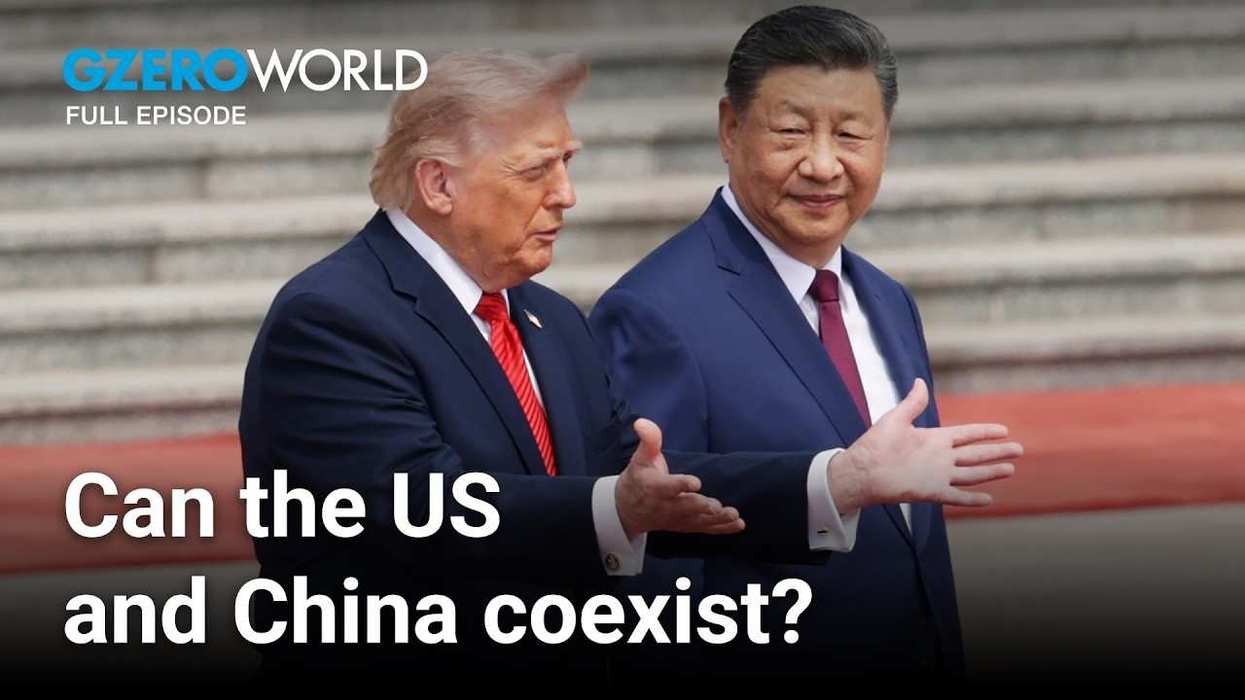
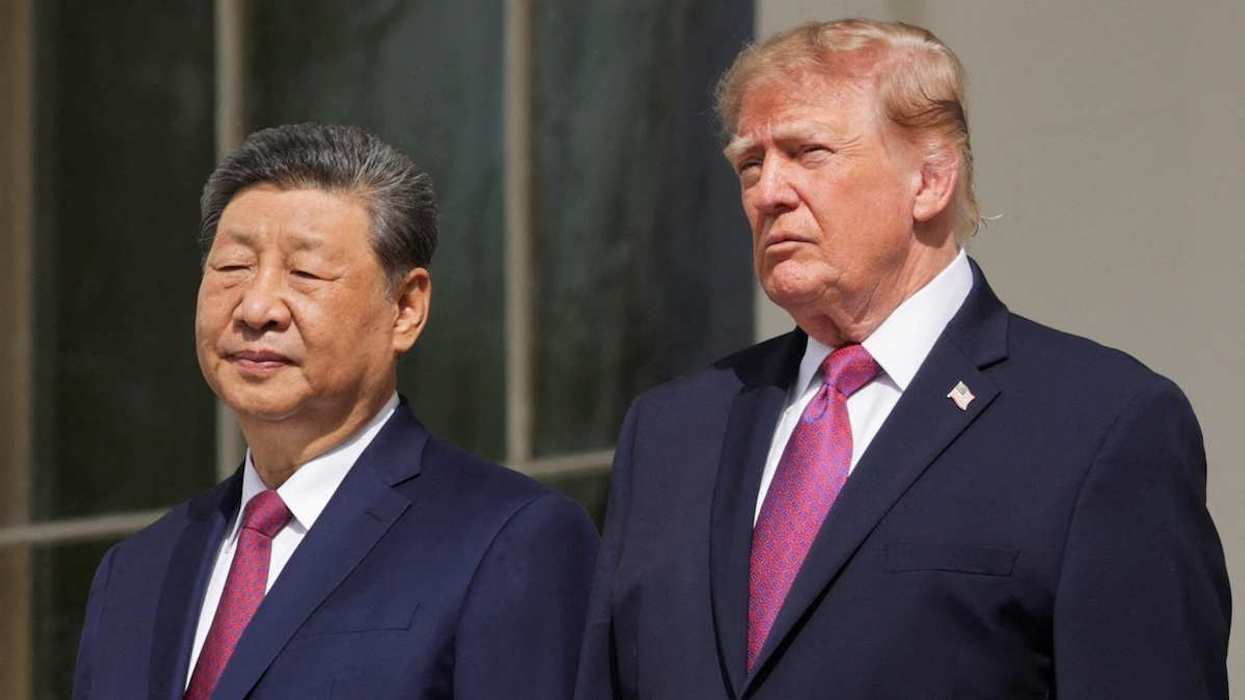
The détente established by Joe Biden and Xi Jinping at Woodside in November 2023 kept US-China tensions reasonably contained in 2024. But Trump’s return to office will unleash an “unmanaged decoupling in the world’s most important geopolitical relationship.” That, in turn, risks a major economic disruption and a broader crisis.
Trump will set new tariffs on Chinese goods to pressure Beijing for concessions on a host of issues, and China’s leaders, despite real economic weakness at home, will respond more forcefully to prove to both Trump and China’s people that they can and will fight back.
Tensions over Taiwan will likely rise, though a true crisis remains unlikely in 2025. But Trump administration actions targeting the Chinese Communist Party's legitimacy and visas for Chinese students will further inflame tensions.
Technology policy will be the true frontline in this conflict, Bremmer and Kupchan assert. China’s leaders insist that Washington wants to stunt China’s technological growth to protect the US position as world No. 1. Battles over trade and investment in everything from semiconductors to critical minerals will erupt in 2025.
4. Trumponomics
In January, Trump will inherit a robust US economy. Output has risen above pre-pandemic trends, unemployment remains near 4%, and an inflation rate nearing the Federal Reserve’s 2% target encourages investors to expect interest rate cuts. But Bremmer and Kupchan warn that Trump’s policies will bring higher inflation and lower growth in 2025.
First, Trump will significantly hike tariffs to correct “unfair” practices and reduce America’s trade deficit, which he views as intrinsically bad for the country. When US consumers face fewer affordable options on many goods, inflation will rise again, leaving interest rates higher and slowing growth. The dollar will strengthen, the report forecasts, making US exports less competitive. Some countries targeted by Trump will retaliate with measures that hurt American exporters and raise the risk of a disruptive global trade war.
Second, there is Trump’s immigration policy, which could deport up to 1 million people in 2025, Bremmer and Kupchan argue, and as many as five million over the course of his four-year term. Reduced illegal immigration and mass deportations will shrink the US workforce, drive up wages and consumer prices, and reduce the productive capacity of the economy, they insist, and legal immigration won’t fill the gap.
5. Russia still rogue
Russia is now the world’s leading rogue power by a large margin, the report’s authors argue, and Vladimir Putin will pursue more policies that undermine the US-led global order, despite a likely ceasefire in Ukraine. Russia will take hostile action against EU countries with cyber, sabotage, and other “asymmetric attacks,” and will build on its strategic military partnership with Iran and North Korea in 2025.
Donald Trump will likely achieve the ceasefire in Ukraine he has promised, and Ukraine’s President Volodymyr Zelensky needs a halt to a war his country is slowly losing. Russia is advancing on the battlefield, but 600,000 Russian casualties and three years of sanctions give Putin good reason to cut a ceasefire deal with Trump. The agreement's terms, Bremmer and Kupchan predict, will freeze forces in place and leave Russia in de facto control of conquered territory. Both sides will rearm, and sporadic fighting will continue along the line of control, the report forecasts. The fragile ceasefire will probably continue through 2025, “but not much longer.”
Yet, the ceasefire itself will create new problems beyond Ukraine. The Nordics, the Baltic countries, and Poland will support a Ukrainian military buildup during the ceasefire. France, Germany, Italy, and others will likely provide security guarantees to Ukraine and bolster Ukrainian and EU defenses. EU sanctions on Russia will remain in place, giving Putin more reason to interfere in their domestic politics, just as they used cyber and other tools to interfere in Romania’s election in November 2024 and in the US too, according to US officials. Bremmer and Kupchan predict Putin will continue attempts at sabotage and even assassination in many Western countries, and continue to use Telegram to instill pro-Kremlin views in citizens of European countries.
NATO Secretary General Mark Rutte said in December that Moscow was “preparing for long-term confrontation, with Ukraine and with us.” Russia will do more than any other country to subvert the global order in 2025.
For the rest of the Top Risks 2025, read the full report here.
Disclaimer: Willis Sparks has contributed to these Top Risks reports for the past 20 years.