By all accounts, the 47th president of the United States will have plenty on the domestic to-do list once they assume office on Jan. 20, 2025. The US continues to navigate a post-COVID hangover with inflation hovering higher than before the pandemic and a long-expected interest rate reduction remaining just beyond reach.
In the latest indicator of economic health, the US Bureau of Labor Statistics revised downward its estimate of jobs created for the year ending in March 2024 to the tune of 818,000. These numbers matter to US voters, who are feeling it in their pocketbooks. Measures of economic confidence have fallen through 2024, even as inflation, pricing pressures, and the economy continue to be top issues for voters.
Will isolationism win?
Yet, if the last four years have taught us anything, it is that developments abroad and the demands on US foreign policy are never dormant. Given the stakes, global leadership has been tracking former President Donald Trump’s words closely over the last year. Now, with Vice President Kamala Harris’ historically late entrance into the race, the world is left wondering if isolationism will win in November, or if something else (but what is it?) may drive the US approach to the world over the next four years.
Trump has never been one to shy away from the headlines. Earlier this year, he sent ripples across Europe when he claimed he would encourage Russia to do “whatever the hell they want” to any NATO member not paying their fair share on defense. Given prior reports that Trump contemplated pulling the US from NATO during his first administration, this warning focused the minds and dominated conversations across European security circles. His VP running-mate selection of Sen. JD Vance, an opponent of US security guarantees, has more recently exacerbated those concerns.
From promises to ending the war in Ukraine upon taking office by negotiating on favorable terms with Russia to a policy platform that includes “building a great iron dome missile defense shield over our entire country,” Trump’s America First brand of foreign policy has become synonymous with a go-it-alone, pull-up-the-drawbridge isolationism.
With unresolved conflicts remaining (Ukraine, Israel, Sudan) and potential stressors lurking (South China Sea, the wider Middle East region, the Arctic), many allies and adversaries of the US await a Trump 2.0 with apprehension. President Joe Biden’s exit and Harris’ stepping into the 2024 campaign have represented a potential reprieve for these anxieties.
Glimpses of Harris’ vision begin to seep through
Despite plenty of reporting on the alternative, relatively little is known about what a Harris foreign policy agenda would look like. In her nomination acceptance speech at last month’s Democratic National Convention, Harris spoke at length about the US’ global role and the need to be “steadfast in advancing our security and values abroad.”
She touched on the range of ongoing territorial tensions – from China and Russia-Ukraine to the Middle East – as well as borderless challenges like artificial intelligence and space. In a particularly insightful, behind-the-scenes moment, Harris described meeting with President Volodymyr Zelensky five days before Russia attacked Ukraine to warn him of the planned invasion.
While conventional wisdom suggests that Harris represents a policy continuity story for Democrats, there are early indications that as president she would chart her own course. In her DNC speech, Harris sought to associate herself with the Biden administration’s perceived successes (the global coalition for Ukraine), distance herself from its missteps (the Afghanistan withdrawal), and introduce daylight where she has apparent conviction. The clearest evidence of that daylight thus far has been on Israel, where Harris has projected a sense that she holds multiple difficult truths in parallel. In her first sit-down interview since accepting the nomination, Harris revealed little more of her plan for resolving the conflict, saying only that a deal must get done.
Perhaps the biggest indicator to follow is personal, or personnel. It has long been believed that current national security advisor Jake Sullivan would not stay on through a second Biden administration. With Harris being guided by a separate set of policy strategists, including her national security advisor Philip Gordon, the major architects of Biden’s foreign policy – Biden himself, Sullivan, Sec. of State Antony Blinken and Sec. of Defense Lloyd Austin – may all be out of the Situation Room.
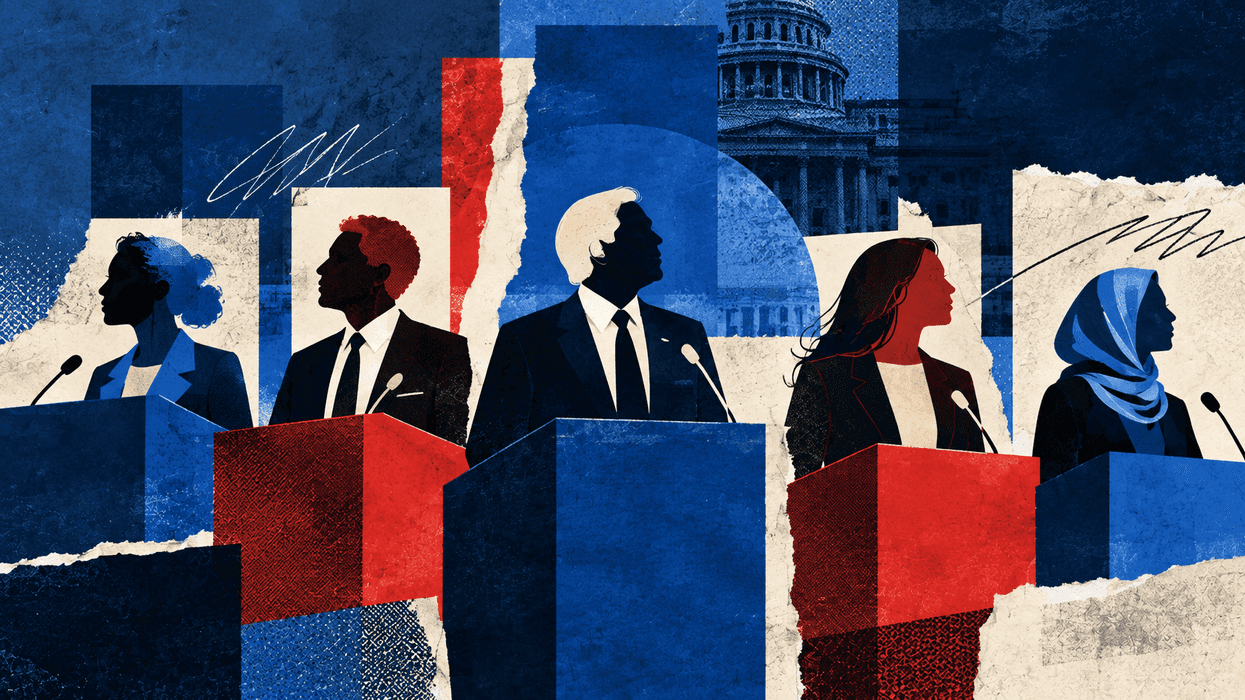
Greater understanding of both Harris’ foreign and domestic policy priorities will be filled in over the coming weeks, including with the first Harris-Trump debate currently set for Sept. 10. Given Trump’s warm embrace of isolationism, there is a growing sense abroad that only a Harris presidency stands between the world as it is and a very different – and more precarious – geopolitical trajectory.
Lindsay Newman is a geopolitical risk expert and columnist for GZERO.