Perhaps you have heard of the city of Omelas. It is a seaside paradise. Everyone there lives in bliss. There are churches but no priests. Sex and beer are readily available but consumed only in moderation. There are carnivals and horse races. Beautiful children play flutes in the streets.
But Omelas, the creation of science fiction writer Ursula Le Guin, has an open secret: There is a dungeon in one of the houses, and inside it is a starving, abused child who lives in its own excrement. Everyone in Omelas knows about the child, who will never be freed from captivity. The unusual, utopian happiness of Omelas, we learn, depends entirely on the misery of this child.
That’s not the end of the tale of Omelas, which I’ll return to later. But the story's point is that it asks us to think about the prices we’re willing to pay for the kinds of worlds we want. And that’s why it’s a story that, this week at least, has a lot to do with the internet and free speech.
On Saturday, French police arrested Pavel Durov, the Russian-born CEO of Telegram, at an airport near Paris.
Telegram is a Wild West sort of messaging platform, known for lax moderation, shady characters, and an openness to dissidents from authoritarian societies. It’s where close to one billion people can go to chat with family in Belarus, hang out with Hamas, buy weapons, plot Vladimir Putin’s downfall, or watch videos of Chechen warlord Ramzan Kadyrov shooting machine guns at various rocks and trees.
After holding Durov for three days, a French court charged him on Wednesday with a six-count rap sheet and released him on $6 million bail. French authorities say Durov refused to cooperate with investigations of groups that were using Telegram to violate European laws: money laundering, trafficking, and child sexual abuse offenses. Specifically, they say, Telegram refused to honor legally obtained warrants.
A chorus of free speech advocates has rushed to his defense. Chief among them is Elon Musk, who responded to Durov’s arrest by suggesting that, within a decade, Europeans will be executed for merely liking the wrong memes. Musk himself is in Brussels’ crosshairs over whether X moderates content in line with (potentially subjective) hate speech laws.
Somewhat less convincingly, the Kremlin – the seat of power in a country where critics of the government often wind up in jail, in exile, or in a pine box – raised the alarm about Durov’s arrest, citing it as an assault on freedom of speech.
I have no way of knowing whether the charges against Durov have merit. That will be up to the French courts to prove. And it is doubtless true that Telegram provides a real free speech space in some truly rotten authoritarian societies (I won’t believe the rumors of Durov’s collusion with the Kremlin until they are backed by something more than the accident of his birthplace.)
But based on what we do know so far, the free speech defense of Durov comes from a real-world kind of Omelas.
Even the most ferocious free speech advocates understand that there are reasonable limitations. Musk himself has said X will take down any content that is “illegal.”
Maybe some laws are faulty or stupid. Perhaps hate speech restrictions really are too subjective in Europe. But if you live in a world where the value of free speech on a platform like Telegram is so high that it should be functionally immune from laws that govern, say, child abuse, then you are picking a certain kind of Omelas that, as it happens, looks very similar to Le Guin’s. A child may pay the price for the utopia that you want.
But at the same time, there’s another Omelas to consider.
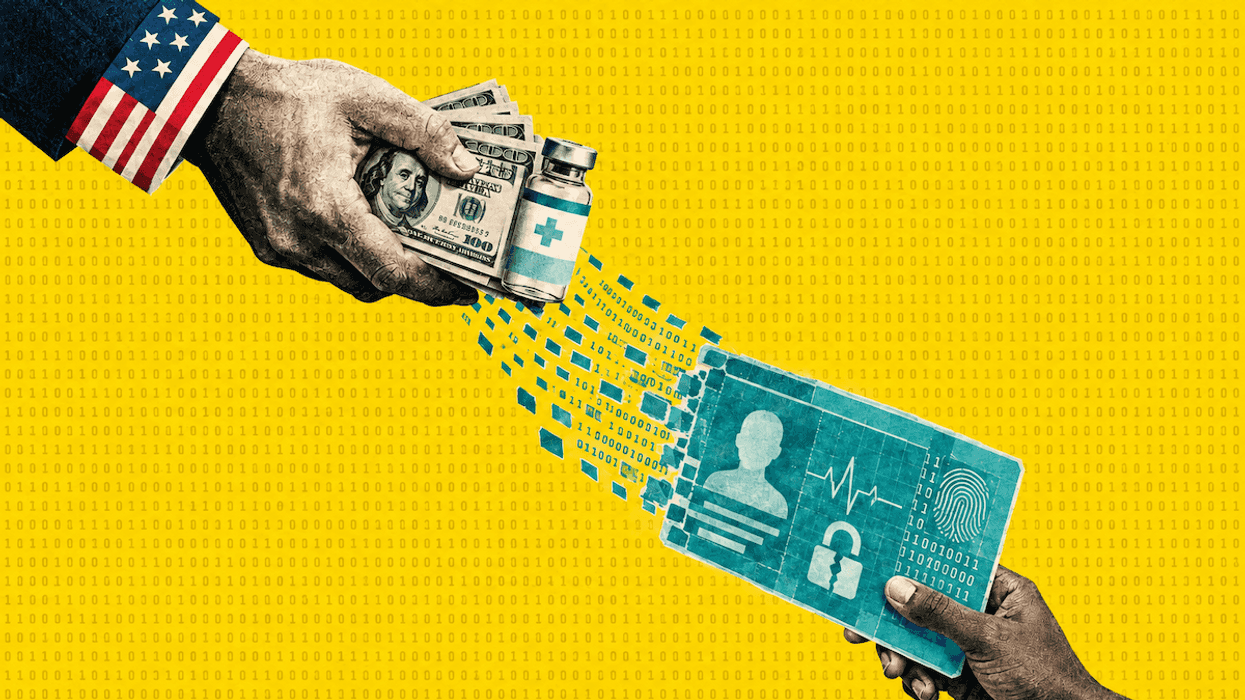
On Tuesday, Mark Zuckerberg sent a letter to Congress in which he admitted that during the pandemic, he had bowed to pressure from the Biden administration to suppress certain voices who dissented from the official COVID messaging.
Zuck said he regretted doing so – the sense being that the banned content wasn’t, in hindsight, really worth banning – and that his company would speak out “more forcefully” against government pressure next time.
Just to reiterate what he says happened: The head of the world’s most powerful government got the head of the world’s most powerful social media company to suppress certain voices that, in hindsight, shouldn’t have been suppressed. You do not have to be part of the Free Speech Absolutist Club™ to be alarmed by that.
It’s fair to say, look, we didn’t know then what we later learned about a whole range of pandemic policies on masking, lockdowns, school closures, vaccine efficacy, and so on. And there were plenty of absolutely psychotic and dangerous ideas floating around, to be sure.
What’s more, there are plenty of real problems with social media, hate, and violence – the velocity of bad or destructive information is immense, and the profit incentives behind echo-chambering turn the marketplace of ideas into something more like a food court of unchecked grievances.
But in a world where the only way we know how to find the best answers is to inquire and critique, governments calling audibles on what social media sites can and can’t post is a road to a dark place. It’s another kind of Omelas – a utopia of officially sanitized “truths,” where a person with a different idea about what’s happening may find themselves locked away.
At the end of Le Guin’s story, by the way, something curious happens. A small number of people make a dangerous choice. Rather than live in a society where utopia is built on a singular misery, they simply leave.
Unfortunately, we don’t have this option. We are stuck here.
So what’s the right balance between speech and security that won’t leave anyone in a dungeon?