Skip to content
Search

Latest Stories

Analysis

South Africa still struggles with inequality 30 years after apartheid

​Members of the armed wing of Nelson Mandela's African National Congress line up waiting to vote in a military base north of Pretoria, on April 26, 1994.

Members of the armed wing of Nelson Mandela's African National Congress line up waiting to vote in a military base north of Pretoria, on April 26, 1994.

REUTERS/Corinne Dufka
Make us preferred on Google

Thirty years ago this weekend, South Africa ushered in its first democratic government.

On April 27, 1994, Black South Africans went to the polls, marking an end to years of white minority rule and the institutionalized racial segregation known as apartheid.

Freedom Day, as that day is commemorated, gave rise to South Africa’s first Black president, Nelson Mandela. The internal protests and violence over apartheid, as well as international sanctions, were relegated to the annals of history, ushering in a new era of promise for racial equality and prosperity.


But three decades later, the “rainbow nation” still faces many challenges, with racial equality and economic development remaining out of reach.

The country struggles with some of the highest inequality levels of any nation worldwide, says Ziyanda Stuurman, a senior analyst with Eurasia Group. “Many young people, in particular, are unemployed and feel despondent about finding work,” she says.

Three main factors have led to persistent inequality. First, South Africa’s unemployment rate is a whopping 32% – the highest globally. Those with secure jobs tend to be non-unionized and, as a result, see lower earnings. And, finally, workers who do well tend to make very high salaries compared to the lower-wage earners, bolstering the poverty gap.

“Due to a lack of economic opportunities and financial inclusion for the majority of Black South Africans,” says Stuurman, “many have not been able to make the most of the expanded political freedoms and opportunities in democratic-era South Africa.”

Since 1994, Mandela’s African National Congress party has been at the helm, but the lack of economic growth and rising inequality may be driving a change of heart among the electorate.

Next month, on May 29, South Africa heads to the polls again for its seventh general election since the end of apartheid. For the first time, polls suggest that the ANC may fail to win 50% of the national vote – which could mean tricky coalition talks or even its exit from power.

Stay tuned to GZERO. We’ll talk more with Stuurman in the coming weeks to gain insights about South Africa’s big election.


More For You

Saudi Arabia's MBS shaking hands with the UAE President Mohammed bin Zayed Al Nahyan

Saudi Crown Prince Mohammed bin Salman receives UAE President Mohammed bin Zayed Al Nahyan, in Saudi Arabia, on September 3, 2025.

IMAGO/APAimages via Reuters Connect
For many years, mutual concern about Iran helped to paper over deeper disagreements between Saudi Arabia and the UAE. The two powerful and ambitious Sunni Gulf monarchies have been on opposite sides of the civil wars in both Sudan and Yemen, as well as in fierce competition for regional dominance in AI. But two months into the so-far unresolved [...]
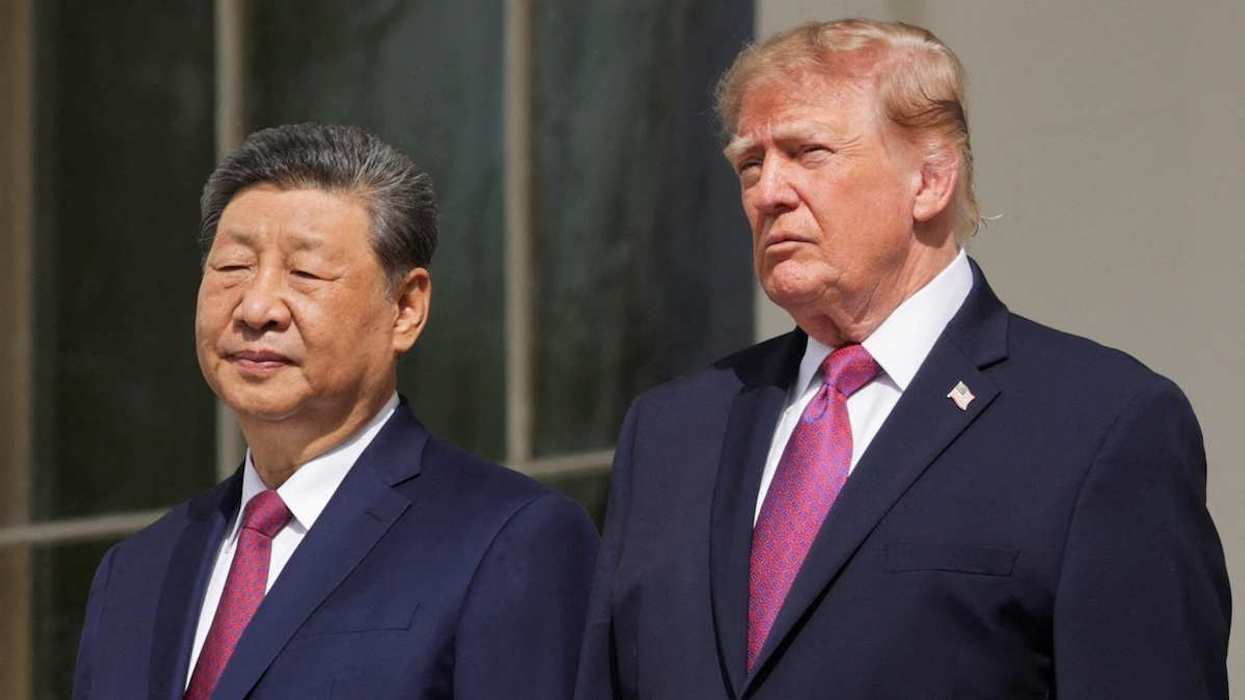
​US President Donald Trump arrives at Beijing Capital International Airport in Beijing, China, on May 13, 2026.

US President Donald Trump participates in an arrival ceremony at Beijing Capital International Airport during his visit to the country, in Beijing, China, on May 13, 2026.

REUTERS/Evan Vucci
President Donald Trump stepped off Air Force One after landing in Beijing today, and the Chinese rolled out the red carpet: military honor guard, three hundred students waving American and Chinese flags, state banquet on the schedule. Trump, who flew in with a delegation of top cabinet officials and some of the biggest names in American business, [...]
Argentina's President Javier Milei gestures in response to comments from deputies with Secretary of the Presidency Karina Milei, Minister of Human Capital Sandra Petovello, and Minister of Economy Luis Caputo.

The President of Argentina, Javier Milei (bottom left), gestures in response to comments from deputies, alongside Secretary of the Presidency Karina Milei (bottom right), Minister of Human Capital Sandra Petovello (top left), and Minister of Economy Luis Caputo (top right), during the Chief of Cabinet's management report session in Congress. (in Buenos Aires, Argentina on April 29, 2026).

Silvana Safenreiter/NurPhoto
All across Latin America, right-wing leaders have been consolidating their power.In Argentina, Javier Milei’s La Libertad Avanza had a superb midterm election night last October, allowing the president to pass major labor reforms in March. Ecuador’s Daniel Noboa eased to reelection last year by a handsome margin. El Salvador’s Nayib Bukele no [...]
​French President Emmanuel Macron and Kenya's President William Ruto at the Taifa Hall of the University of Nairobi, in Nairobi, Kenya, on May 11, 2026.

French President Emmanuel Macron and Kenya's President William Ruto shake hands during the "Africa Forward Summit 2026" at the Taifa Hall of the University of Nairobi, in Nairobi, Kenya, on May 11, 2026.

REUTERS/Monicah Mwangi
When French President Emmanuel Macron took to the stage at the Africa Forward summit yesterday, the audience may not have expected a scolding.“Hey! Hey! Hey! I’m sorry guys, but it’s impossible to … have people … coming here making a speech with such a noise,” he said. “This is a total lack of respect.”Macron’s harsh words directed at the crowd, [...]