VIDEOSGZERO World with Ian BremmerQuick TakePUPPET REGIMEIan ExplainsGZERO ReportsAsk IanGlobal Stage
Site Navigation
Search
Human content,
AI powered search.
Latest Stories
Start your day right!
Get latest updates and insights delivered to your inbox.
Quick Take
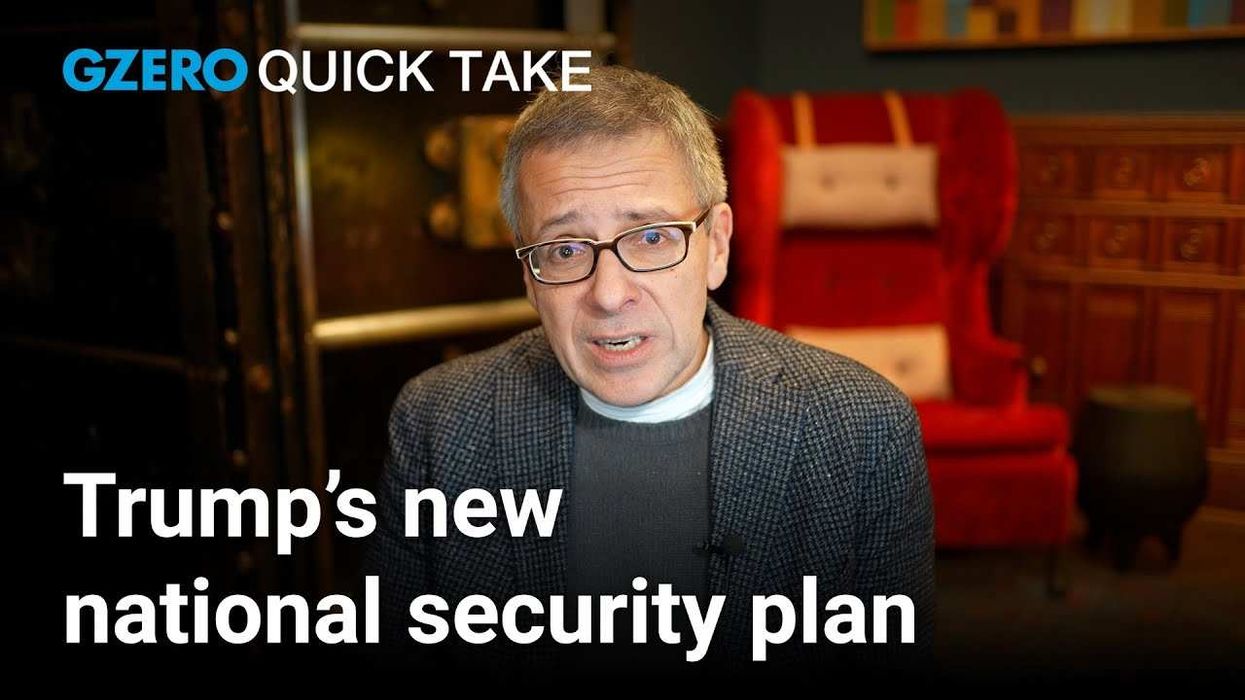
Ian Bremmer, political scientist and president of Eurasia Group and GZERO Media, shares insights on global political events.
Presented by

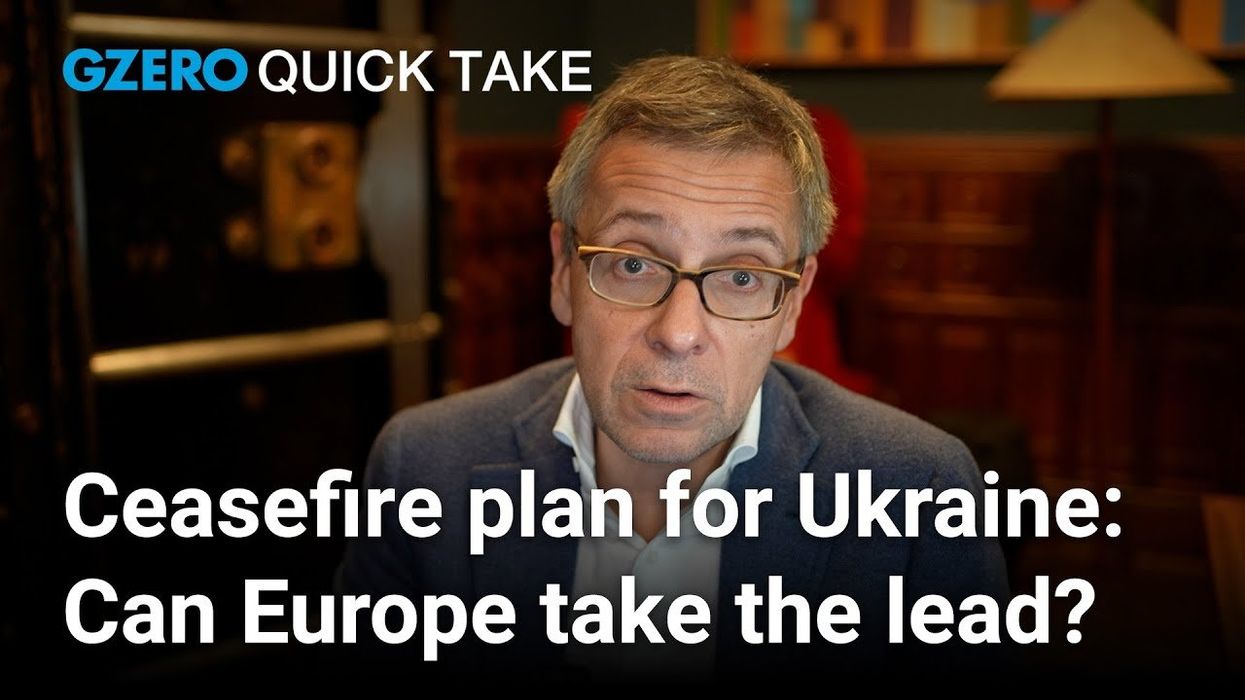
Ian Bremmer's Quick Take: A Quick Take to kick off your week. The big news, everything around Russia, Ukraine, the United States, and Europe. The Europeans now with the ball in their court, a big summit, a coalition of the willing in London this week. And Zelensky very warmly embraced, quite literally, by UK Prime Minister Keir Starmer and by everyone in attendance. It was very different visuals, very different takeaways than the meeting between Zelensky, Trump, and Vance in the Oval Office, which couldn't have gone much worse if everyone tried.
Where we are right now, certainly this coalition of the willing had everyone that mattered in Europe. I mean, not the countries, not the leaders that have been skeptical, that have been more aligned with the Russians, or more, say, in a minimal position, like the Hungarians, like the Slovaks, but everybody else was there. So, you've got the Brits, you've got the French, you've got the Italians, and the Germans. You also have EU leadership, Ursula von der Leyen, Kaja Kallas, and also you have all of the frontline leaders that have the most at stake from a national security perspective: the Nordics, the Balts, the Poles. You even have Canada, Prime Minister Justin Trudeau, who doesn't spend very much on defense, but nonetheless going there to show he's aligned with the Ukrainians, whether or not the Americans, who the Canadians rely on completely economically, are not.
Does it matter? Does it matter? If you're asking does it matter in the sense that can the Europeans go it alone without the Americans? I'm still skeptical, though they're putting a lot more on the table now than they were a week ago, and they should have been doing that years ago. And that's going to remain a very big question, and I'm probably going to remain pretty skeptical. But very interesting that the Europeans do now have a level of ownership. Remember that Trump, both when he was running for president and once he became president, said that the United States was going to end this war, that he, Trump, would be responsible for the ceasefire, that he's going to do it himself with the Ukrainians, with the Russians, he could do it in 24 hours. That's obviously an exaggeration, but nonetheless, even as he realized it was going to take longer, he was the dominant actor. That's now changed. Keir Starmer has now told Trump that the Europeans, this coalition of the willing, is coming up with a ceasefire plan, and they are going to present it to the United States, and Trump is expecting it.
So for now, the Europeans don't just have a seat at the table, but they actually are in the driver's seat, in terms of the ceasefire on the back of the Ukrainian-US relationship having functionally blown up, and the Americans saying they're not going to do anything particularly more for the Ukrainians. They're not even prepared to sign the critical minerals deal that Zelensky now says he is prepared to sign. But if the Europeans are the ones that are going to be coughing up the money and providing the troops, then certainly they're the ones that are responsible for the terms of the ceasefire.
Now, that's interesting. And we're hearing certainly that there's going to be a lot more engagement, that potentially Starmer, Macron, and Zelensky will all three come together to the White House to meet Trump maybe later this week, maybe next week. Certainly Zelensky should not be attending meetings like that by himself anymore, I think he understands that, the Europeans understand that as well.
What they should do now, the Europeans, is present a UN Security Council resolution with the plan once Trump has seen it and is prepared to move forward. A simple thing, deciding nothing, just saying that the Security Council supports the path to peace as outlined from the UK summit. This will force Russian amendments, which the UK and France will veto, and then Russia will be forced to veto the resolution. And that's useful in a couple of different ways. First of all, it costs the French and the UK nothing, and they win a fair amount. The news will be all about how their Russian veto was used for the first time since 1989, and it places the Americans on the same side as the Europeans on the ceasefire issue, which is what the Europeans, the Ukrainians desperately need, and frankly, the Democrats and the Republicans in Congress as well.
The UK and France can then show Trump that they indeed don't need to be invited to the table, because they're at the table, they have the ceasefire plan and they're the ones that are driving it. Now, having a ceasefire plan is different from being able to implement the ceasefire and support the Ukrainians, and that is where there's still an awful lot that still needs to be accomplished.
Specifically the one piece of good news, surprising news, is that the Germans are now talking about 800 billion Euro package, outside of their debt break, that would support defense spending and infrastructure spending. They weren't talking about anything remotely like this even a few days ago. It would have to be done well before the end of the month because when the new chancellor comes in, then you are going to have the far left and the far right with the ability to block any constitutional majority. They don't have that capacity now, which means the debt break can be overridden by a vote in the Bundestag. That's really important, and would lead to German leadership in helping to finance this war.
You also have the 300 billion Euros that are frozen, the Russian sovereign assets that are mostly in the hands of the Europeans, the Belgians, as it turns out, and some others as opposed to the Americans, the Japanese. So, that could also be used to support Ukraine to buy more weapons, also to build up Ukraine's military industrial complex. In other words, while this situation is difficult and urgent, I would not yet say that it has fallen apart for the Ukrainians or the Europeans. They are still, as it were, in the game.
Now, the big question overlooking all of this is the United States and Russia, because they still want to do a deal, and that deal is not mostly about Ukraine, that deal mostly is about rapprochement between the United States and Russia over the heads of their NATO allies. This is what Trump is interested in, this is what Putin is interested. And frankly, it's a little easier to do that deal if you don't have a ceasefire, because the Russians don't really want one, than it is to do that deal if a ceasefire is a part of it. That's what has to be watched very carefully because of course, Trump and Putin are talking about where they're going to meet in person, Saudi Arabia maybe in May, Trump would even be willing to go to Moscow. This could include things like the United States taking unilateral sanctions off of Russia while the Europeans would still have them on. Could lead to a lot of business, a much bigger critical minerals deal than the one that was going to be signed between the Americans and the Ukrainians, and now, at least, is off the table.
Also note that the US Defense Department has at least temporarily suspended offensive cyberattacks against the Russians, which is quite something, again, in the context of nothing having been agreed to between the Americans and the Russians, but clearly Trump much more willing to be on Putin's good side right now than he is with Zelensky. So ultimately, that is a very big challenge for the Europeans, but they will be in far better shape if they're able to move on the ceasefire in the near-term, which looks likely, and on support for Ukraine in the medium-term, which looks like more of a challenge.
So, that's it for now. I'll talk to you all real soon.
Keep reading...Show less
More from Quick Take
Zelensky, Trump, and NATO: A united front on Ukraine?
August 18, 2025
Trump and Putin to meet in Alaska to discuss Ukraine
August 11, 2025
US government rescinds West Point role for former cyber director
August 04, 2025
US-EU trade deal marks a win for Trump
July 28, 2025
The US, China, and the critical minerals question
July 21, 2025
Epstein conspiracies divide Trump's MAGA base
July 14, 2025
US-Brazil relations in crisis
July 10, 2025
Elon Musk vows to start a new political party
July 07, 2025
What Zohran Mamdani’s win really signals for US politics
June 30, 2025
Iran's retaliation shows strategic weakness
June 23, 2025
US enters war with Iran: What comes next?
June 22, 2025
Iran looks to negotiate ceasefire
June 16, 2025
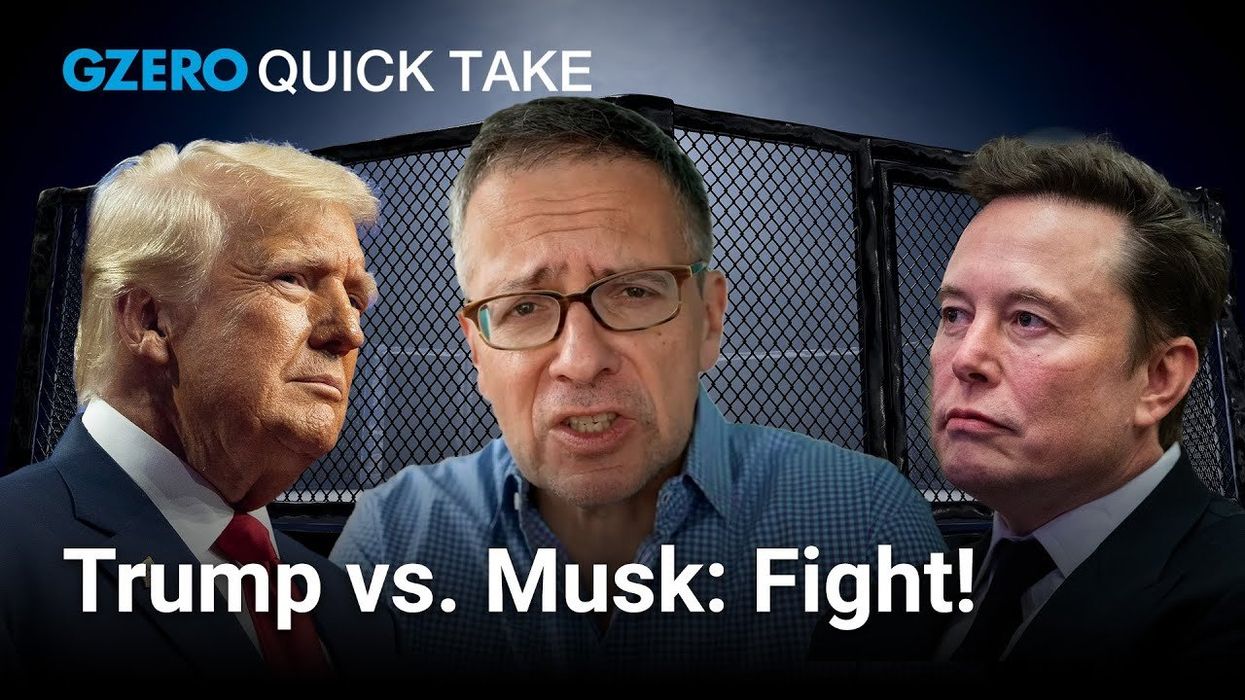
Elon vs. Trump: Billionaire fallout goes public
June 06, 2025
Elon Musk steps down from Trump administration
May 29, 2025
Trump's weekend of geopolitical success
May 12, 2025
Can Trump and Carney reset US-Canada relations?
May 07, 2025
Trump’s ‘less is more’ message is un-American
May 05, 2025
Ian Bremmer on Trump's first 100 days
April 28, 2025
Trump’s America: A kleptocracy but not a police state
April 23, 2025
Inside the Harvard-Trump showdown
April 21, 2025
Can the US win by undoing globalization?
April 14, 2025
Who benefits from Trump's tariff wall?
April 07, 2025
Trump's tariffs & the end of globalization
April 03, 2025
Leaked Signal chat shows Trump team's mindset
March 26, 2025
What Trump team's war plans leak revealed
March 25, 2025
Is Europe in trouble as the US pulls away?
March 24, 2025
Putin-Trump Ukraine call is a small win for both sides
March 18, 2025
What will Trump offer Putin in Ukraine ceasefire talks?
March 17, 2025
Ukraine ceasefire deal now awaits Putin's response
March 11, 2025
What Trump-Zelensky fallout means for Ukraine war
March 01, 2025
Why the US-Ukraine minerals deal changed
February 26, 2025
Germany's close election limits its ability to lead Europe
February 24, 2025
Ukraine hopes for Europe's help as US negotiates with Russia
February 18, 2025
JD Vance stuns Munich conference with critique on European democracy
February 14, 2025
Trump-Putin chat over Ukraine "deeply" worries Europe
February 13, 2025
What is Trump's Gaza playbook?
February 10, 2025
Why cutting USAID will hurt American foreign policy
February 05, 2025
Why is Trump starting a trade war with Canada?
February 02, 2025
How Trump's assertive foreign policy impacts international relations
January 27, 2025
Trump's Davos address sets up big shifts in US strategy
January 24, 2025
From Davos: How global leaders are grappling with Trump’s return
January 20, 2025
Ian Bremmer on the forces behind the geopolitical recession
January 17, 2025
What Greenlanders might want from a deal with Trump
January 13, 2025
New Year's Day terror attacks highlight America's divisions
January 03, 2025
GZERO Series

© 2025 GZERO Media. All Rights Reserved | A Eurasia Group company.
GZERO Daily: our free newsletter about global politics
Keep up with what’s going on around the world - and why it matters.