Why the IMF is cutting global growth forecast
At the 2026 World Bank/IMF Spring Meetings, Eurasia Group’s Rob Kahn joined GZERO’s Tony Maciulis to assess why the IMF has downgraded global growth to 3.1%.

At the 2026 World Bank/IMF Spring Meetings, Eurasia Group’s Rob Kahn joined GZERO’s Tony Maciulis to assess why the IMF has downgraded global growth to 3.1%.

As the US economy continues to defy expectations, Eurasia Group Managing Director of Global Macro Robert Kahn says the key question is whether a slowdown has been avoided or merely delayed. “The headline here is the impressive resilience of the US, maybe also the global economy over the last six months,” Kahn tells GZERO Media’s Tony Maciulis on the sidelines of the 2025 World Bank–IMF Annual Meetings.

“We’re heading toward a substantial U.S. recession,” said Robert Kahn, Eurasia Group’s Managing Director, Global Macro.. “We may even be in one now.” That notion challenges the official economic outlook released this week by the International Monetary Fund, which was more cautious in its assessment.

As the candidates make their final arguments in the 2024 US Presidential Election, the economy is front and center on the minds of voters. Despite all signs indicating stable and above-trend growth in the US, many Americans feel uncertain about how well the economy is doing, said Robert Kahn, Managing Director of Global Macro-Geoeconomics at Eurasia Group.

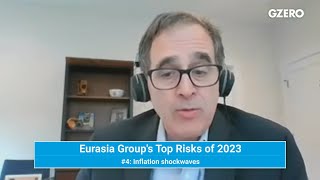
Inflation shockwaves is Eurasia Group's top geopolitical risk No. 4 for 2023. But who is most vulnerable to the effects of rising interest rates and a looming global recession? Emerging markets. Why? For Rob Kahn, managing director for geo-economics at Eurasia Group, these countries are in deep trouble because they have higher debt and more subject to sudden stops of capital flows that'll make it harder for them to pay for stuff. Not to mention that the pandemic has killed any fiscal monetary policy space they had before COVID.

Dive deeper with our top stories and analysis.
Privacy notice: By signing up, I acknowledge that I have read, understand, and consent to the Privacy Policy and Terms of Use, including the transfer of my personal data to the United States from my country of residence (if different).
Listen: As record inflation meets rising interest rates, we’re examining the role of the US Federal Reserve in protecting the economy from recession in the coming months.15 years ago the world faced the largest financial crisis since the Great Depression, brought on by a perfect storm of risky lending, mortgage defaults, and failures of financial institutions. In January 2008, the Fed made significant cuts to interest rates to stimulate the economy. Those rates have stayed historically low since then, but that’s rapidly changing.
Listen: Last year the US economy grew 5.7%, the biggest growth rate in decades, yet at the beginning of 2022 fewer than 1 in 5 Americans thought it was strong. And as the world confronts the converging crises of pandemic and war in Ukraine, inflation and skyrocketing prices are further contributing to feelings of financial insecurity.
When the COVID-19 pandemic hit in full force in the US, the government had to act quickly to keep the economy afloat. One major thing that the Federal Reserve did was lower interest rates to zero. That helped money keep flowing and borrowing rates low on things like mortgages, cars, and other things Americans needed. The danger in juicing the economy this way, however, is that inflation could go up, and higher consumer prices could end up hurting our wallets. How does the government strike the right balance? In this episode, we'll hear more about the US recovery, the international picture, and what could come next.