Skip to content
Search

Latest Stories

News

What We’re Watching: Mexico’s Border Patrols, Ukrainian Outrage

What We’re Watching: Mexico’s Border Patrols, Ukrainian Outrage
Make us preferred on Google

Mexico's Army Stretched Thin — Mexico has deployed 15,000 troops to its border with the United States to reduce the flow of migrants seeking undocumented entry into El Norte. It's an unprecedented deployment, but the country is scrambling to reduce the flow of northbound migrants as part of a deal reached with the Trump administration earlier this month to avoid US import tariffs on Mexican goods. The move comes atop 9,000 troops already deployed to Mexico's southern border to prevent Central Americans from entering Mexico. We are watching to see how a cash-strapped Mexican government will balance the twin tasks of keeping Trump happy with border security, while addressing huge domestic security problems at the same time. There are only so many troops available.

The Defense of Human Rights in Europe — The Council of Europe, a 47-member human rights institution, has reinstated Russia's voting rights several years after revoking them over the Kremlin's annexation of Crimea and support for separatists in Eastern Ukraine. Not surprisingly, Ukraine is incensed and other Western European governments see the scot-free readmission as a blot on the integrity of an institution that defends civil liberties for more than 800 million people. But supporters of the move say it's better to give human rights activists struggling within Russia some recourse to the Council's legal protections than to risk stranding them if Russia leaves the body all together. Most Russians polled agree. And from a purely pecuniary perspective, a reinstated Russia will start paying its 10 percent share of the Council's annual budget again.


What We're Ignoring:

Word Bans in Pakistan — The deputy speaker of Pakistan's National Assembly on Sunday banned lawmakers from using the phrase "selected Prime Minister," a favorite of opposition politicians keen to suggest that Prime Minister Imran Khan, who is close to the military, was chosen by the country's generals rather than by the people in last year's election. As you might expect in Pakistan's spirited legislature, the move backfired: lawmakers are just using synonyms like "handpicked" and now the legally questionable ban itself is a focus of opposition ire, drawing far more attention to the original phrase. We are ignoring this unless they try to ban the term "Streisand Effect" next.

More For You

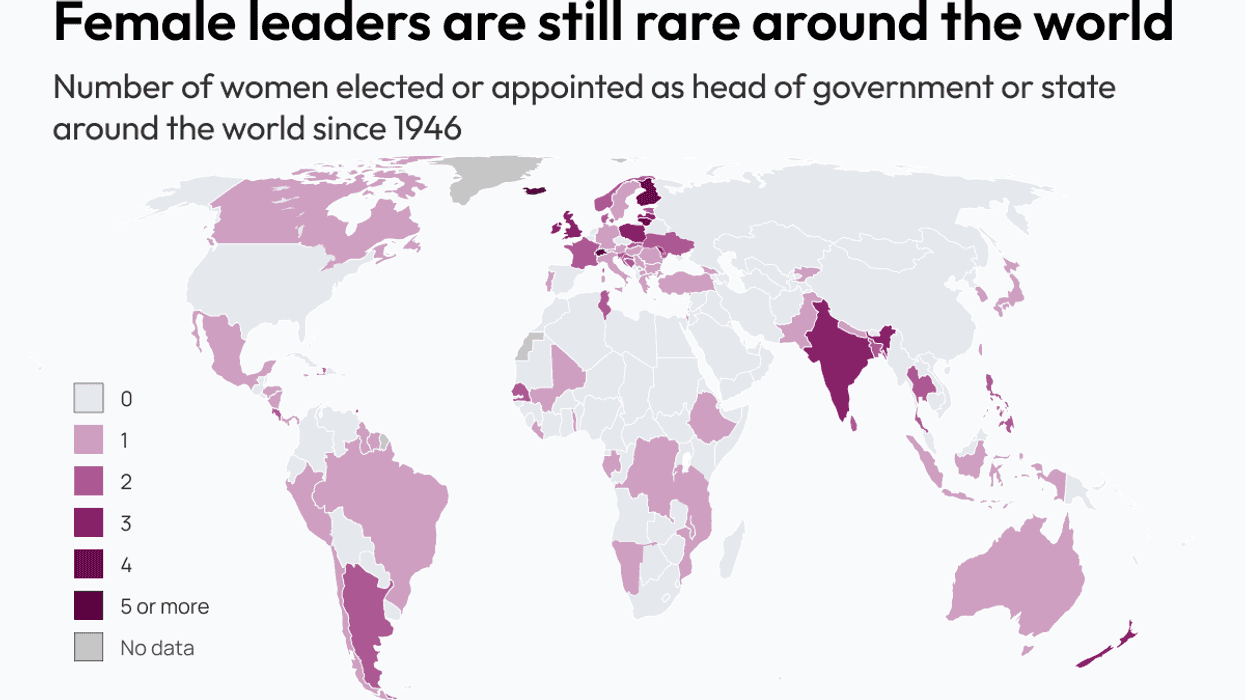
Female leaders are still rare around the world
Eileen Zhang
Several elections next year could bring historic firsts for women in politics. In France, Marine Le Pen leads the polls in the country’s presidential race, while Ilse Aigner is the leading contender to become Germany’s next president. Meanwhile, attention is already turning to the 2028 US presidential race, and former Vice President Kamala Harris [...]
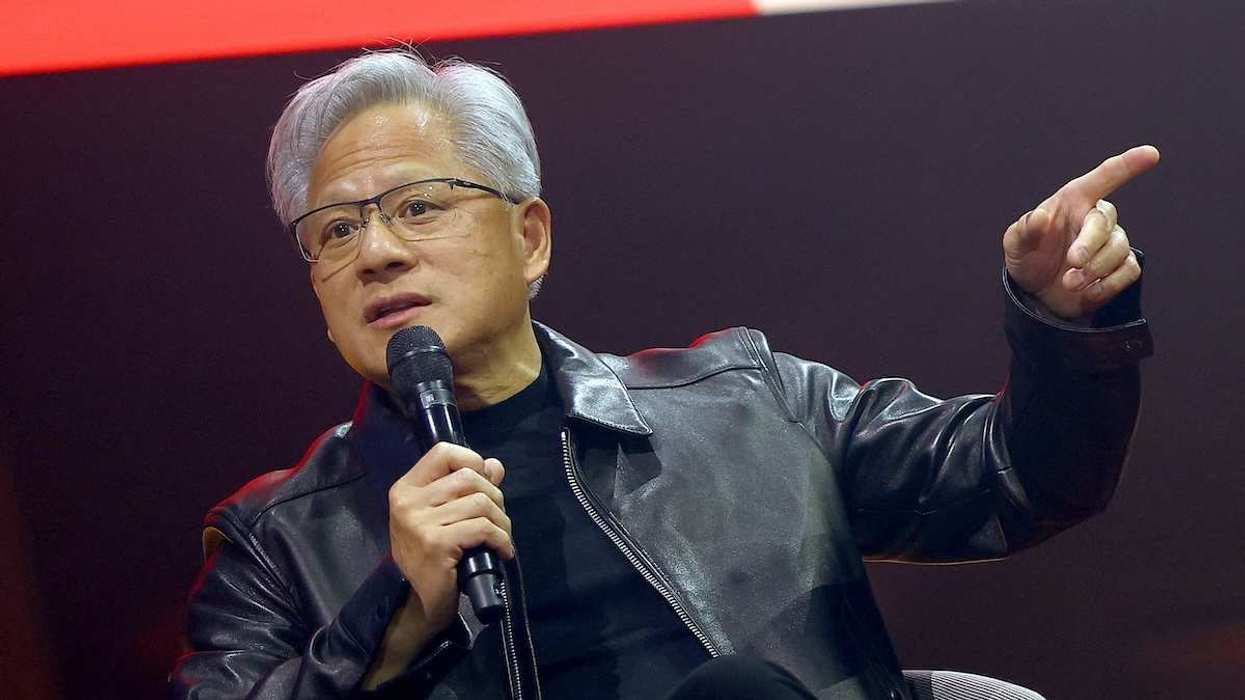
Nvidia CEO Jensen Huang speaks on stage during the Invest in Germany Summit in Berlin, Germany, October 19, 2026.

Nvidia CEO Jensen Huang speaks on stage during the Invest in Germany Summit in Berlin, Germany, October 19, 2026.

REUTERS/Lisi Niesner
US national security and the Nvidia honeypot scandalOver the weekend, Jensen Huang, CEO of the $4 trillion US microchip manufacturer Nvidia, admitted to an affair with a woman thought to be a Chinese spy. Three immediate questions arise, each with huge implications for US national security, the shape of the “AI race,” and US-China relations. [...]
Chile’s new president sees approval sink
Will Fitzpatrick
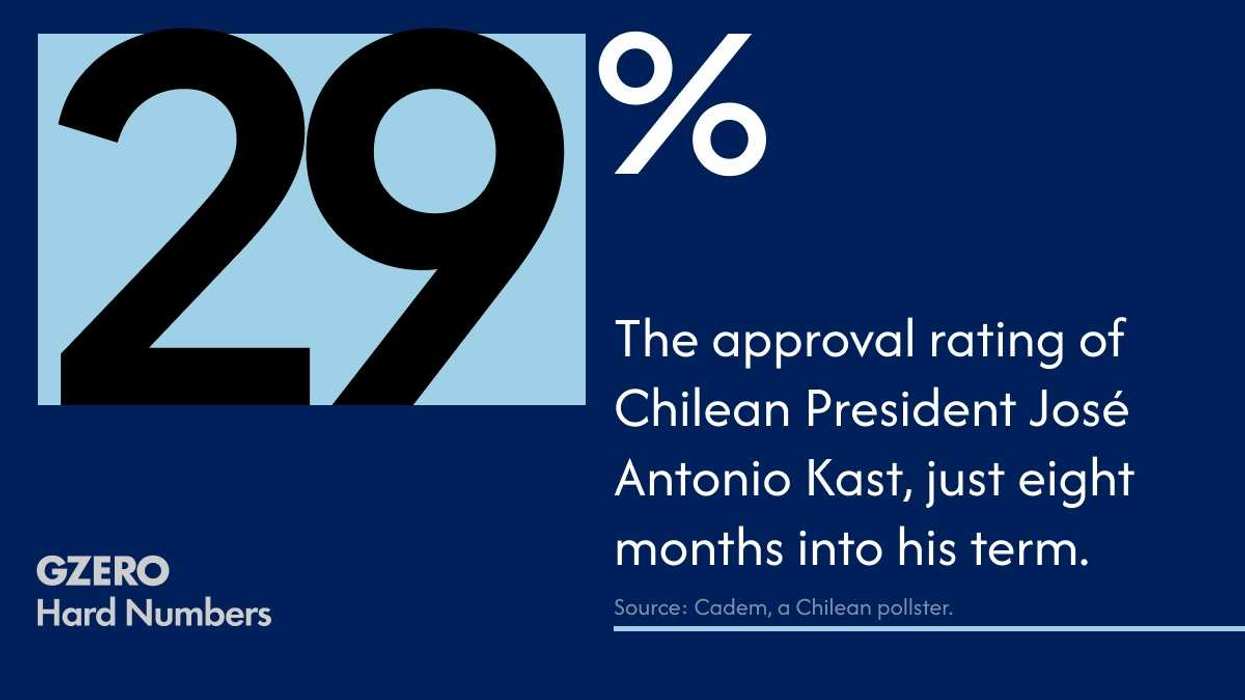
Kast, an ultra-conservative Catholic, won Chile’s presidential runoff in a landslide last December, taking nearly 60% of the vote with promises to be tough on crime and immigration. But almost immediately after he took office in March, his approval rating began to fall, and has now plummeted some 30 points overall. A leading reason is a recent [...]
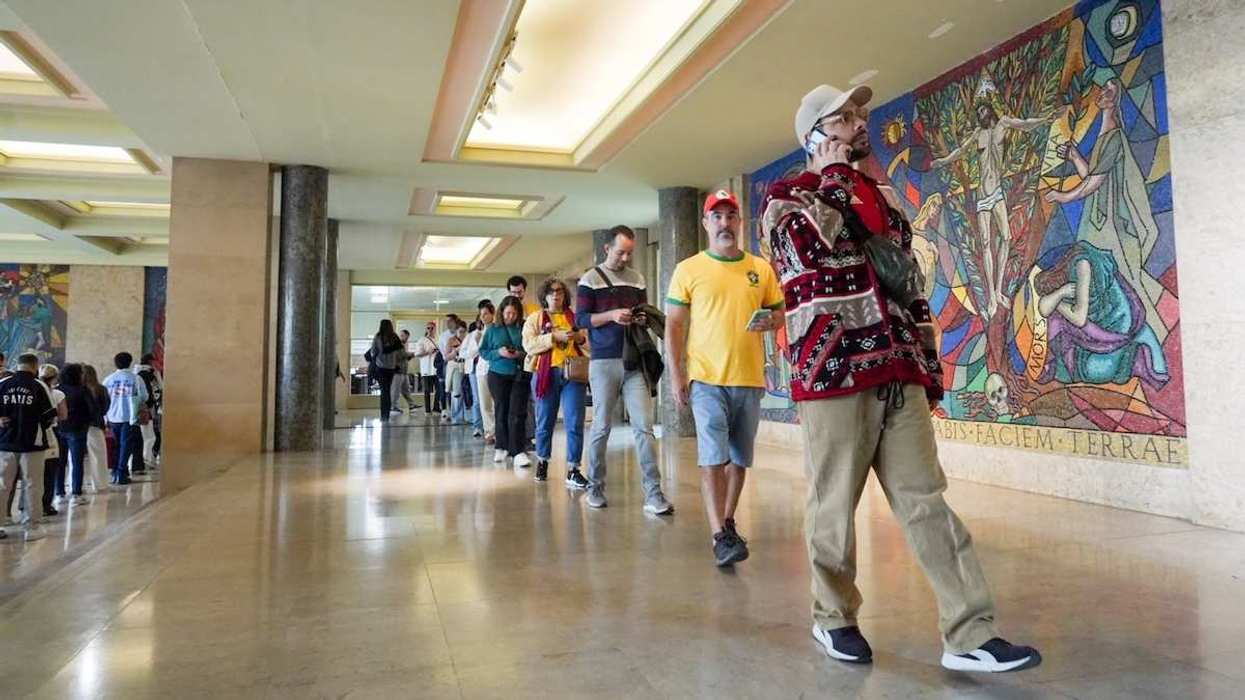
Brazilian voters arrive at a polling station at Cidade Universitaria to cast their ballots in the second round of Brazil's presidential election in Lisbon, Portugal, on October 25, 2026.

Brazilian voters arrive at a polling station at Cidade Universitaria to cast their ballots in the second round of Brazil's presidential election in Lisbon, Portugal, on October 25, 2026.

Luis Boza via Reuters Connect
Elections have been taking place around the world in recent weeks – and if there’s one thing they have in common, it’s this: voters are fired up.In Serbia, turnout reached its highest level since the breakup of Yugoslavia in 1992. In Israel, it was the highest in more than two decades. Brazil saw an additional three million people who had [...]