Skip to content
Search

Latest Stories

News

What We’re Watching: Protests in Chile, US vs Google, Middle East economic peril

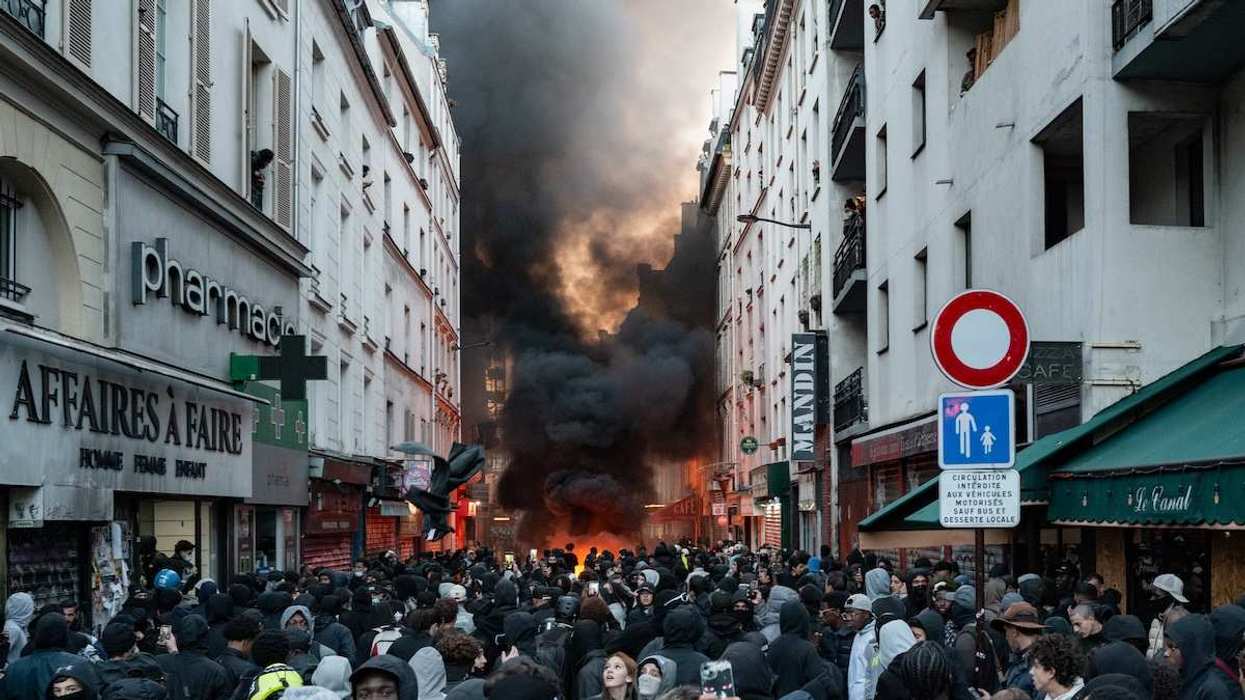
Protest against Chile's government during the one-year anniversary in Santiago of the protests and riots in 2019. Reuters

Protests ahead of Chile's referendum: It's been one year since massive protests over inequality rocked the normally staid and ostensibly affluent country of Chile. To mark that anniversary this week, tens of thousands of protesters hit the streets again, in part to call for a "YES" vote in Sunday's upcoming referendum on whether to rewrite the country's constitution. But some of the demonstrators turned to violence and looting, setting the country on edge as the crucial vote looms. Replacing the country's current constitution — which dates from the days of Pinochet's dictatorship — was a key demand of last year's protesters, who say that it entrenches the country's dizzyingly high inequality by limiting the role of the state and constraining political choices. If the current protests continue through the weekend, authorities and street activists alike are concerned violence may deter some people from voting.


Google hit with US antitrust case. The US Department of Justice has filed a lawsuit against the tech giant for maintaining an illegal monopoly over the search engine market. The ruling sets up an epic battle between government regulators and one of America's most powerful companies. Google, which says it faces more search engine competition than you'd think and that its services have actually boosted small businesses, will of course fight this with the lobbying and legal power you'd expect from a trillion-dollar enterprise. But the DOJ filing comes just weeks after a Democrat-led House Committee released a 450-page report alleging various ways in which Google, Apple, Amazon, and Facebook undermine commercial and political freedom. As a bipartisan consensus emerges on the need to rein in these companies, the DOJ's Google case is sure to be a watershed event in US regulation of Big Tech.

(Economic) trouble in MENA: A report this week from the International Monetary Fund warns that COVID-19 has inflicted a "deeper and more persistent economic impact" on potentially fragile states in the Middle East and North Africa, adding to the risk of major social unrest. The IMF blames a witch's brew of the global impact of coronavirus, low oil prices, coronavirus containment measures, the impact of "limited digitalization" and "limited remote working," weak social safety nets, cash-strapped governments, and the region's disproportionate share of the world's refugees and displaced people. The list includes war zones like Syria, Libya, Somalia, and Yemen. But Lebanon, Iraq, and the West Bank and Gaza qualify too. Even in Saudi Arabia and other wealthy Gulf states, where sizable protests are far less likely, governments will probably have much less money to spend for years to come.

More For You

Tokyo Electric Power Company (TEPCO)'s Kashiwazaki Kariwa nuclear power plant, one of the world's largest nuclear facilities, stands along the seaside in Kashiwazaki, Niigata prefecture, Japan December 21, 2025.

Tokyo Electric Power Company (TEPCO)'s Kashiwazaki Kariwa nuclear power plant, one of the world's largest nuclear facilities, stands along the seaside in Kashiwazaki, Niigata prefecture, Japan December 21, 2025.

REUTERS/Issei Kato
54: Japan is reopening the world’s largest nuclear power plant after a regional vote gave the greenlight on Monday. The Kashiwazaki-Kariwa plant, located 136 miles outside of Tokyo, had its 54 reactors shuttered following the 2011 earthquake and tsunami that spurred the worst nuclear disaster since Chernobyl. The decision reflects Japan’s push to [...]
Pro-democracy protesters carry portraits of North Yemen's late president Ibrahim al-Hamdi.

Pro-democracy protesters carry portraits of North Yemen's late president Ibrahim al-Hamdi.

REUTERS/Khaled Abdullah
Group of Yemeni ministers announce support for UAE-backed rebel coalitionIn the latest twist to Yemen’s decade-long civil war, a group of government ministers declared support for the UAE-backed Southern Transitional Council (STC), a rebel group that broke the war’s deadlock earlier this month by seizing control of the oil-rich Handramout region. [...]
US President Donald Trump speaks with Chinese President Xi Jinping at Gimhae Air Base in Gimhae, South Korea, on October 30, 2025.

US President Donald Trump speaks with Chinese President Xi Jinping, during a bilateral meeting at Gimhae Air Base in Gimhae, South Korea, on October 30, 2025.

Yonhap News/POOL/Handout via Sipa USA
Every January, Eurasia Group, GZERO’s parent company, unveils a forecast of the top 10 geopolitical risks for the world in the year ahead, authored by EG President Ian Bremmer and EG Chairman Cliff Kupchan. The 2026 report drops on Monday, January 5.Before looking forward, though, it’s worth looking back. Here’s how the 2025 Top Risks report [...]
US President Donald Trump announces tariffs on US trading partners at the White House in Washington, DC, USA, on April 2, 2025.

US President Donald Trump arrives to announce reciprocal tariffs against US trading partners in the Rose Garden of the White House in Washington, DC, USA, on April 2, 2025.

POOL via CNP/INSTARimages.com
As GZERO readers will be all too aware, 2025 has been a hefty year for geopolitics. US President Donald Trump’s return to office has rocked global alliances, conflicts have raged from Khartoum to Kashmir, and new powers – both tangible and technological – have emerged.To put a bow on the year, GZERO highlights the biggest geopolitics stories of 2025. [...]