Skip to content
Search

Latest Stories

News

Whose vaccine is it anyway?

Whose vaccine is it anyway?

As the novel coronavirus burns its way around the world, the race for a vaccine is now well underway. More than 100 Covid-19 vaccines are now in some stage of research, and there are eight candidate vaccines already in clinical evaluation, according to the World Health Organization.

Of those eight, four come from China, two from the US, one is a collaboration of companies in Germany, China, and the US, and another is the product of a partnership between Britain's Oxford University and AstraZeneca. Companies in Canada, France, Germany, Israel, Australia, and Switzerland may not be far behind.


Later this year or sometime in 2021, there's a good chance we'll see a COVID vaccine successfully produced— in limited quantities. Someone will be first in line. Others who want to be vaccinated will have to wait, possibly for years, as more vaccine is manufactured, and distribution gets up to speed.

So...there's a major political, epidemiological, and even moral question ahead: Who should get vaccinated first?

Here are a few ways to answer that question.

The highest bidder. It's not cheap to develop and produce vaccines. If this vaccine goes first to governments or individuals who pay the most for it, the large profits can then be reinvested to produce more vaccine for more people more quickly. In this case, efficiency can save many more lives.

Citizens of the country where the vaccine was made. If you're French, and a French company develops the vaccine first, shouldn't French citizens benefit first? Why should a French vaccine go first to save Americans, Italians, Russians, Indonesians, Nigerians, or Brazilians?

Front-line workers in the country where the vaccine was developed. Keep the vaccine in-country to save the lives of our compatriots but give it to front-line health-care workers first. More lives will be saved as hospitals become safer. And let's reward their courage.

A small number of front-line workers in every country where COVID is present. Risk and need, rather than borders, should decide who benefits. All human beings are at risk, and the person doing life-saving work under life-threatening conditions across the border is a better choice than the healthy person inside our country.

A larger number of front-line workers, but only in the hardest-hit countries. That way we reach those fighting the biggest fires fastest.

Your Signal authors? No, we're not saving lives. But we're very nice people. Don't forget about us!

Bonus question: Who gets to decide this question? Should the decision on first dibs be made by the CEO of the company that gets there first? Or the government of the country where that company pays taxes? The World Health Organization? A vote of the United Nations General Assembly? Someone else?

Which option would you choose? In the end, much depends on whether we believe a vaccine for this virus should be considered a commodity or a public good. Our answer to THAT will determine how we define fairness in this case.

This may seem like an abstract question. But it's coming. Hopefully soon.
More For You

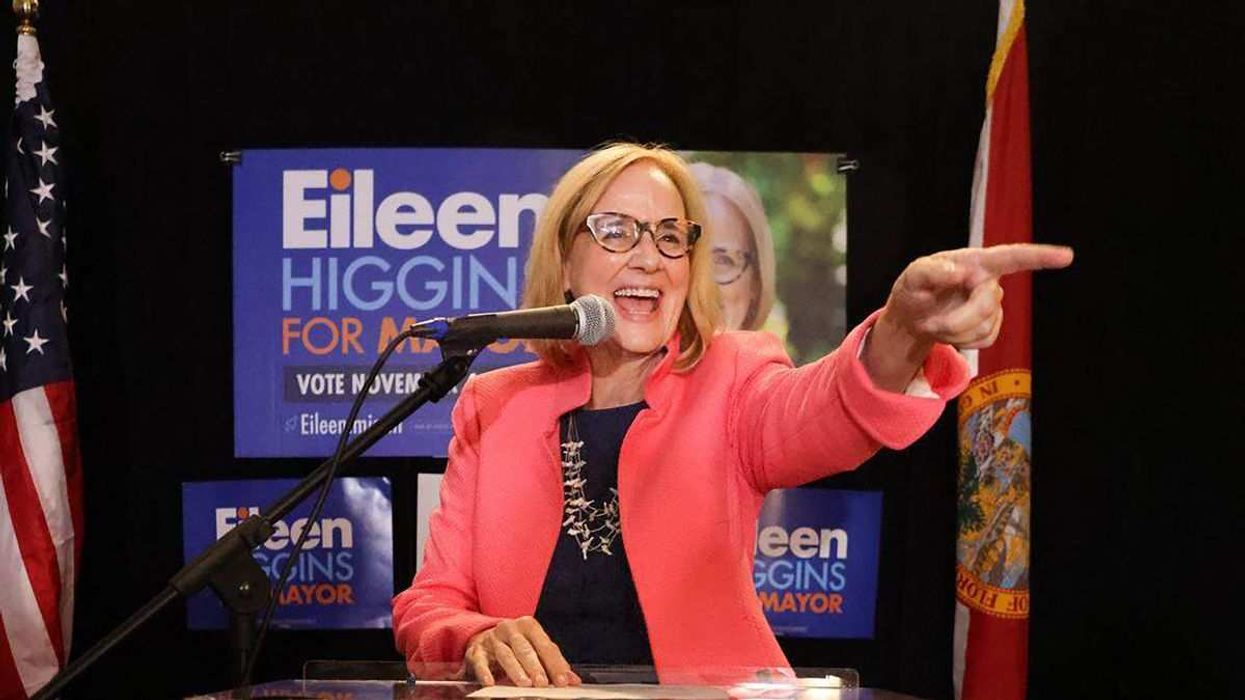
​Miami Mayor-elect Eileen Higgins points as she thanks her staff and supporters on the night of the general election, on Tuesday, Nov. 4, 2025.

Miami Mayor-elect Eileen Higgins points as she thanks her staff and supporters on the night of the general election, on Tuesday, Nov. 4, 2025.

Carl Juste/Miami Herald/TNS/ABACAPRESS.COM
For the second time in a month, Republicans lost a mayoral race in a state US President Donald Trump has called home. This time it happened in Florida.Democrat Eileen Higgins defeated Republican Emilio González in Miami’s mayoral election on Tuesday to become the first female leader of Florida’s largest city, and the first Democrat to win this [...]
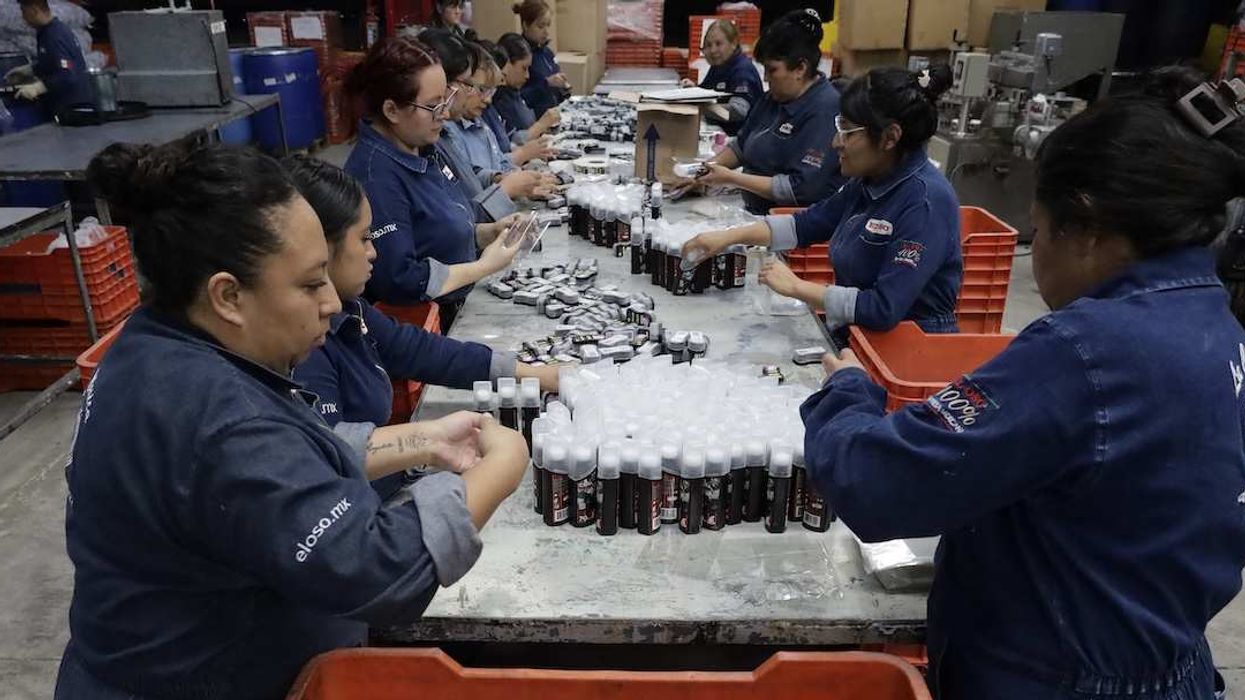
Women work in the plastic container assembly area inside the El Oso shoe polish factory, located in Mexico City, Mexico, in its new facilities, after officers from the Secretariat of Citizen Security and staff from the Benito Juarez mayor's office arbitrarily and violently remove their supplies, raw materials, machinery, and work tools on January 17 of this year following a coordinated operation stemming from a private dispute. On August 27, 2025.

Women work in the plastic container assembly area inside the El Oso shoe polish factory, located in Mexico City, Mexico, in its new facilities, after officers from the Secretariat of Citizen Security and staff from the Benito Juarez mayor's office arbitrarily and violently remove their supplies, raw materials, machinery, and work tools on January 17 of this year following a coordinated operation stemming from a private dispute. On August 27, 2025.

Photo by Gerardo Vieyra/NurPhoto
50: Mexico’s President Claudia Sheinbaum is taking a page out of US President Donald Trump’s book, implementing up to a 50% tariff on more than 1,400 products in a bid to boost domestic production. The tariffs are expected to heavily affect China, which has increased its shipping to Mexico as a way to bypass US tariffs, and come as the US has been [...]
Ukrainian President Volodymyr Zelenskiy meets with British Prime Minister Keir Starmer, French President Emmanuel Macron, and German Chancellor Friedrich Merz at 10 Downing Street, in London, Britain, December 8, 2025.

Ukrainian President Volodymyr Zelenskiy meets with British Prime Minister Keir Starmer, French President Emmanuel Macron, and German Chancellor Friedrich Merz at 10 Downing Street, in London, Britain, December 8, 2025.

REUTERS/Toby Melville/Pool
Zelensky’s counteroffer shows his willingness for compromiseUkrainian President Volodymyr Zelensky made a counter to the US’s original plan for ending the Russia-Ukraine war on Wednesday, one that includes several concessions. Among them are allowing the US to recognize Russian-occupied territory, and granting the US and Russia control over the [...]
It’s official: Trump wants a weaker European Union

Trump, Putin, and Zelensky surrounded by tanks and negotiators.

The transatlantic relationship isn’t at a crossroads, it’s past one. America’s new National Security Strategy confirms what Europeans have feared since Vice President JD Vance’s speech in Munich last February: Washington now sees a strong, unified European Union as a problem to be solved, not an ally to be supported.The Trump administration’s NSS [...]