What We're Watching

At least 250,000 civilians flee as Sudan safe-haven overrun

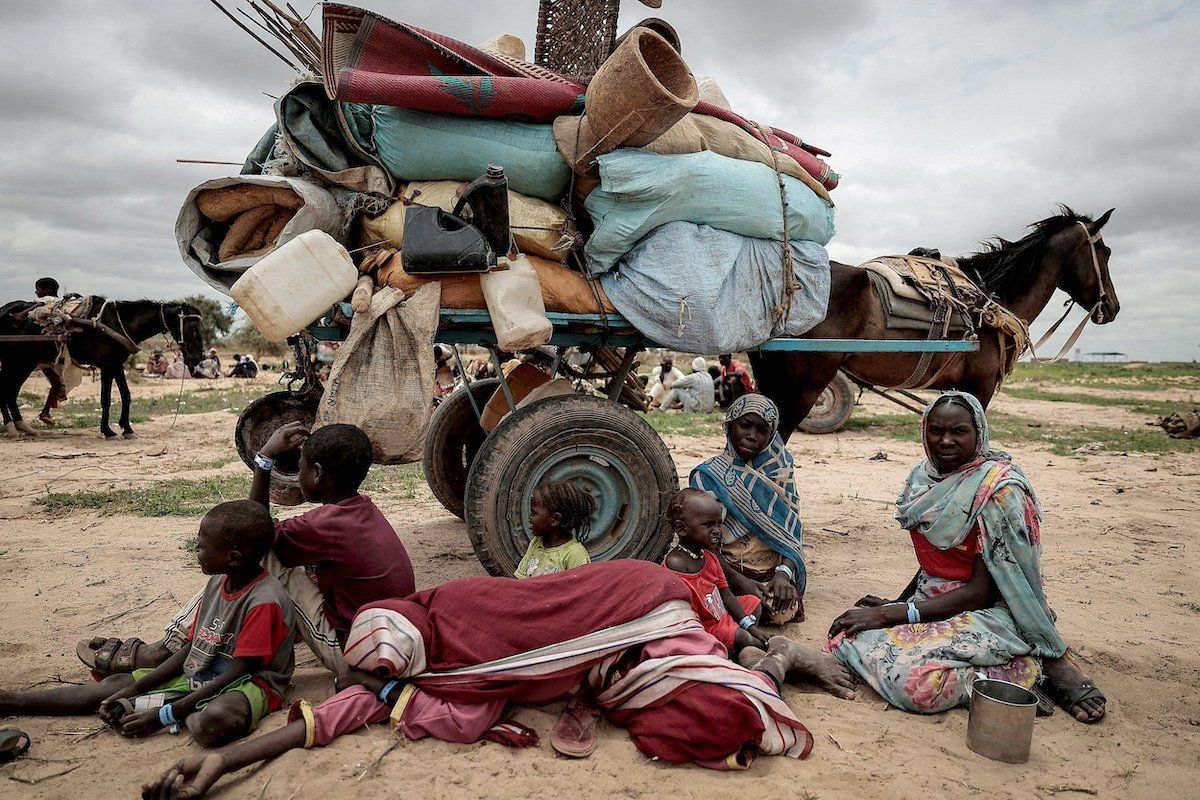
FILE PHOTO: A Sudanese family who fled the conflict in Murnei in Sudan's Darfur region, sit beside their belongings while waiting to be registered by UNHCR upon crossing the border between Sudan and Chad in Adre, Chad, July 26, 2023.
REUTERS/Zohra Bensemra/File Photo

The paramilitary Rapid Support Forces, one side of Sudan’s ongoing civil war, have routed Army forces in Wad Madani, and are reportedly setting up checkpoints and looting homes and vehicles. Civilians are terrified they will be subjected to the same sexual violence and targeted ethnic killings that RSF fighters have reportedly perpetrated elsewhere. Some are piling onto the back of trucks, others are packing their possessions onto horsecarts, and many are simply taking what they can and escaping by foot.

The city had been a relative safe haven, one of the few places where humanitarian organizations were able to bring in aid. At least 85,000 refugees from elsewhere in Sudan had relocated to Wad Madani since fighting broke out in April, and around half a million were in the surrounding Al-Jazira state. An aid worker on the ground told the BBC that people are now “scattering in different directions,” fleeing toward the city of Sinnar and the borders with Ethiopia and South Sudan. The UN says it does not have enough resources in place in those areas to receive them, and their aid supply lines could be jeopardized if fighting spreads to White Nile state in the west.

The fighting has stretched on for more than eight months without a clear end in sight. Talks mediated by Saudi Arabia did result in a very porous and shaky ceasefire in May — but they have since stalled, and Riyadh’s attention has been elsewhere since the Oct. 7 attacks in Israel.

October is also when the RSF started gaining momentum, forcing the Army out of much of southern Darfur – where the RSF is now accused of committing atrocities – capturing a key dam on its supply lines to Khartoum, and now, pushing southeast. But they’ve yet to deal the Army a fatal blow, and we are watching for signs that their battlefield advances could motivate ethnic militias who fear RSF control to join the fight.
More For You

US President Donald Trump listens to a question from a reporter prior to signing an executive order on AI next to Sriram Krishnan, Senior White House Policy Advisor on Artificial Intelligence, US Sen. Ted Cruz (R-TX), US Commerce Secretary Howard Lutnick, and David Sacks, chair of the President's Council of Advisors on Science and Technology, in the Oval Office at the White House in Washington, D.C., USA, on December 11, 2025.

REUTERS/Al Drago

Artificial intelligence and Donald Trump's foreign policy are creating huge tail risks for markets.

Last week, Microsoft released a new report offering an in-depth look at AI adoption across the United States, with state- and county-level insights for the first time. While more than 30 percent of working-age Americans now use AI tools, adoption remains uneven across regions, with significantly higher usage in urban areas and communities tied to universities. The findings point to a broader challenge: without stronger access to infrastructure, skills, and education, AI’s benefits risk remaining concentrated rather than broadly shared. Read the full blog here.

A demonstrator holds a Kenyan flag during a protest against a US-backed Ebola quarantine plan on the establishment of a 50-bed facility at a Kenyan air force base that was intended to host Americans exposed to Ebola, in Nanyuki town, in Laikipia County, Kenya June 1, 2026
REUTERS/John Muchucha

Hundreds took to the streets in Kenya after the US announced plans to build an Ebola quarantine center on a Kenyan air base, with protesters warning the facility risks introducing a disease the country has never recorded. President Ruto is defending the project.