GZERO AI
Automation is coming. Are you ready?
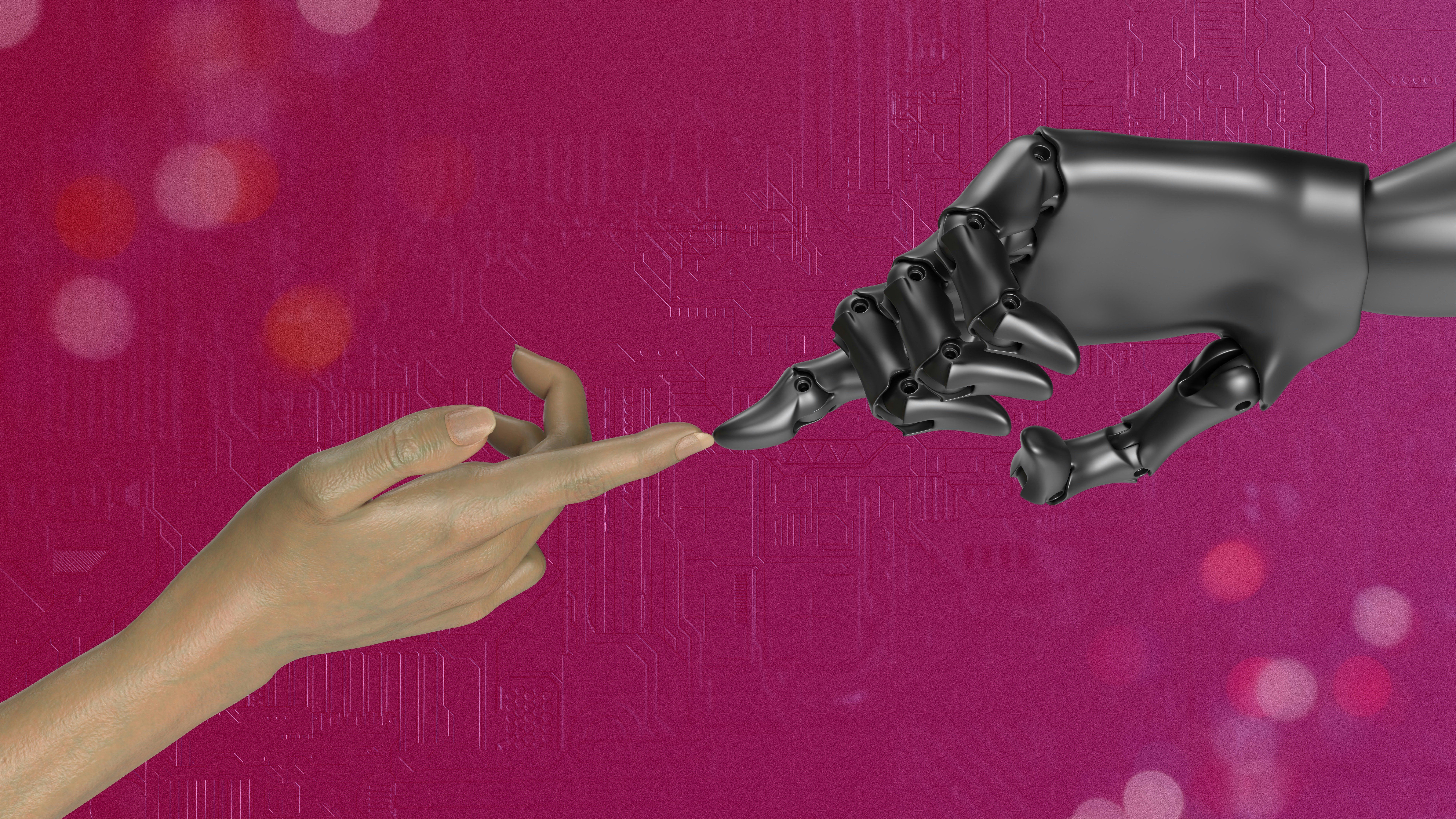
Two hands, one human and one robotic, touching each other in front of a pink background.
Photo by Igor Omilaev on Unsplash
In the next five years, 170 million new jobs will be created by macro trends including the rise of AI, but another 92 million will be displaced.
The report indicates that AI will fuel demand for a new cadre of workers, such as “big data specialists, fintech engineers and AI and machine learning specialists,” and demand for software developers will continue to rise. Cashiers, administrative assistants, and bank tellers will be among the displaced jobs.
Thankfully, newsletter writers and editors aren’t listed as easily replaceable — at least not yet.
Check out the latest swag from the official Puppet Regime merchandise store! Browse an array of products that will show the world you are a devoted subject of the Regime, including: A big, beautiful mug for drinking coffee very strongly, A handsome tote bag to carry your favorite classified documents, Collectible stickers, Stylish t-shirts and hoodies – now also available in pink. We ship worldwide! Shop now at shop.puppetregime.tv!
Washington and Ottawa are down to the wire with last-minute talks to reach an agreement by 12:01 a.m. Wednesday, when President Donald Trump has threatened to impose 50% tariffs on over $20 billion of Canadian goods.
On Monday, public health officials said the virus had killed 2,325 people.
As the line between the battlefield and everyday life blurs, countries are increasingly preparing civilians for the next war.