GZERO World with Ian Bremmer
Beginning of Putin's end
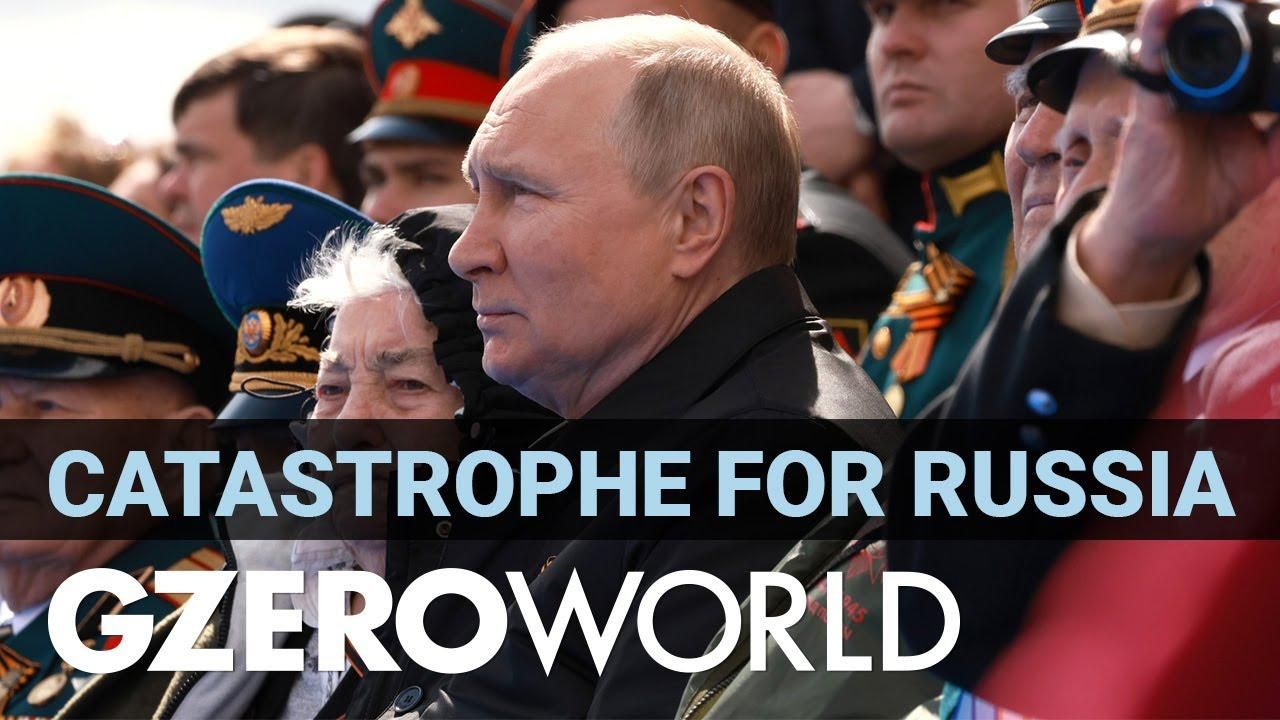
Beginning of Putin’s End | Russia's Catastrophe & Ukraine's Advantage | GZERO World with Ian Bremmer
On May 9, Vladimir Putin marked the 77th anniversary of Russia's Victory Day in World War II by co-opting its narrative to justify invading Ukraine and paint itself as a victim of Western aggression.
Russia, it seems, hasn't moved on much since 1945 — and still hangs on to perceived outside threats — like Finland and Sweden joining NATO. But if the West goes too far, there's a much bigger risk: World War III.
On GZERO World, Ian Bremmer speaks to Michael McFaul, who knows a thing or two about Russia and Putin from his days as the former US ambassador in Moscow.
"There is not a single economic actor in Russia that thinks this is good," notes McFaul, who speaks to Russians frequently. "My sense is that this is a pretty catastrophic failure."
McFaul says that Putin signaled in his nothing-burger speech that Russia is ready to gobble up another chunk of Ukraine in the Donbas region, and explains why that gives Ukraine a stronger hand at the negotiating table. Also, he believes that the US needs to change up its sanctions game and keep quiet about sharing intel with the Ukrainians, and debunks the overwhelming support for the war claimed by the Kremlin.
Also on GZERO World: the West thinks this is a fight for democracy itself, but some pretty big democracies beg to differ.
China has defied Western sanctions for years and buys as much as 90% of Iran’s oil exports.
Think you know what's going on around the world? Here's your chance to prove it.
President Bola Tinubu faces strong headwinds in his bid for a second term.
Critics have said that Zelensky – now in his seventh year in office – has been in power for too long.