March 19, 2019
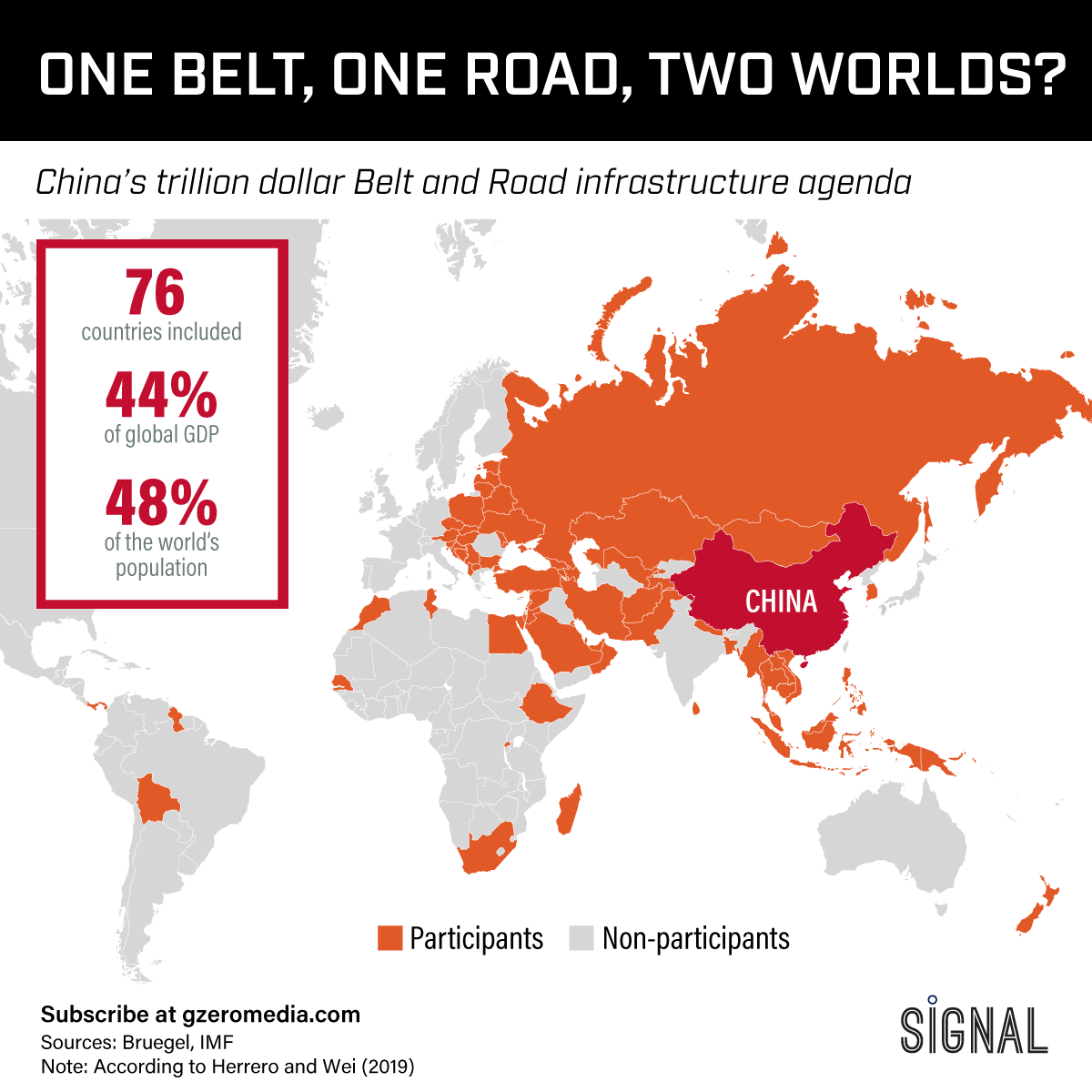
China's Belt and Road infrastructure initiative is one of the most ambitious geopolitical projects ever. By 2027, it aims to dish out an estimated $1.3 trillion in loans, around ten times what the US spent on the Marshall Plan in the aftermath of World War II. As China increases its investment in the West, will countries' loyalty shift toward Beijing? Here's a look at the already staggering scope of Beijing's agenda.
*Correction: An earlier version of this graphic misstated India's participation in the Belt and Road Initiative. India is a member of the AIIB and ADB but not OBOR.
More For You
Can Washington turn military pressure into a diplomatic strategy? Brett McGurk joins Ian Bremmer on the GZERO World podcast to discuss the Iran war, Houthi attacks, and how elections in Israel and the US could reshape the region.
Most Popular
Think you know what's going on around the world? Here's your chance to prove it.
Turkish President Recep Tayyip Erdogan receives Canadian Prime Minister Mark Carney with an official ceremony in Ankara, Turkiye on October 22, 2026.
Anadolu via Reuters Connect
Canadian Prime Minister Mark Carney is in Turkey on Thursday for talks with President Recep Tayyip Erdogan - the visit is the first by a Canadian prime minister.
© 2025 GZERO Media. All Rights Reserved | A Eurasia Group media company.