September 23, 2024
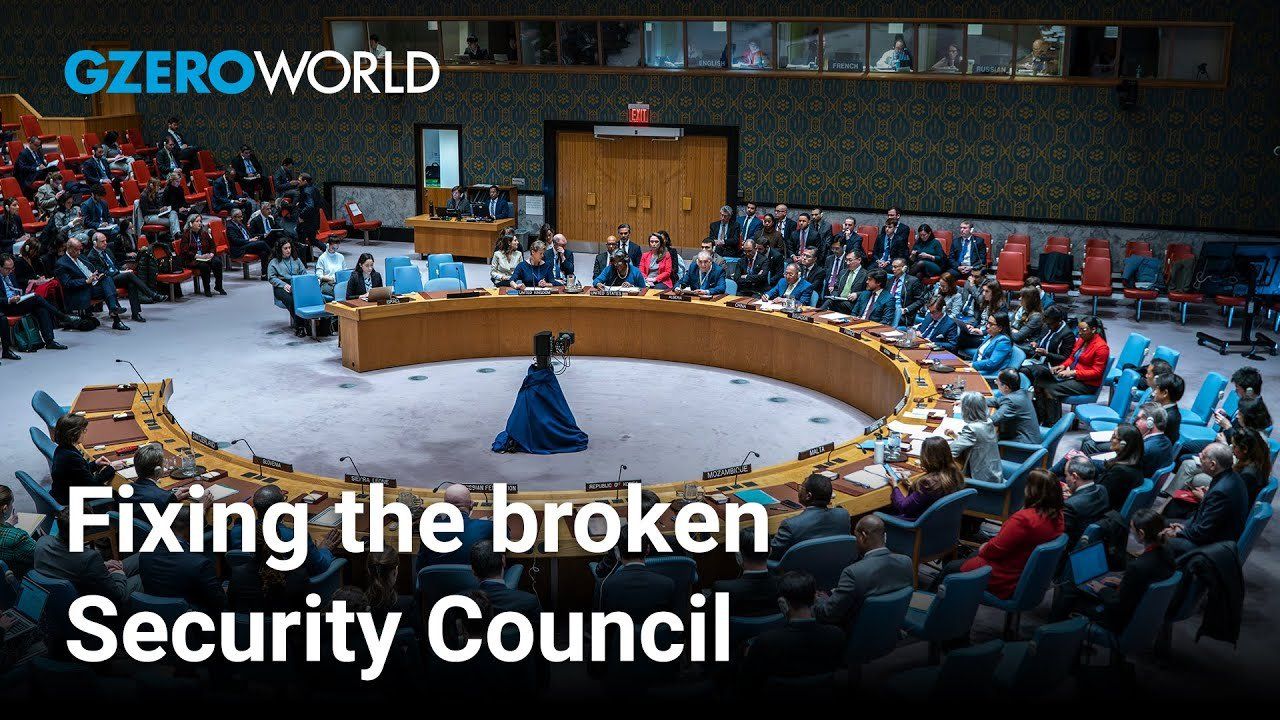
For years, meaningful reform of the UN Security Council was considered an impossible pipe dream that could never happen. But with so many ongoing global crises, now is the time to reform institutions to meet the political and economic realities of today's world. On GZERO World with Ian Bremmer, UN Secretary-General António Guterres says he’s most concerned with a lack of accountability, growing impunity, and countries fragmenting further into coalitions and blocs, which is at odds with everything the UN stands for. The world has changed dramatically since the UN was formed in 1945, and it's time to reform outdated, unfair institutions, like the Security Council, that concentrate power in the hands of a few wealthy countries and don't reflect current reality. Guterres says giving an African country a permanent seat on the Council “must be done,” but admits extending veto power to an African member will be a major challenge.
“The African situation, it is in historic injustice,” Guterres explains, “For the first time, the five permanent members recognize that they are ready to accept at least an African permanent member in the Security Council.”
GZERO World with Ian Bremmer, the award-winning weekly global affairs series, airs nationwide on US public television stations (check local listings).
New digital episodes of GZERO World are released every Monday on YouTube. Don't miss an episode: subscribe to GZERO's YouTube channel and turn on notifications (🔔).
From Your Site Articles
- Podcast: UN Ambassador Linda Thomas-Greenfield on Russia, human rights, & the Security Council presidency ›
- Ian Explains: Why Russia has a permanent seat on the UN Security Council ›
- 4 things to know about the Munich Security Conference ›
- Zelensky takes aim at the UN Security Council - GZERO Media ›
- UN Security Council: Liberia’s top diplomat joins calls for Africa’s representation - GZERO Media ›
More For You
- YouTube
In his latest Quick Take, Ian Bremmer discusses the on-again off-again ceasefire between the United States and Iran and why it has failed to hold, arguing that both sides remain locked in a fundamental disagreement over who has the leverage.
Most Popular
Walmart sponsored posts
Empowering associates with comprehensive benefits
Sponsored posts
Why open-weight AI matters for innovation and competition
- YouTube
Can a war-torn Lebanon disarm Hezbollah, end Israel’s occupation of its southern territory, and reclaim control of its future? Beirut-based journalist Kim Ghattas joins Ian Bremmer on GZERO World.
As Hezbollah’s power weakens and Israel occupies parts of southern Lebanon, could the country finally reclaim its sovereignty? Or is it headed toward another war? Journalist Kim Ghattas joins Ian Bremmer on the GZERO World Podcast.
- YouTube
Ian Bremmer breaks down how Iran spent four decades building Hezbollah into a powerful proxy against Israel, and why the group’s uncertain future could reshape the Middle East.
© 2025 GZERO Media. All Rights Reserved | A Eurasia Group media company.