GZERO Live
Highlights from our live discussion on post-pandemic health security
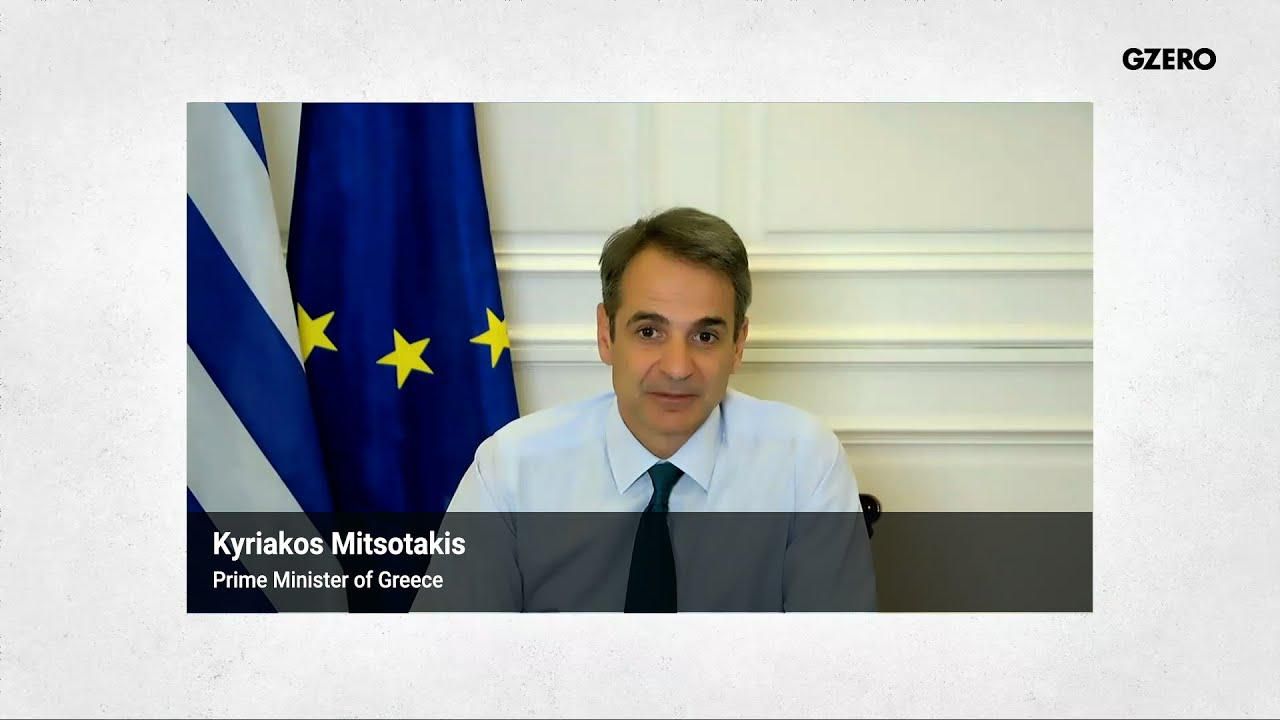
Greek PM Defends EU-Wide Vaccine Procurement, Rollout | PM Kyriakos Mitsotakis | GZERO Media
Here are a few highlights from our June 8 live event, "Beyond the Pandemic: A Radical New Approach to Health Security," hosted by GZERO Media in partnership with Flagship Pioneering. Watch more at https://www.gzeromedia.com/healthsecurity.
Greek Prime Minister Kyriakos Mitsotakis (above) has criticized the European Union over its sluggish vaccine rollout. But overall he supports the EU's decision to purchase the jabs collectively and distribute proportionally because it demonstrated the same European solidarity that delivered the bloc's COVID economic relief package. "I don't want to be competing with Germany, France, or Italy" in a race to buy vaccines, Mitsotakis said during a livestream discussion about post-pandemic health security hosted by GZERO Media in partnership with Flagship Pioneering.
Why is Pfizer using much smaller doses of its COVID vaccine in its clinical trials on infants? And when does the company think we'll all need booster shots, especially to deal with new and potentially more vaccine-resistant variants? CEO Albert Bourla explains Pfizer's process to develop updated vaccines against new variants in 100 days.
For science journalist Laurie Garrett, the US bungled its pandemic response because its health security infrastructure was only prepared to deal with threats from parts of the world that America regarded as inferior. In her view, this post-colonial mentality not only did a disservice to the US by causing the worst COVID epidemic in the world, but also justified attacking China at a moment of raw US-China competition despite the fact that probing the origin of the virus was — and still is — is a lost cause.
Should the US Congress investigate the government's pandemic response with a 9/11-style commission similar to the one that Democrats want to probe the January 6 Capitol insurrection? Former US Homeland Security chief Jeh Johnson is in favor, especially if such a commission truly focuses on the lessons learned — not the politics.
"It took a tiny virus for many of us to realize that inconceivable things were actually conceivable" on cooperation between the US government and the private sector on COVID vaccine development, says Moderna co-founder Noubar Afeyan. Afeyan, also CEO of the Flagship Pioneering venture capital fund, credits Operation Warp Speed as a "stellar success" without which America would not have recovered from COVID as fast as it has.
The second part of the series, Stronger Partnerships for a Healthier World: Mutually Assured Protection, is scheduled for Wednesday, June 9 at 11 am EDT. Register to watch at www.gzeromedia.com/healthsecurity
This live event series is produced by GZERO Media in partnership with Flagship Pioneering. We thank our event partners, Partnership for a Healthier America and Medtronic.
On Monday, public health officials said the virus had killed 2,325 people.
The decision deals a blow to a decades-old alliance: South Korea relies heavily on US deterrence against its nuclear-armed northern neighbor and hosts 28,500 American troops.
AI is reshaping not only how college students learn, but what they choose to study in the first place.
Russia may be on the back foot in the war, but life near Ukraine’s front lines remains brutal. On GZERO World, David Miliband talks about the human cost of war and why winning on the battlefield means nothing if Ukraine can’t sustain its people.