Munich Security Conference
Many knew Putin wasn't bluffing, but not how far he'd go, says International Crisis Group’s Comfort Ero
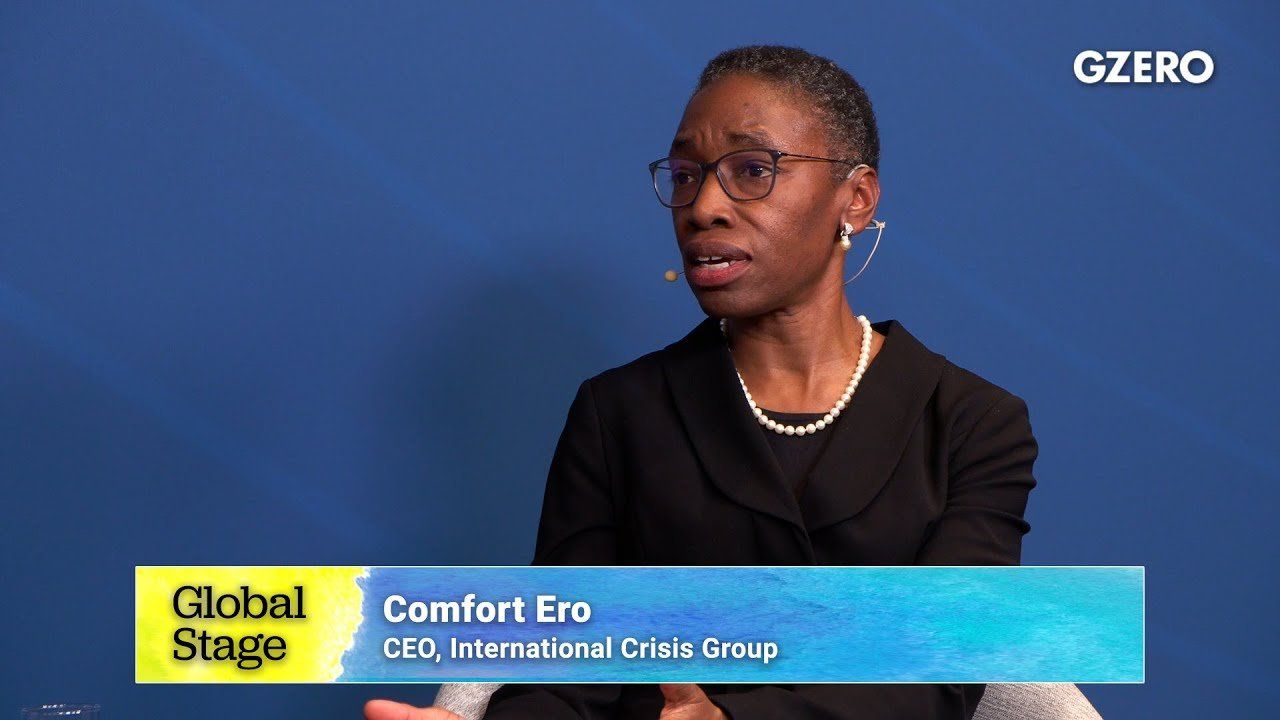
‘The world must do better at anticipating conflicts | Global Stage | GZERO Media
People rightfully focus on conflict prevention and deterrence, but global policy lagged behind when it came to preparing for the Russian invasion.
“What surprises me is that no actor says they’re surprised by what happened. You ask yourself, what about the steps that ought to have been taken?” says Comfort Ero, president and CEO of the International Crisis Group, during a Global Stage livestream conversation hosted by GZERO in partnership with Microsoft at the Munich Security Conference.
Some argue that the original sin was perhaps not dealing with the crises in Georgia and Crimea, she adds. Moving forward, she says, NATO and the West must focus on having anticipatory policies that prevent military aggression.
Watch the full Global Stage livestream conversation “Live from Munich: Ukraine and the Global Turning Point.”
South Sudan is accusing neighboring Sudan of launching a drone strike that killed at least 73 people at a market in Abyei, a disputed, oil-rich region of roughly 4,000 square miles claimed by both countries.
In this Quick Take, Ian Bremmer says President Donald Trump's approach to the war in Ukraine is putting more pressure on President Volodymyr Zelensky and raising concerns among European allies about the future of NATO.
Ongoing student protests in France descended into looting and riots over the weekend as more than half a million people took to the streets across the country.
After his father was killed in a plane crash in 2023, Pavel was tapped to lead Wagner.