What We're Watching
Singapore’s clandestine kitties get their place in the sun
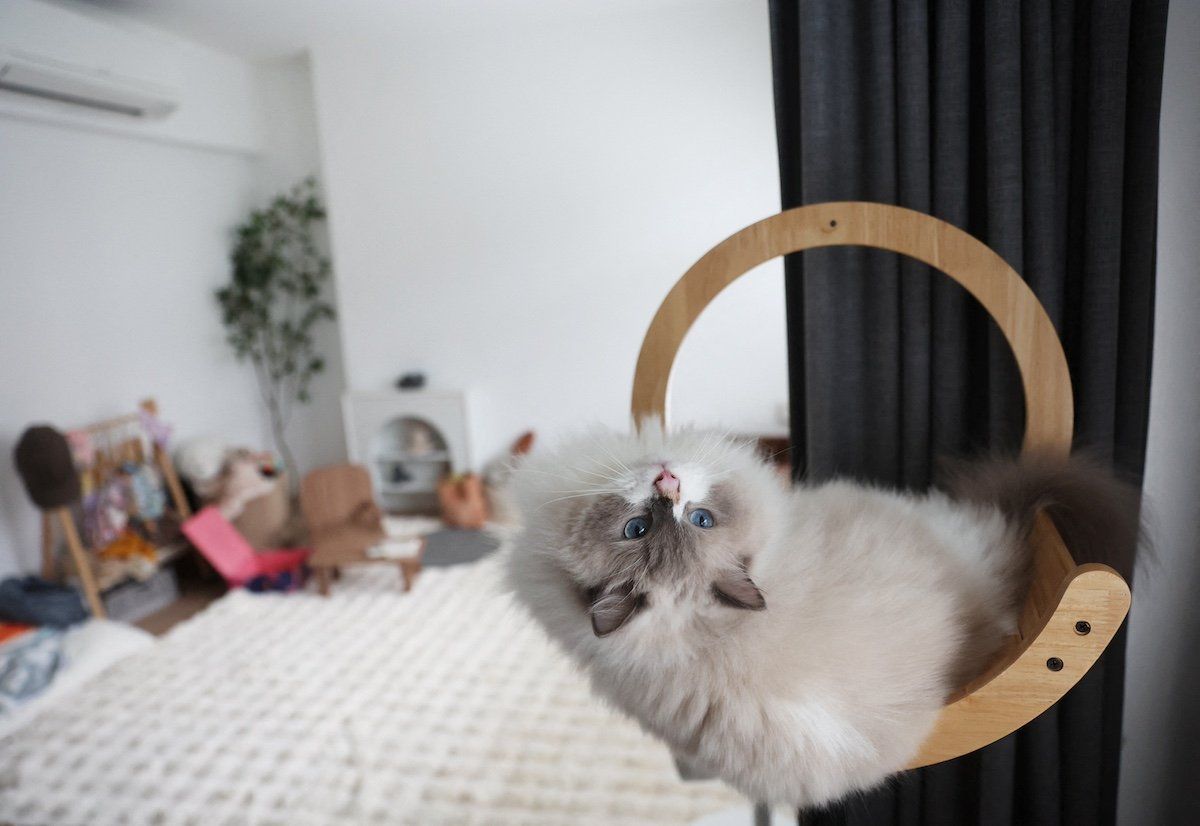
A Ragdoll cat named Mooncake sits in a cat tree in a Housing and Development Board (HDB) flat in Singapore December 19, 2023.
REUTERS/Edgar Su
Across the famously law-abiding (or at least law-enforcing) city-state, thousands of rogue cat lovers have defied a three-decade ban on feline friends in public housing — but as of this summer, the cats are out of the bag.
Around 80% of Singaporeans live in public housing, which comes with some pretty strict rules: Quiet hours between 10:30 p.m. and 7 a.m., no smoking, and you best not get caught naked with your blinds up. Pets, however, have generally been allowed, including dogs, parrots, chinchillas, turtles, you name it. Just not cats, thanks to a 1989 law that blames them for tending “to shed fur and defecate or urinate in public areas, and also make caterwauling sounds.”
But after an official survey in 2022 showed 90% of Singaporeans feel cats are appropriate pets, the government finally decided to pull its claws in. It’s now working on some rules (naturally!) about how many cats can be in an apartment, and what steps owners will need to take at the vet to keep kitty street-legal.
After scratching at the door for an hour, a spokescat for Singapore’s feline community briefly sniffed the free air outside, turned around, and fell back asleep.
In this Quick Take, Ian Bremmer breaks down Brazilian President Luiz Inácio Lula da Silva’s historic re-election victory and what it means for the country’s political future and democracy.
Could replacing Benjamin Netanyahu change Israel’s direction? Brett McGurk explains why a government led by Gadi Eisenkot would likely maintain Israel’s security doctrine while taking a different approach to the West Bank.
The competition to master this technology shapes everything from high-level tensions between the US and China to the local politics of where to build data centers.