News
The Graphic Truth: The racial breakdown of US arrests
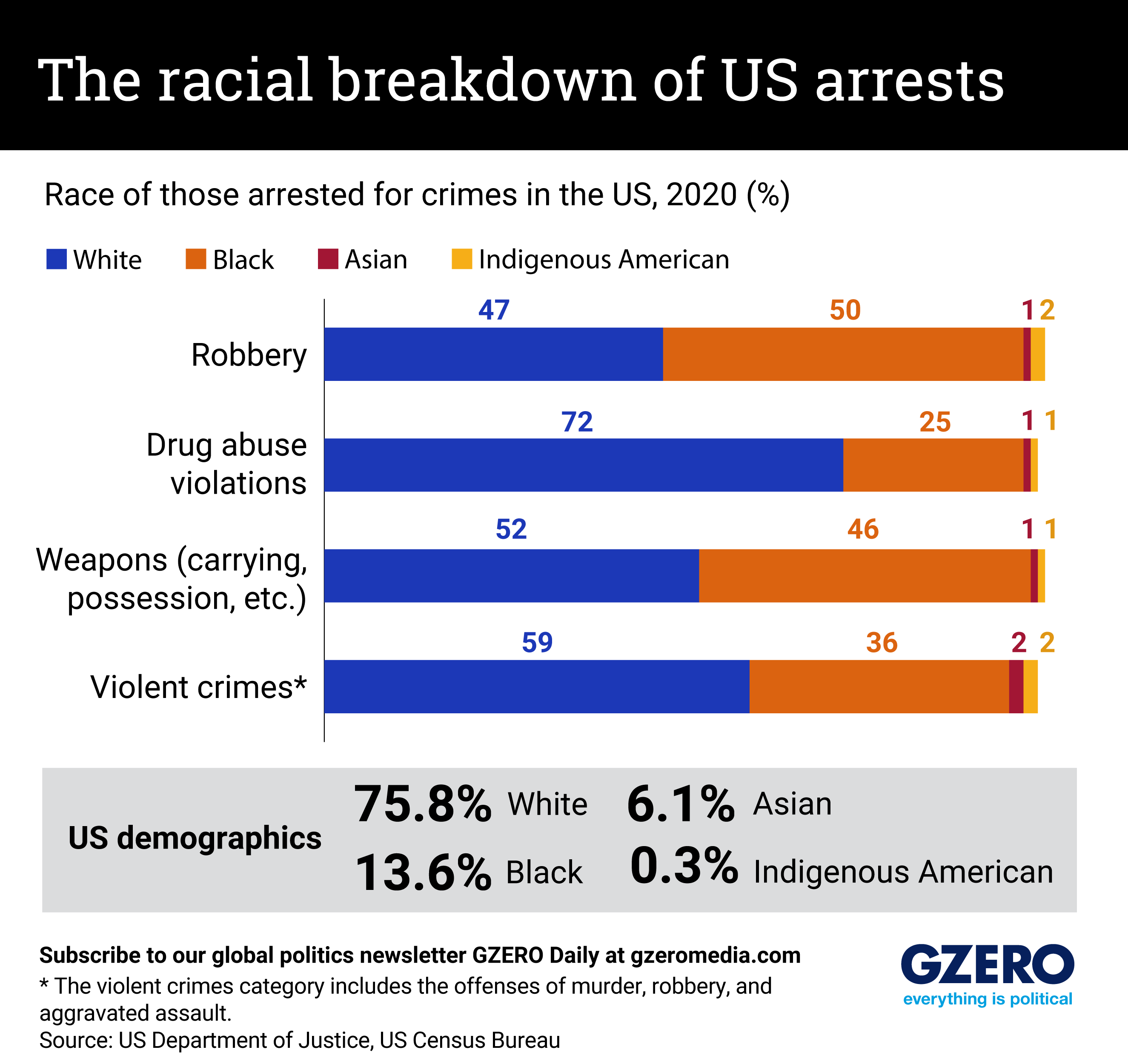
Demographics of those arrested for crimes in the US, 2020%
Luisa Vieria
Criminal justice advocates often point to US incarceration rates as proof of racial disparities in policing and American courts. But many say that systematic racism is also reflected in how law enforcement targets individuals for scrutiny and subsequent arrest – the cases of Tyre Nichols and Eric Garner are but two headline-grabbing examples. Consider that, despite accounting for just 13.6% of the national population, 36% of those arrested for violent crimes in 2020 were Black. We take a look at the race profiles of people arrested for various crimes.
Tens of thousands still remain missing after the RSF’s siege of El Fasher. The RSF also remains in control of the city, and the civil war continues to drag on with seemingly no end in sight.
With Israel and the US heading to the polls, could elections change the course of the Middle East’s conflicts? Brett McGurk joins Ian Bremmer to discuss the Iran war, escalating Houthi attacks, and whether Washington has a strategy to contain the turmoil.
Can Washington turn military pressure into a diplomatic strategy? Brett McGurk joins Ian Bremmer on the GZERO World podcast to discuss the Iran war, Houthi attacks, and how elections in Israel and the US could reshape the region.
Could replacing Benjamin Netanyahu change Israel’s direction? Brett McGurk explains why a government led by Gadi Eisenkot would likely maintain Israel’s security doctrine while taking a different approach to the West Bank.