Graphic Truth
The Graphic Truth: What Americans are most, least divided on
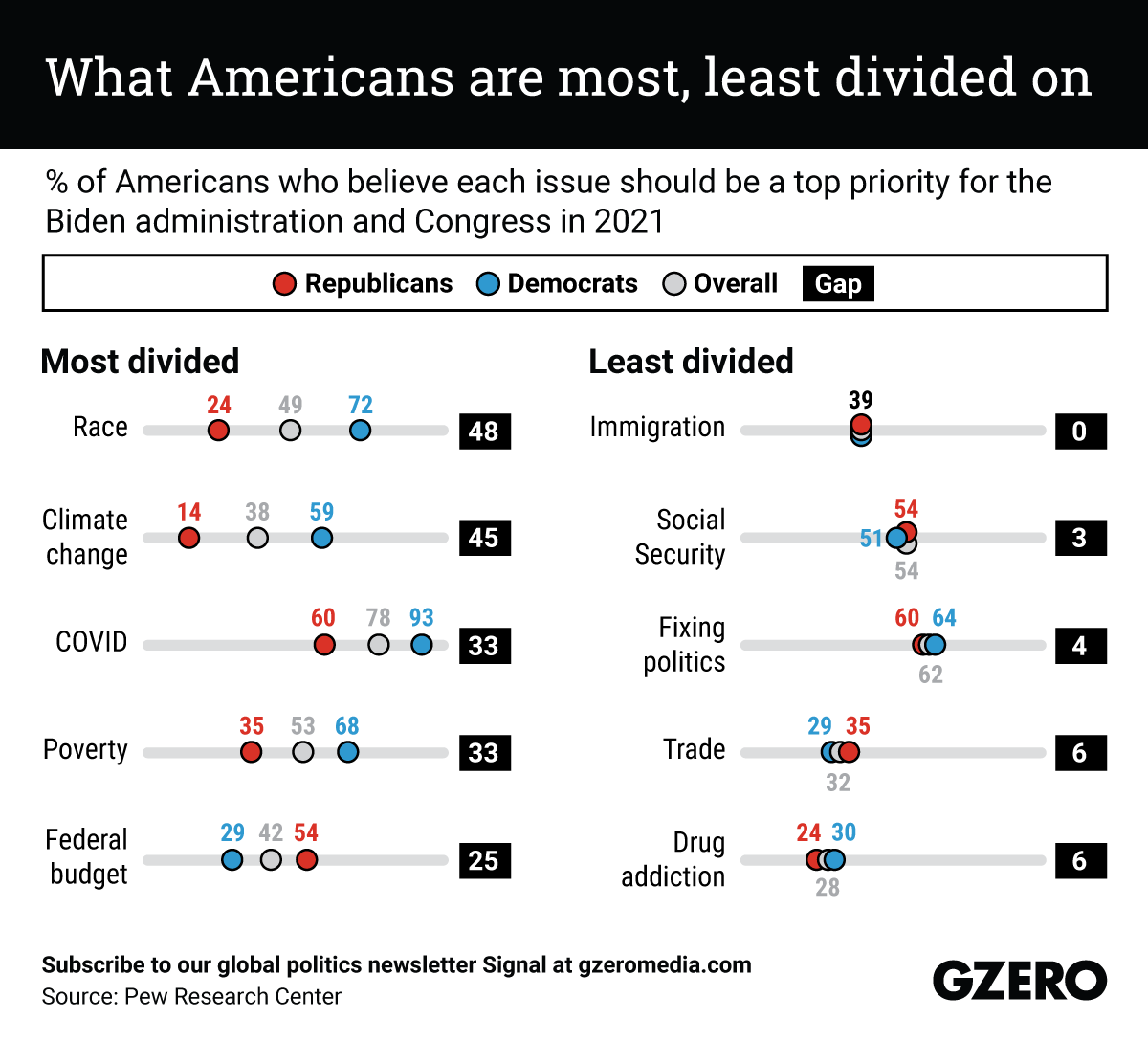
Percentage of Americans who believe each issue should be a top priority for the Biden administration and Congress in 2021
Gabriella Turrisi
As the COVID-19 scourge continues to plague the US, most Americans say they want the Biden administration and Congress to focus on tackling the public health and economic crises with the most urgency. But that's where the consensus ends. Deep political polarization, exacerbated by the aftermath of the 2020 presidential election and last month's US Capitol insurrection — has exposed, and perhaps deepened, splits on issues like race relations, poverty, climate change, and the federal deficit. We take a look at the public policy priorities that both Democratic and Republican voters agree on, as well as those where they find little common ground.
Could replacing Benjamin Netanyahu change Israel’s direction? Brett McGurk explains why a government led by Gadi Eisenkot would likely maintain Israel’s security doctrine while taking a different approach to the West Bank.
Think you know what's going on around the world? Here's your chance to prove it.
Canadian Prime Minister Mark Carney is in Turkey on Thursday for talks with President Recep Tayyip Erdogan - the visit is the first by a Canadian prime minister.
Temps are dropping. Approval ratings are dropping. Protests are rising. Throw on a classic Puppet Regime hoodie to get you through this season of geopolitical chaos. Visit the Puppet Regime Ministry of Merchandise here.
We also offer:
• A big, beautiful mug to take your coffee VERY STRONGLY.
• A tote bag to carry the microfilms to your next dead drop.
• Stickers to challenge existing borders.
Tariffs are complicated. Our shipping isn't. We deliver almost everywhere (sorry Iran, Russia, and North Korea). Shop now at shop.puppetregime.tv!