GZERO North
The Graphic Truth: Who invested the most in Canada in 2022
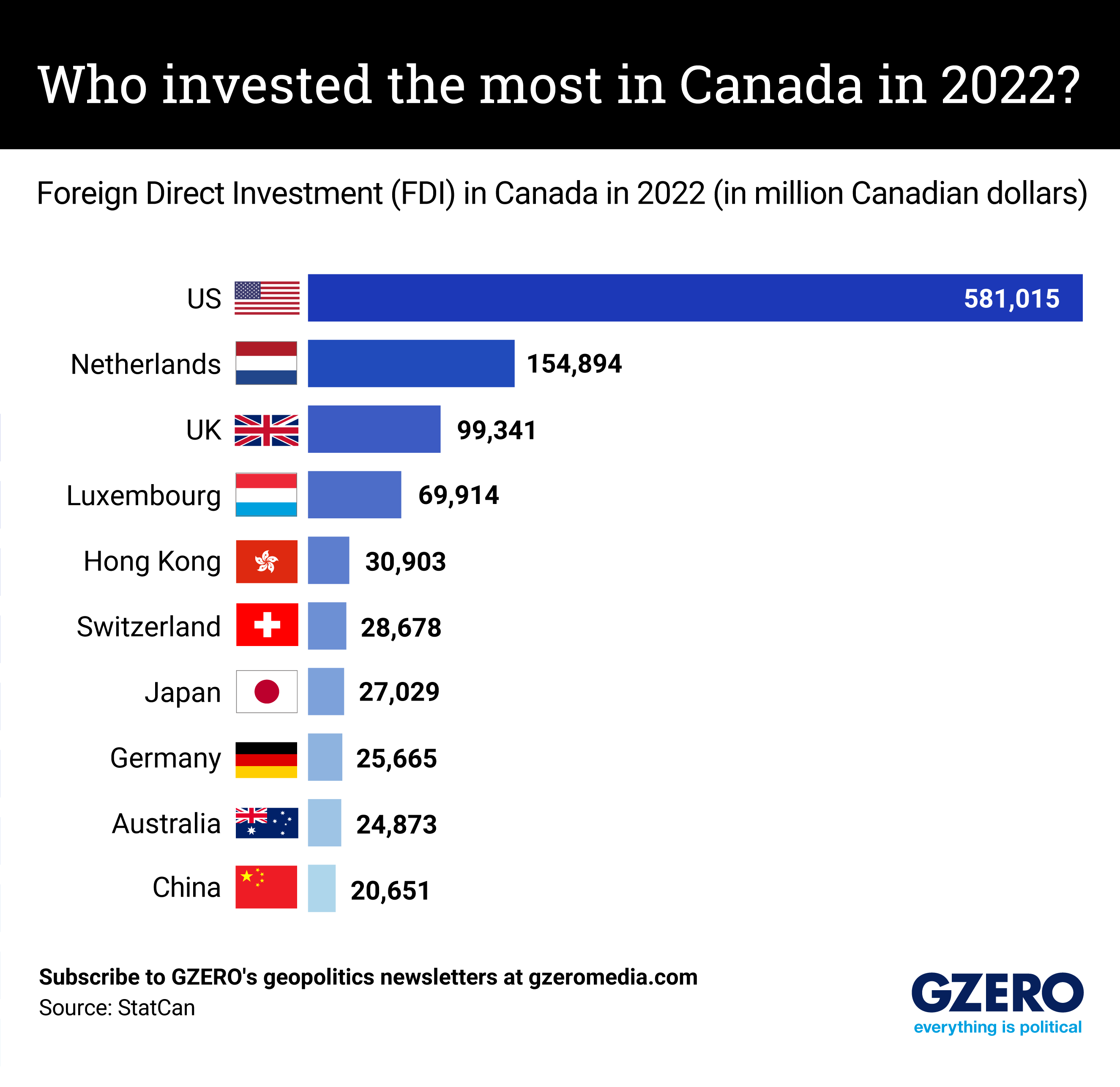
Bar graph of countries investing in Canada
Luiza Vieira
Last year, Trudeau’s government revised the Investment Canada Act, its law governing foreign direct investment, adding new safeguards against China investing in areas of the economy that could be a threat to national security. The revisions touched on infrastructure, critical resources, technology, supply chains, and intellectual property.
The decision marked a new era in the China-Canada relationship, with Ottawa siding more with Washington amid the US-China rivalry, decisively backing away from its earlier middleman role.
But how big of a concern was China’s FDI footprint in Canada? We look at the biggest foreign investors in Canada in 2022.
In this Quick Take, Ian Bremmer breaks down Brazilian President Luiz Inácio Lula da Silva’s historic re-election victory and what it means for the country’s political future and democracy.
Could replacing Benjamin Netanyahu change Israel’s direction? Brett McGurk explains why a government led by Gadi Eisenkot would likely maintain Israel’s security doctrine while taking a different approach to the West Bank.
The competition to master this technology shapes everything from high-level tensions between the US and China to the local politics of where to build data centers.