News
What We’re Watching: Protests meet Thai king, AMLO’s anti-corruption push under fire, Brexit mess continues
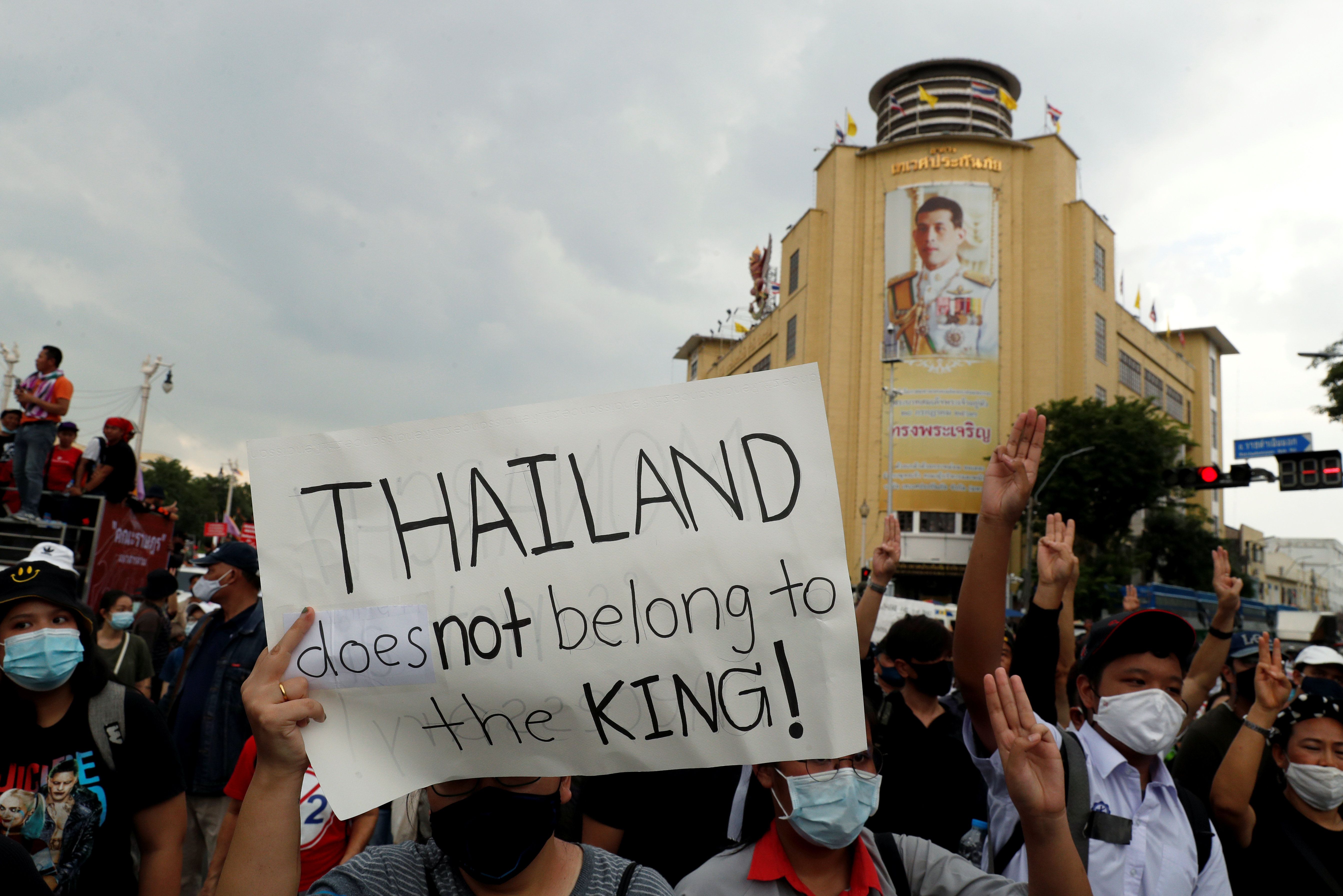
Thais "welcome" king back: Thousands of pro-democracy activists rallied across Bangkok on Wednesday as embattled King Maha Vajiralongkorn returned to Thailand after spending almost seven months amid a growing youth-led movement calling to reform the monarchy. Police pushed away protestors trying to confront the king's motorcade, while hundreds of royalist counter protesters cheered him on. Although violence was largely avoided, animosity is rising as some of the pro-democracy activists are now openly calling to go beyond reform and outright abolish the monarchy, normally a taboo topic in Thailand. They are fiercely opposed by the royalist camp, which controls the government and the security forces. We're keeping an eye on whether the king's physical presence in the country will encourage wider protests and put pressure on Thai Prime Minister — and 2014 coup leader — Prayuth Chan-ocha to crack down hard against the increasingly bold activists. (So far, he has banned public gatherings and arrested over 20 protesters).
Does Mexico's anti-corruption president have a corruption problem? Andrés Manuel López Obrador, an austere leftwing populist known as AMLO, was elected President of Mexico in 2018 — in part on his pledges to clean up the country's rampant corruption. He won plaudits for stripping public officials of immunity, rejecting the lavish lifestyle of previous presidents, and setting up an Institute for Returning to People What Was Stolen (INDEP), which auctions off the illegally obtained property of public officials and is supposed to put the proceeds back into the national budget. But recently, the head of INDEP resigned, alleging that the institute itself was misusing those funds. Taken together with a flurry of corruption scandals alleging misconduct by his own brother and his sister-in-law, AMLO may be facing a corruption problem of his own as he gears up for next year's crucial mid-term elections.
EU-UK post-Brexit deal (still) up in the air: The European Union and the United Kingdom remain deadlocked on talks to prevent the UK from exiting the EU without a trade agreement at the end of the year. Although British Prime Minister Boris Johnson says he's willing to walk away if no consensus is reached by October 15, the two sides are simultaneously negotiating a one-year extension to avoid the economic fallout of a no-deal Brexit (which would raise prices for businesses and consumers in both the UK and the EU). The latest snag is French opposition to certain British fishing rights once it leaves the EU: the French want full EU access to British waters in return for reciprocal full UK access to sell fish to the EU, while Brits demand quotas on the former. Moreover, London and Brussels are still squabbling over a new UK law that would exclude Northern Ireland from some EU trade rules while both sides continue negotiating. Will Johnson keep his word and gamble on a no-deal Brexit? If so, will it be too late for the EU to stop him? The answer in the next episode of this neverending drama.With Israel and the US heading to the polls, could elections change the course of the Middle East’s conflicts? Brett McGurk joins Ian Bremmer to discuss the Iran war, escalating Houthi attacks, and whether Washington has a strategy to contain the turmoil.
Think you know what's going on around the world? Here's your chance to prove it.
Even as Israel grows increasingly isolated on the world stage, there is one region where a whole swath of newly-elected leaders can't seem to get enough of the Jewish State: Latin America.