
Skip to content
Search

Latest Stories

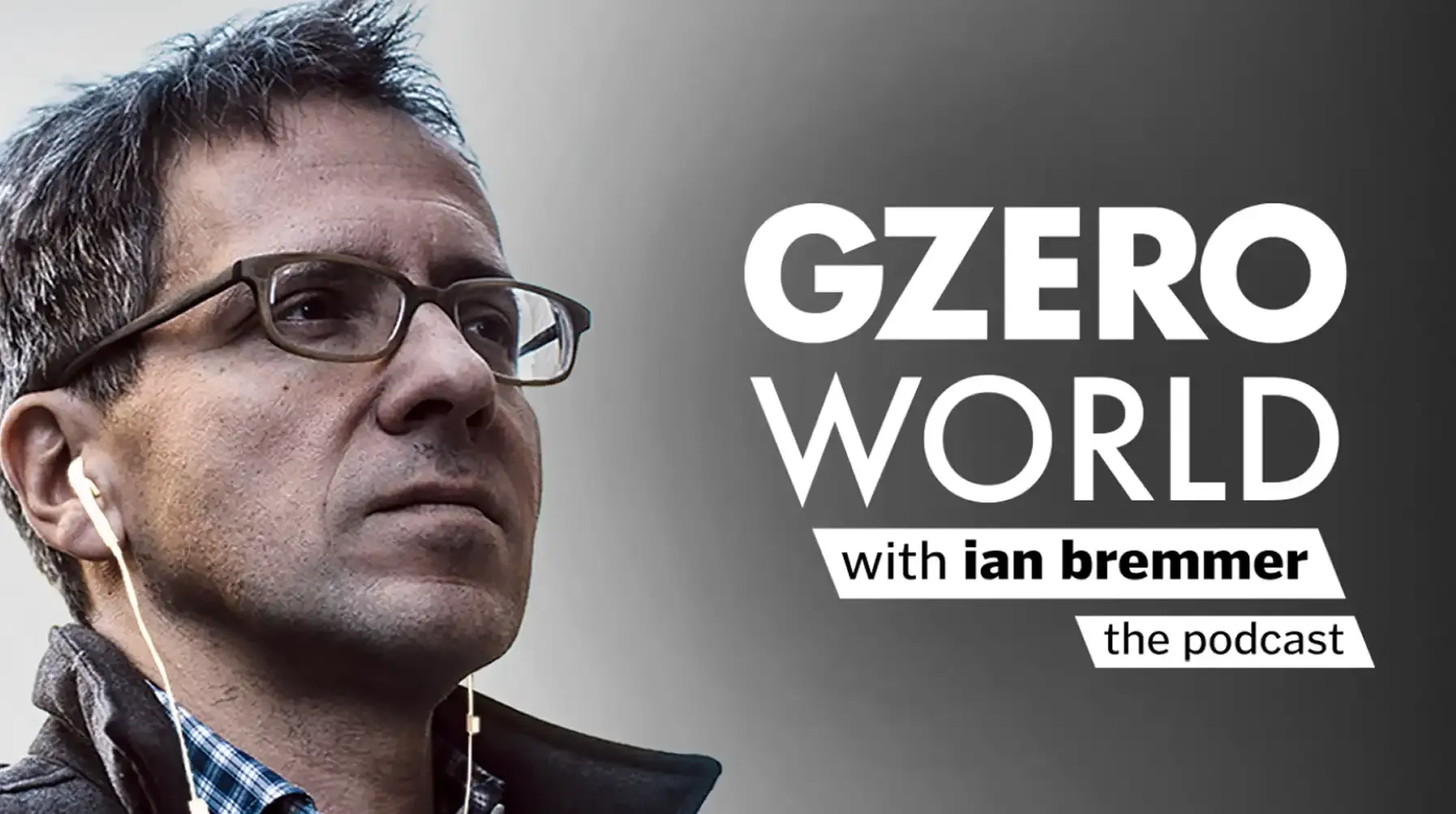
GZERO World with Ian Bremmer Podcast

The United States will no longer play global policeman, and no one else wants the job. This is not a G-7 or a G-20 world. Welcome to the GZERO, a world made volatile by an intensifying international battle for power and influence. Every week on this podcast, Ian Bremmer will interview the world leaders and the thought leaders shaping our GZERO World.

Presented by

Latest Episode

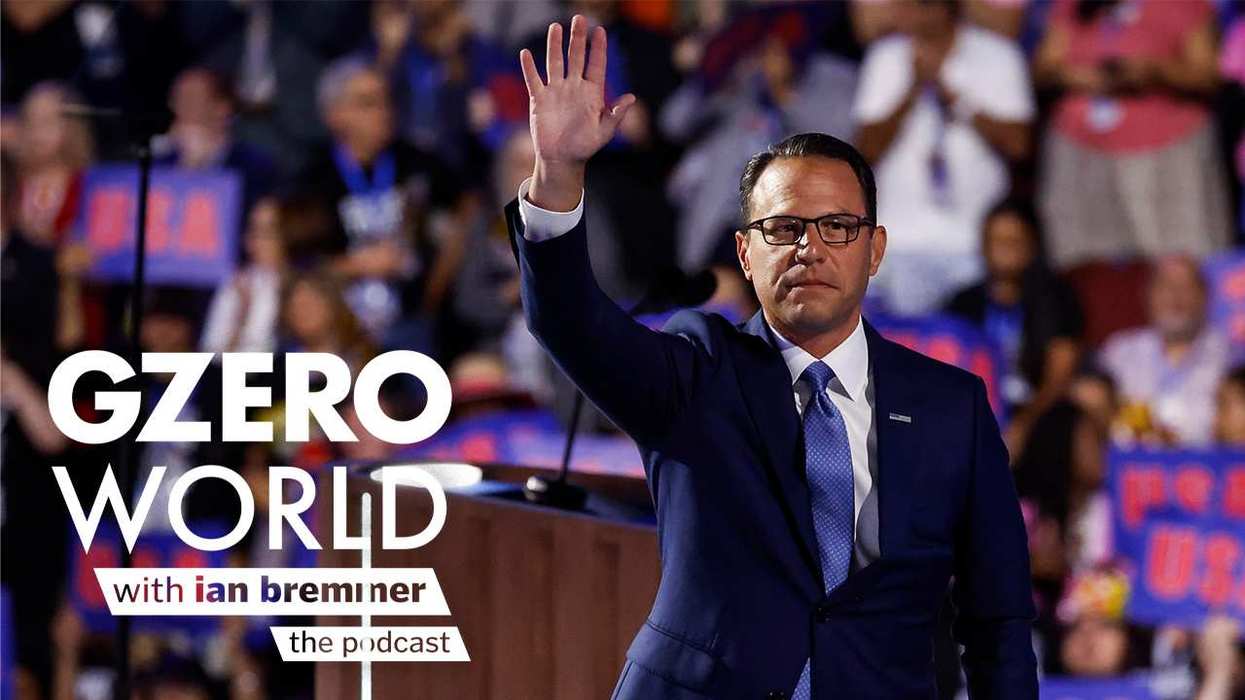
Governor Josh Shapiro at a rally

The future of the Democratic party, with Josh Shapiro


As Democrats search for a path forward after 2024, Pennsylvania Governor Josh Shapiro argues that voters aren't looking for more political rhetoric - they're looking for results.

What can Democrats learn from winning in America's ultimate swing state? On the latest episode of the GZERO World podcast, Ian Bremmer sits down with Pennsylvania Governor Josh Shapiro to discuss the future of the Democratic Party, the growing crisis of trust in American institutions, and the biggest challenges facing the country at home and abroad.

Keep reading...Show less

More from GZERO World Podcast

The Wolrd Cup 2026 kicks off in North America

World Cup politics, with the Financial Times' Simon Kuper

listen on:

The World Cup arrives in North America this week, bringing with it billions of viewers, billions of dollars, and no shortage of political controversy. But according to Financial Times columnist Simon Kuper, none of that is new - the tournament has always reflected the world around it.


On GZERO World, Kuper and Ian Bremmer discuss how national teams have become flashpoints in debates over immigration and identity, why FIFA remains one of the world's most powerful and least accountable organizations, how Iran's World Cup campaign could become a geopolitical spectacle, and what the tournament reveals about nationalism, belonging, and power in the modern world.

Yet for all the politics, money, and controversy surrounding the tournament, Kuper argues the World Cup remains one of the few events capable of captivating entire countries and bringing billions of people together. The result is a tournament that reflects the hopes, divisions, and identities of the nations watching it.

The World Cup is the planet's biggest sporting event, and the most political one. This year, it will also be the most profitable spectacle of all time.... More >

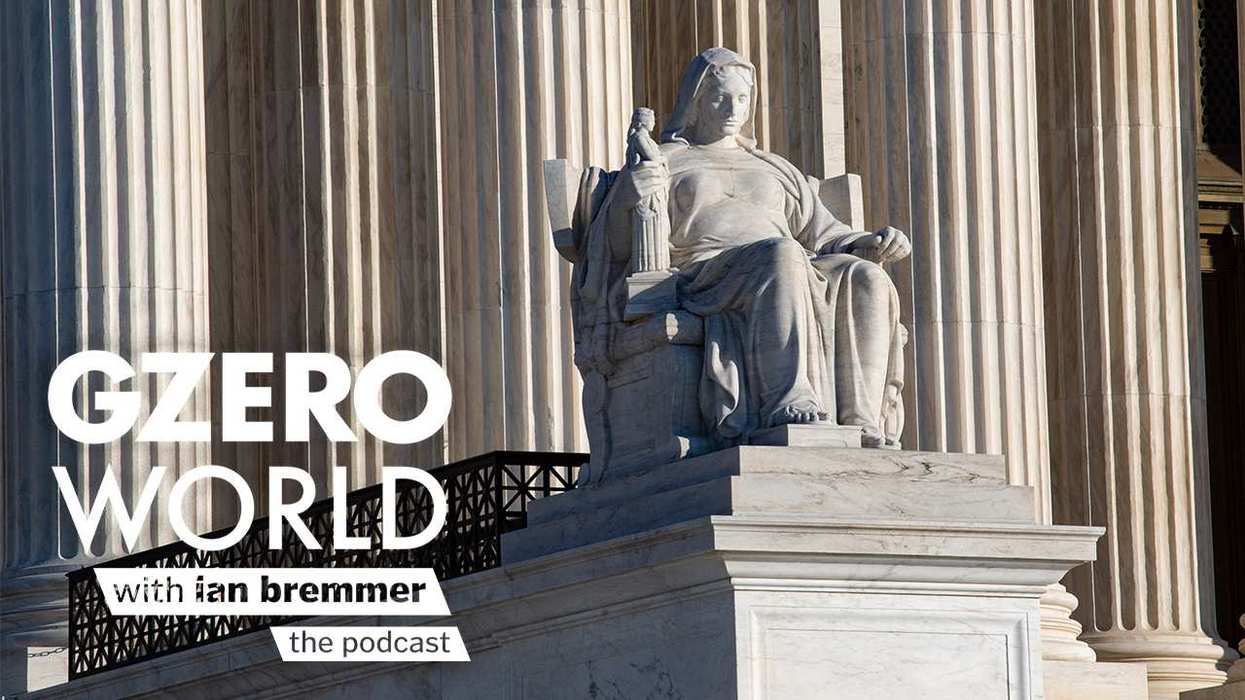
The Supreme Court statue with the logo of GZERO World with Ian Bremmer the podcast

The Supreme Court's biggest tests ahead, with Emily Bazelon

listen on:

From birthright citizenship to the independence of federal agencies, the Supreme Court is poised to decide a series of cases that could redefine the balance of power in Washington. Yale legal scholar and New York Times Magazine staff writer Emily Bazelon joins Ian Bremmer to assess what's at stake and whether the judiciary remains an effective check on presidential authority.


Bazelon argues that Trump's effort to end birthright citizenship is unlikely to succeed, but says other pending cases involving the Federal Reserve and the Federal Trade Commission could significantly expand presidential control over agencies that Congress intentionally designed to operate independently. "I think it's very likely the court will rule in the president's favor," she says of the FTC case.

The conversation also examines the Court's recent decisions on tariffs and voting rights, including a ruling that further weakened protections against partisan gerrymandering. Bazelon argues that the consequences extend beyond individual cases, contributing to a broader perception that the Court is becoming increasingly political.

Yet despite declining public trust, Bazelon sees reasons for cautious optimism. While Congress has largely failed to constrain executive power, she argues that the judiciary, particularly the lower courts, has repeatedly pushed back against actions that exceed legal authority. The bigger question is whether those guardrails will continue to hold as the Court confronts some of the most consequential constitutional disputes still ahead.

The Supreme Court is facing some of the biggest legal and political questions of the Trump era. Emily Bazelon joins Ian Bremmer to break down the rulings that could reshape executive power, voting... More >

Winners and losers of the Iran war, with Kori Schake

Winners and losers of the Iran war, with Kori Schake

listen on:


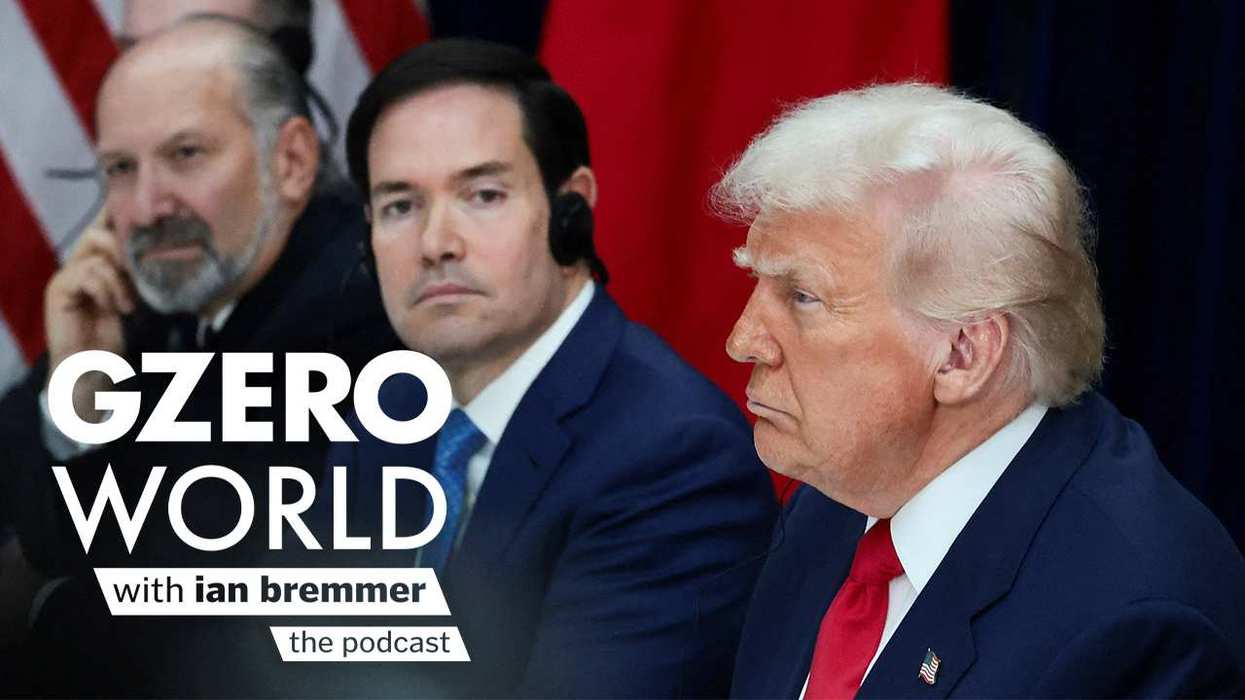
Operation Epic Fury may be over, but the Iran war is far from resolved. On this week's episode, American Enterprise Institute Kori Schake joins Ian Bremmer to discuss the conflict's global ripple effects.

With the Strait of Hormuz effectively closed to commercial shipping, the US finds itself in what Schake calls a Mexican standoff, unable to force Iran's hand without dramatic escalation, and unwilling to accept the humiliation of ceding control of one of the world's most critical waterways. Meanwhile, Washington's two biggest rivals are gaining ground. Russia is cashing in on higher oil prices at a moment when the Kremlin was under mounting financial pressure over Ukraine.

In Beijing, the Trump-Xi summit took place with the White House in a weakened position. The US needs China's help pressuring Iran, and Xi knows it. As Schake puts it: "It's an important measure of just how much President Trump has lost in starting the war in Iran and pursuing it in the way he has, that he's having to go appeal to China, America's most powerful potential adversary, for assistance in delivering us from a problem of our own creation."

The costs for US allies are adding up too. Partner countries are absorbing economic pain they had no hand in creating, with energy prices squeezing European economies. Schake also raises a harder structural question: with Patriot systems redirected from Europe to the Gulf and munitions stocks stretched thin, the war has laid bare the limits of the American defense industrial base, and what it means for the credibility of US commitments around the world..

Three months into the Iran war, the Strait of Hormuz is in a standoff and the geopolitical fallout is spreading fast. Kori Schake of the American Enterprise Institute breaks down with Ian Bremmer... More >

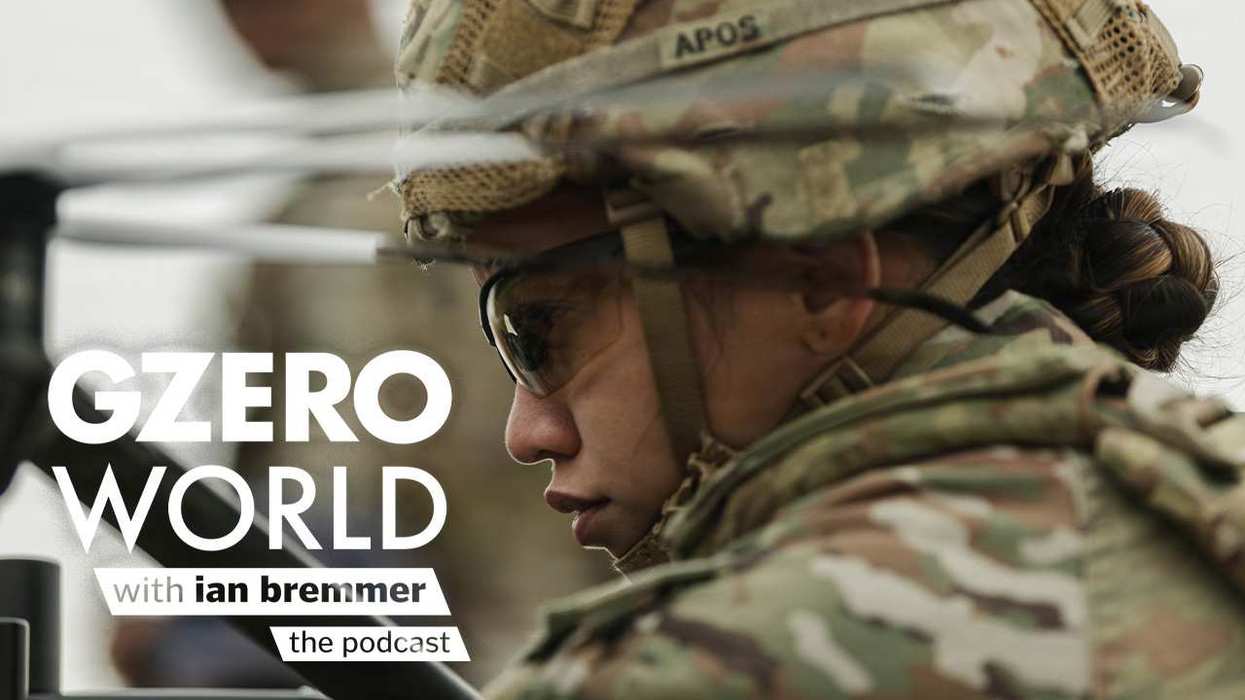
How AI is transforming warfare and the US military with Katrina Manson

How AI is transforming warfare and the US military with Katrina Manson

listen on:


Ian Bremmer sits with Bloomberg defense tech reporter Katrina Manson, who spent years reporting on Project Maven for her new book on the Pentagon's AI push.

The program launched in 2017 with a narrow mandate: use machine learning to process drone footage. It has since expanded into something far more ambitious. Autonomous weapons, drone swarming technology, and AI-assisted targeting are now central to how the Pentagon talks about modern warfare.

The tech rollout is fast, but not reliable. Algorithms fail when the battlefield changes. The targeting process is accelerating to the point where operators are clicking through AI recommendations with little ability to question them. Manson says the military knows about AI's vulnerability "to sycophancy, to escalation, to bias and hallucination," and has not yet found adequate solutions.

Bremmer and Manson also take on the US-China AI race, the IDF's use of AI in Gaza, and what the Anthropic contract dispute reveals about the fault lines between commercial AI ethics and military requirements.


Subscribe to the GZERO World with Ian Bremmer Podcast on Apple Podcasts, Spotify, or your preferred podcast platform, to receive new episodes as soon as they're published.

Bloomberg reporter Katrina Manson joins Ian Bremmer to discuss Project Maven, the program that brought AI to the heart of US warfare, and the risks that come with it.... More >

GZERO Podcasts