What We're Watching

A winner from Trump tariff wars? Maybe India

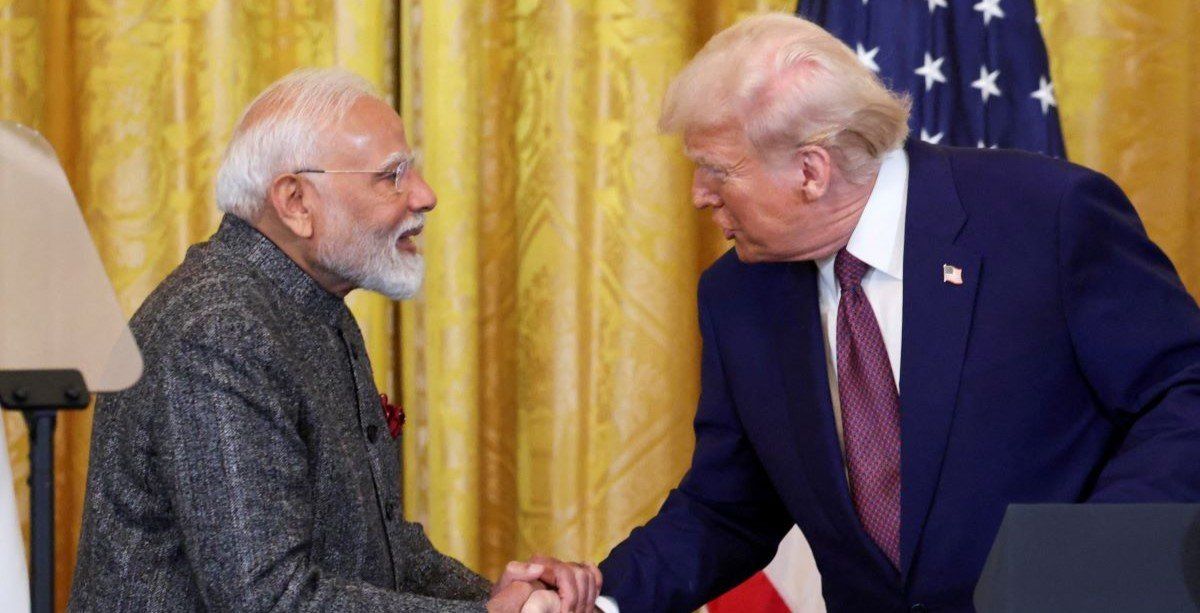
​U.S. President Donald Trump and Indian Prime Minister Narendra Modi shake hands as they attend a joint press conference at the White House in Washington, D.C., U.S., February 13, 2025.
U.S. President Donald Trump and Indian Prime Minister Narendra Modi shake hands as they attend a joint press conference at the White House in Washington, D.C., U.S., February 13, 2025.
REUTERS/Kevin Lamarque
If there’s a winner from President Donald Trump’s trade wars, India is a good candidate. Its longtime rivalry with China gives Prime Minister Narendra Modi ample motive to build new bridges with the United States. That’s one of the reasons India joined the so-called Quad – an Indo-Pacific forum for strategic and diplomatic dialogue – with fellow democracies Japan, Australia, and the US, in 2007.

Modi has been around long enough to have navigated trade frictions during Trump’s first term, and he was one of the first world leaders to approach Trump earlier this year with a conciliatory approach to growing trade tensions. Now, according to US Treasury Secretary Scott Bessent, the first phase of a new US-India trade deal might be “one of the first trade deals we would sign." Following a visit to Washington last week, Rajesh Agrawal, India’s lead trade negotiator, highlighted hopes for a “mutually beneficial, multi-sector bilateral trade agreement by fall of 2025, including through opportunities for early mutual wins.” Creating more market openings for US exports will come at a cost in a country long known for trade protectionism, but Modi has also made moves in recent years to open trade talks with the EU, the UK, and others.

This also follows news that, to avoid the Trump administration’s surging tariff rates on China, Apple has unveiled plans to move production of most of the 60 million iPhones it sells in the US each year from China to India by the end of 2026 – though the transition may take longer.
More For You

In this episode of Tools and Weapons, Microsoft Vice Chair and President Brad Smith sits down with Ed Policy, President and CEO of the Green Bay Packers, to discuss how purpose-driven leadership and innovation are shaping the future of one of the world’s most iconic sports franchises. Ed shares how technology and community-focused initiatives, from Titletown Tech to health and safety innovations on the field, are transforming not just the game of football, but the economy and culture of Green Bay itself. He explains how combining strategic vision with investment in local startups is keeping talent in the Midwest and creating opportunities that extend far beyond Lambeau Field.

Subscribe and find new episodes monthly, wherever you listen to podcasts.

Egyptians head to the polls to elect a new parliament during the first round of the Egyptian parliamentary elections in Giza, Egypt, on November 10, 2025.
Photo by Islam Safwat/NurPhoto

Egyptians are voting this month in parliamentary elections that aren’t expected to change who’s in charge, but could allow President Abdel Fattah el-Sisi to rule beyond 2030.

An injured soldier is transferred to a hospital following a clash between Thai and Cambodian troops over a disputed border area in Sisaket Province,Thailand, December 7, 2025.
Royal Thai Army/Handout via REUTERS

Thailand and Cambodia’s ceasefire is on the verge of collapse. Strikes were launched across their disputed border today, following clashes over the weekend that resulted in the death of a Thai soldier.