"Men make history and not the other way around. In periods where there is no leadership, society stands still." — Harry S. Truman
The former US president's warning feels particularly prescient as world leaders prepare to gather at the 76th United National General Assembly in New York City, the first such in-person event in over 18 months. The importance of apt leadership in determining societies' ability to cope — and survive — has been on full display since COVID-19 enveloped the globe, decimating communities and killing some 4.5 million people.
So as leaders prepare to take the podium both in person and virtually, as well as hustle on the sidelines — where they can chat sans bullet points or cameras — what are some of the key issues on the agenda?
Vaccinating the world. Inoculating low-and middle-income countries is still the most pressing issue on the UN's radar. High-income countries are rolling out vaccines at a rate almost 20 times faster than low-income states. Collectively, the 52 poorest countries have access to just 3 percent of global vaccine stocks.
The global rollout has been lopsided, and this has been highlighted recently as wealthy states like Germany, the UK, the US, and Israel have rolled out booster shot campaigns. Indeed, this has sparked a global debate as the World Health Organization, a UN agency, says that booster schemes are further obstructing poorer countries from accessing vaccine supplies. WHO's director general, Dr. Tedros Adhanom Ghebreyesus, has called on wealthy countries to pause boosters until at least the end of September, but against the backdrop of the highly contagious Delta variant, there's no sign that wealthy countries are willing to listen. (The UN is also working overtime to get vaccine-producing nations, like India, to lift export restrictions.)
The Biden administration, for its part, has recently pushed back, saying that the argument of boosters vs donating shots is "a false choice," because the US is doing both, having given more than 120 million doses to over 80 countries. As the US grapples with the twin problem of surging outbreaks and vaccine skepticism (80 million eligible Americans still refuse to get the shot) this is likely to remain a hot-button issue at UN headquarters in the upcoming weeks.
Sharing the climate burden. Just six weeks out from COP26, the UN climate summit billed as "the last chance" to mitigate fossil fuels' worst effects on the environment, influential global players are trying to chart a mutually agreed-upon path forward.
John Kerry, the US special envoy for climate change, recently flew to India to press Delhi to make more ambitious goals to get to Net Zero emissions by 2050. Moreover, Beijing recently rebuffed calls from the US to deepen its emission goals, including cutting coal consumption, prompting UN Secretary-General António Guterres to warn China and the US — the world's two largest carbon emitters — not to let bilateral friction get in the way of a last-ditch effort to address the climate crisis.
And today, President Biden is gathering some world leaders on Zoom to try and get more big methane emitters (hello China, Russia, Brazil, and Saudi Arabia) to sign onto the US-EU's new plan to cut methane emissions by at least 30 percent from 2020 levels by the end of the decade. Indeed, this all comes weeks after a damning new report by the IPCC said that it's not too late to avoid the worst consequences of climate change if the world acts now.
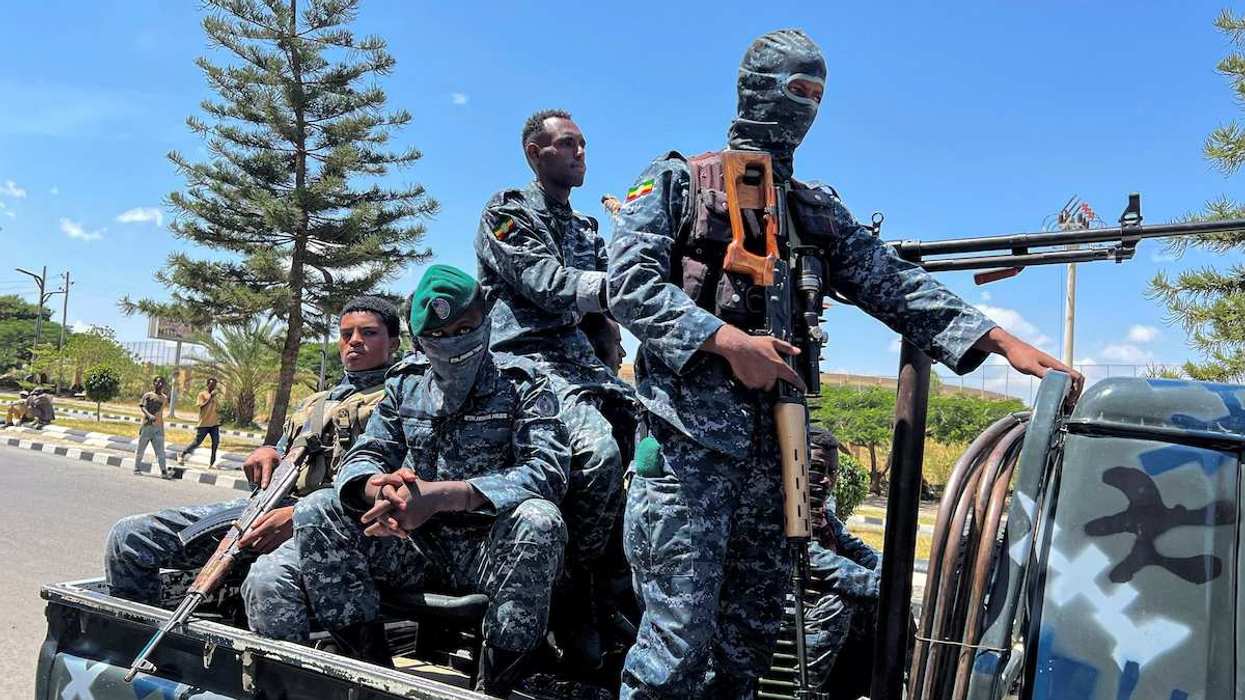
Troubleshooting crises. There's an abundance of human rights and political crises with global resonance sweeping the world right now: civil war in Ethiopia, widespread instability in Afghanistan; post-coup repression in Myanmar; economic and political implosion in Haiti — the list goes on.
Dealing with these crises at the UN — whose core mission of dispute resolution is undercut by big power rivalries — is only becoming more difficult as the chasm between Western states and rogue countries like China, Russia and Iran grows more pronounced.