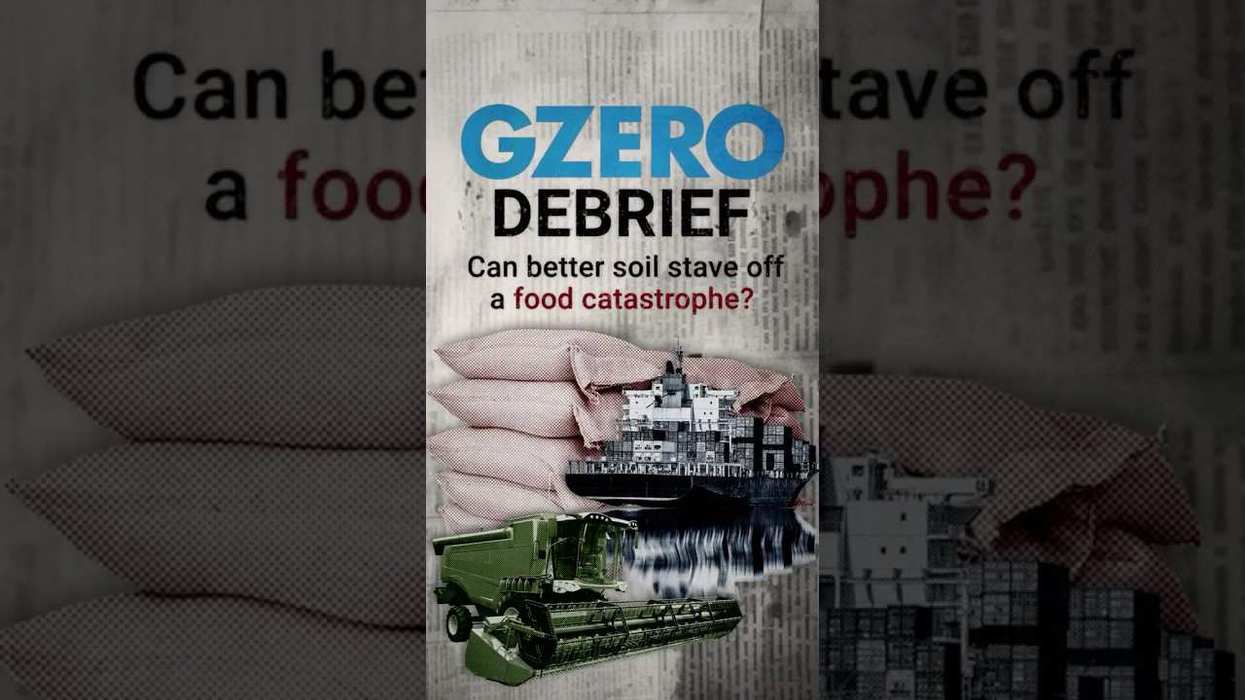
The global food industry has gone bonkers. Since Russia invaded Ukraine last month, global wheat prices have gone through the roof, and sunflower oil is becoming a rare delicacy.
The looming global food crisis has been years in the making. Extreme weather events linked to climate change and pandemic-induced supply chain issues had already caused shortages and sent prices surging. The war in Ukraine has made a bad situation much worse. But how bad might things get, and who holds all the cards?
A war between two agricultural giants. The war in Ukraine is making key food staples around the world more scarce and pricier. Together, Ukraine and Russia account for more than 30% of global wheat exports, most of which have been cut off from the global market. Paying Russia for agriculture exports has become nearly impossible because of sanctions. Ukraine has banned the export of food staples, including wheat, to ensure it has enough to feed people during the war. This is worrying for the dozens of low- and middle-income countries that depend on Russia and Ukraine for one-third or more of their wheat supply.
What’s more, the lingering war, now entering its second month, means that farms may miss out on key planting and harvesting seasons this summer, sending supply chains into a further tizzy.
How bad might things get? Even in wealthy countries, things aren’t looking good. Since Russia invaded Ukraine, many European consumers — already freaked out by pandemic-induced economic uncertainty — have resorted to food hoarding. German grocers, for instance, have been forced to ration sales of cooking oil because of panic-buying. And in the UK, where the war is aggravating pandemic-related inflation, grocery prices have risen at their fastest pace since 2013.
Moreover, there are growing fears that Vladimir Putin could weaponize food exports to inflict harm on the West. Moscow has already blocked ships carrying goods from leaving the Black Sea and has vowed to retaliate for crippling economic sanctions. Indeed, capturing the Ukrainian port city of Odesa, a critical commercial point for the former Soviet Union, would allow Russia to control cargo shipments of food in the region.
If Putin plays hardball, food will get even more expensive in many parts of the world, particularly in poorer countries. This is already coming to a head in cash-strapped Lebanon, which is plagued by political and economic crises and is now facing even more severe food shortages.
Many governments are in a bind as the only thing they can do to remedy the problem is enforce price-fixing and subsidies. But these measures might hurt them in the long run, says Peter Ceretti, a senior analyst at Eurasia Group. "For governments, particularly those with limited resources, subsidies also become a growing drag on public coffers," he says, adding that "the political consequences of cutting them back if the state can no longer afford them at some point could be very serious."
Egypt, the world’s largest importer of wheat — 80% of which comes from Ukraine and Russia — this week fixed the price of unsubsidized bread to stave off a social and economic crisis. Meanwhile, countries such as Hungary and Serbia have banned grain exports.
This dynamic could lead to major political and social upheaval around the world. In import-reliant Egypt, President Abdel Fatah Al-Sisi knows that popular anger over wheat prices in his country — where about two-thirds of the population eat subsidized bread — could spill over into a mass uprising. A drought-induced food crisis in 2007-2008 led to riots in dozens of countries. In 2008, Egypt’s former authoritarian leader Hosni Mubarak ordered the army and police to bake bread to try and lower the temperature.
Who holds the cards? Russia, of course, and the West, which is trying to boost production to offset losses from Ukraine and Russia. But the real powerbroker could be China, which hoards half the world’s grain. Some analysts warn that China could use its grain stocks to try and win bellies and minds across Africa, Latin America, and the Middle East.
“The concern is that China will use its grain stores as a diplomatic tool. In an environment of global scarcity, they could use their supply to curry favor selectively," says Eurasia Group Vice Chairman Gerald Butts. "It may not go where it’s needed most, but where it will deliver the best diplomatic return for China.”
The United Nations, for its part, has warned of a “hurricane of hunger,” saying that as the war lingers, things are bound to get much worse.