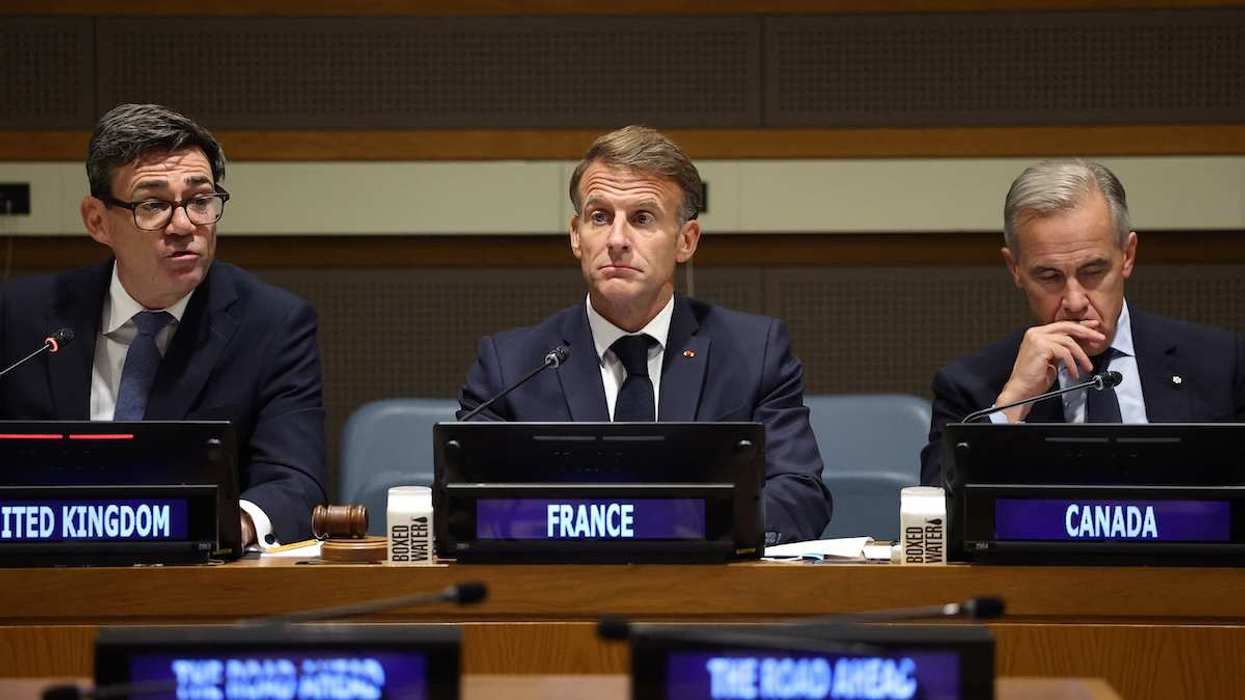
Europe's disastrous "second wave:" As COVID-19 cases continue to surge across Europe, the European Parliament cancelled plans to reconvene next week in Strasbourg, France, saying that the current uptick means that "traveling is too dangerous." It's the second time since September that in-person meetings at the EU legislative body have been cancelled, as countries including France, Spain, Belgium, and the Czech Republic grapple with serious "second waves" of infection, causing hospitals to fill up again in several European cities. In a drastic move Wednesday, French President Emmanuel Macron reimposed strict lockdown measures, including overnight curfews in multiple cities — including the Paris region — to stop the spread of the disease. (France reported 22,591 new cases on Wednesday alone.) After the 53 European states recorded the highest-ever weekly number of new COVID cases, the World Health Organization issued a dire warning Thursday saying that death rates from the disease could reach four to five times higher than their April peak in the near term if things don't turn around — and fast.
Bolivia's first election since that last one failed: On Sunday, Bolivians will go to the polls to elect a president for the first time since a disputed election last fall led to mass protests and the ouster of Evo Morales, the country's long-serving leftwing populist president. Since then, power has been split between Congress, which is still controlled by Morales' Movement for Socialism (MAS) party, and interim President Jeanine Áñez, a right-winger. Clashes between riot police and Morales' predominantly lower-income and indigenous supporters have flared in Bolivia, which is deeply polarized along political, socioeconomic, and racial lines. At the moment, the MAS party candidate, Luis Arce, is leading the polls at 42 percent. If he comes in first on Sunday with more than 40 percent of votes and a 10-point margin over his main challenger — center-right former President Carlos Mesa — he would win outright. If not, there would be a second round between the two men. Whoever wins the presidency will face the daunting task of reuniting a bitterly divided country, while also addressing its biggest economic crisis in 40 years.
Kyrgyz power vacuum: Kyrgyz President Sooronbai Jeenbekov resigned on Thursday after more than a week of mass protests over an election that local critics — and international observers — say was tainted due to vote-buying. Kyrgyzstan is clearly no stranger to political unrest — Jeenbekov is the third president ousted by street protests in the last 15 years. But with the president now out of the picture, there's uncertainty over who will step in. The constitution says the interim leader should be the parliament speaker, but there's growing pressure by opposition groups to appoint current Prime Minister Sadyr Japarov, a populist who wants to nationalize Kyrgyzstan's gold mines. Japarov hasn't been on the job long: he took office just days ago after his supporters freed him from prison, where he was serving a 12-year sentence for kidnapping a governor during a protest against a gold mine project. Whatever happens in Bishkek will be closely watched by Russia —which has close ties to all the former Soviet republics in Central Asia — and China, always wary of potential instability on its borders.