Search
AI-powered search, human-powered content.
scroll to top arrow or icon

Microsoft’s Brad Smith: Disinformation creating a “more polarized” public

Microsoft's President Brad Smith and Ian Bremmer discussed the impact of disinformation campaigns—both domestic and foreign--on the US democracy. The use of fake stories is creating polarization and an ill-informed public, they agreed. In discussing the impact of Russian interference in US politics, Smith said, "In all of the years of the Soviet Union, did the Soviet Air Force ever develop an aircraft that did as much damage to the United States as Russian disinformation campaigns have done through social media over the last four years? I would argue that the answer is no."

Watch more: Panel: How will the world recover from COVID-19?

From Your Site Articles
More from Global Stage

Can AI help solve global crises? Live from the AI for Good Global Summit 2026

As artificial intelligence rapidly reshapes the global economy, one question is becoming increasingly urgent: who will actually benefit? Recorded at the 2026 AI for Good Global Summit in Geneva, this special Global Stage conversation brings together leaders from the United Nations, Microsoft, and the scientific community to examine how AI can help tackle some of the world's biggest challenges, from disaster preparedness and climate resilience to humanitarian response and sustainable development.

How AI speeds up disaster relief efforts

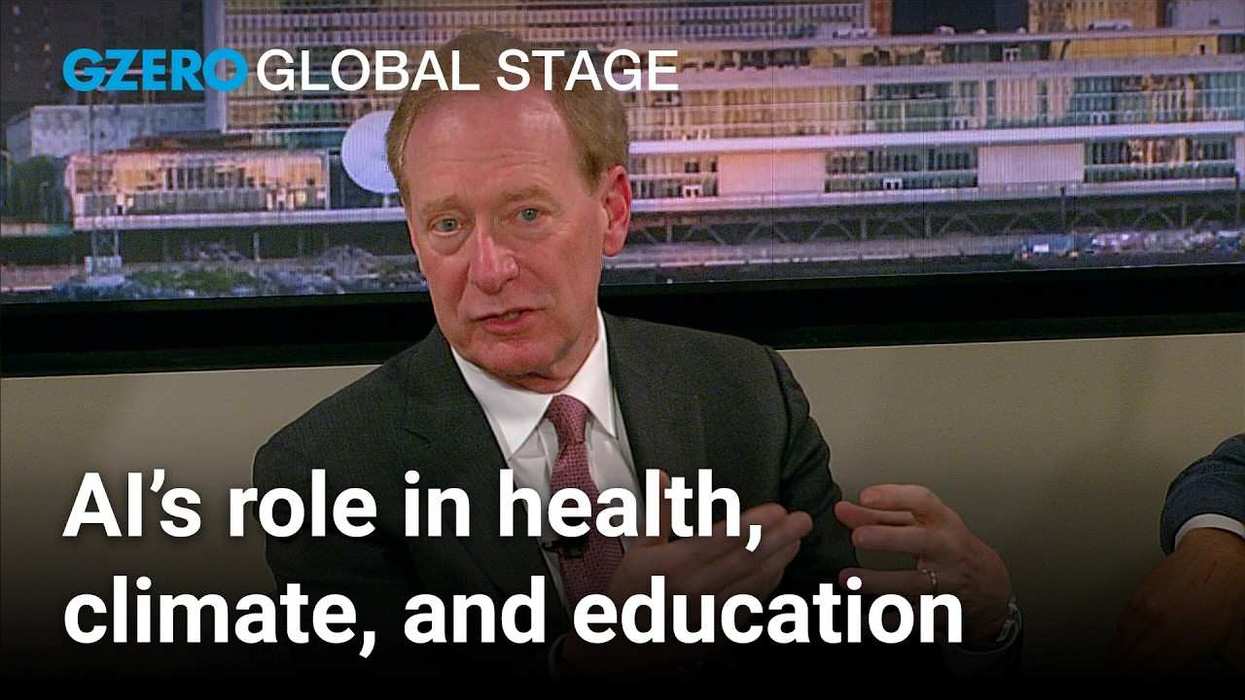
Artificial intelligence is becoming an increasingly powerful tool for disaster preparedness and emergency response. Speaking at the 2026 AI for Good Global Summit in Geneva, Microsoft Vice Chair and President Brad Smith explains how AI combines predictive modeling, satellite imagery, and public data to help governments identify vulnerable communities before disasters strike and respond more quickly when they do.

Building a safer, more equitable AI future

At the 2026 AI for Good Global Summit in Geneva, ITU Secretary-General Doreen Bogdan-Martin says the future of artificial intelligence depends on putting the right guardrails in place to ensure AI is developed safely, responsibly, and equitably.

The World Bank Group's Sangbu Kim on AI and job skills

More than half of Americans believe their job is vulnerable to AI. The data tells a more complicated and in some ways more hopeful story.

Mother-son podcasting duo take on quantum computing

Quantum computing is moving closer to real-world applications, but making the technology understandable remains a challenge.

Can AI protect humanitarian aid?

Artificial intelligence is already helping humanitarian organizations identify people in need, improve supply chains, and deliver assistance more efficiently. But it also introduces new risks.